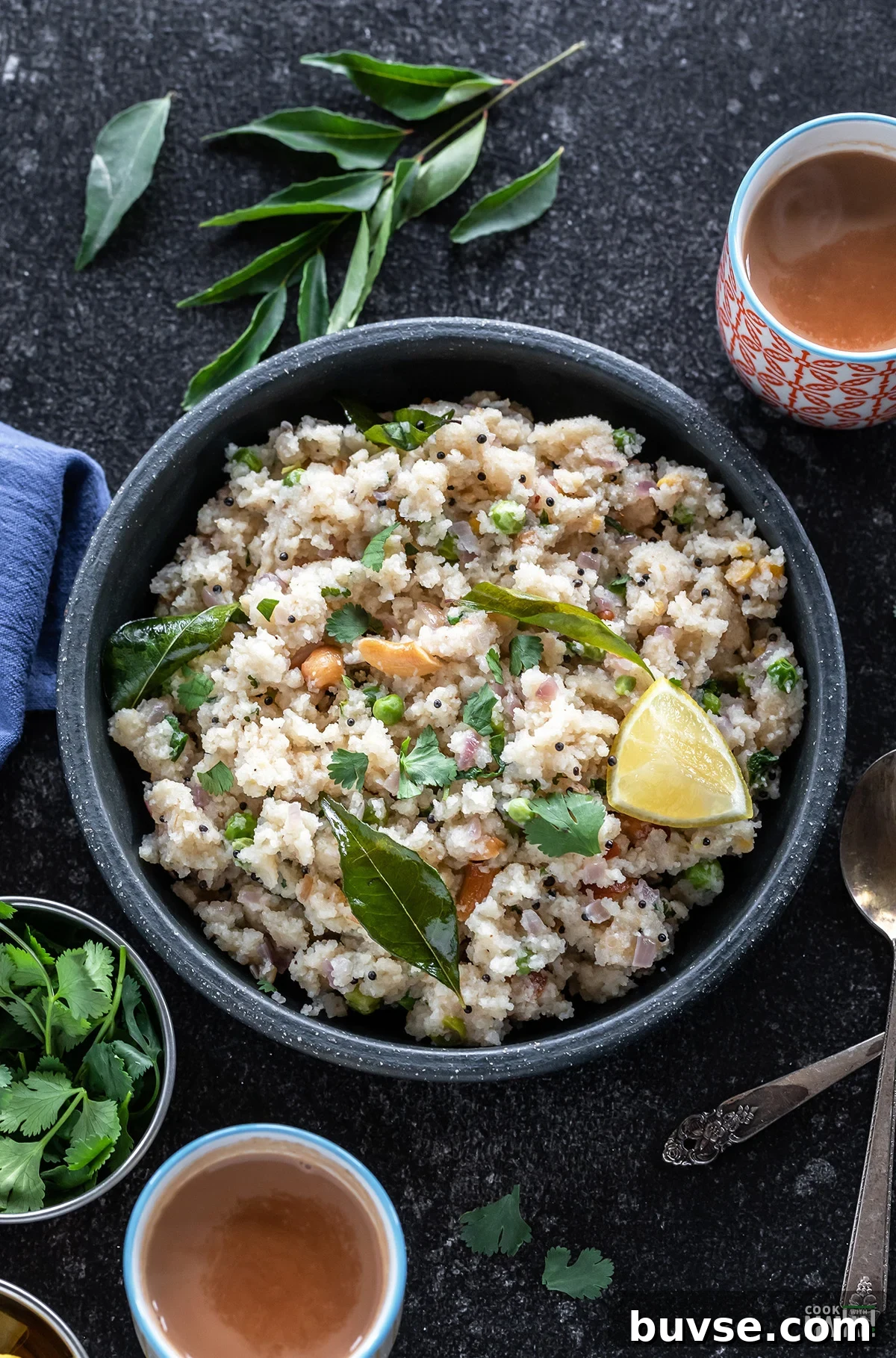
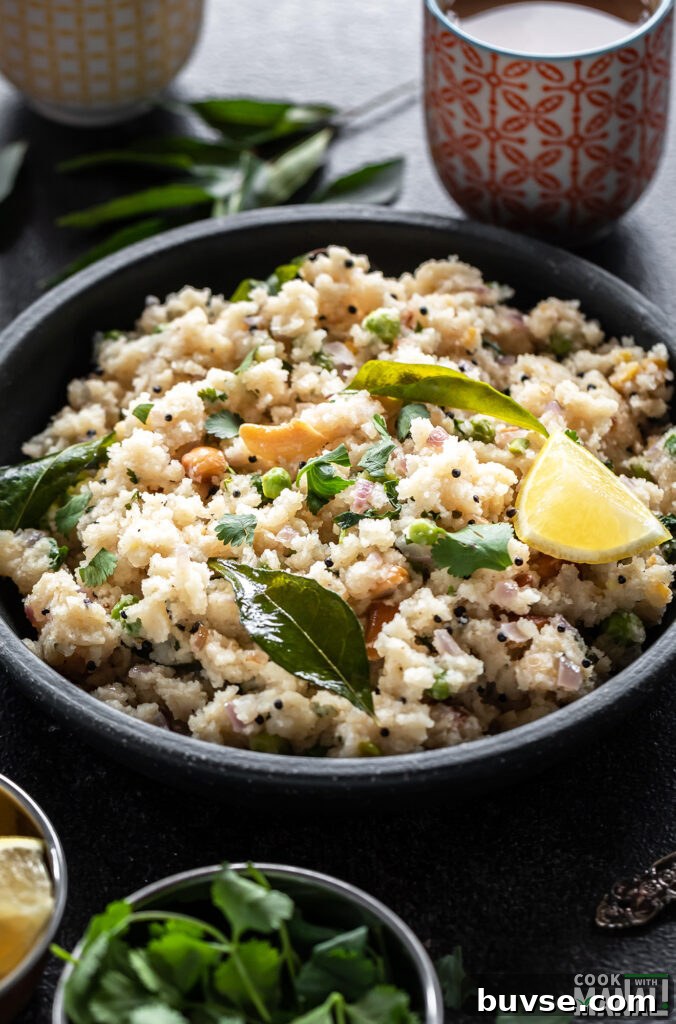
Rava Upma, commonly called Upma, is a classic Indian breakfast porridge made from semolina (sooji or rava) and vegetables. It’s savory, filling and comforting—perfect with a cup of chai or filter coffee. This versatile dish is quick to make and can easily be made vegan by skipping the ghee at the end.
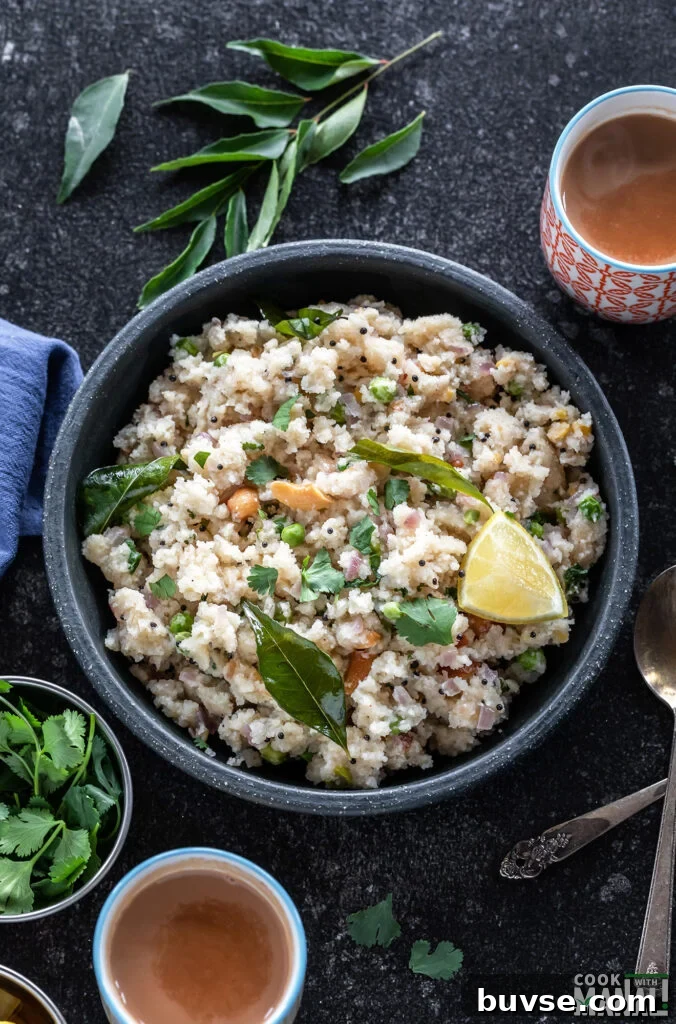
On busy mornings I often reach for simple breakfasts like avocado toast or banana oatmeal. But when I want something warm and satisfying, Upma or Poha are my go-to Indian options. Upma is hearty, easy to customize and can be adapted with different vegetables or grains depending on what you have on hand.
What is Upma?
Upma is a traditional Indian breakfast made with semolina (sooji or rava). Though more common in South India, it’s enjoyed across the country in many variations. The most familiar version uses semolina, but you can also find upma made with vermicelli (semiya), oats, quinoa, or even bread. The basic contrast to a sweet semolina pudding is that upma is savory: it combines toasted semolina with aromatics, spices, vegetables and a little fat.
Rava Upma is often served with coconut chutney and a hot cup of filter coffee. As a child I grew up eating upma at least once a week—sometimes with ketchup, sometimes with chutney. Today I prefer it with fresh cilantro and a squeeze of lemon.
Ingredients
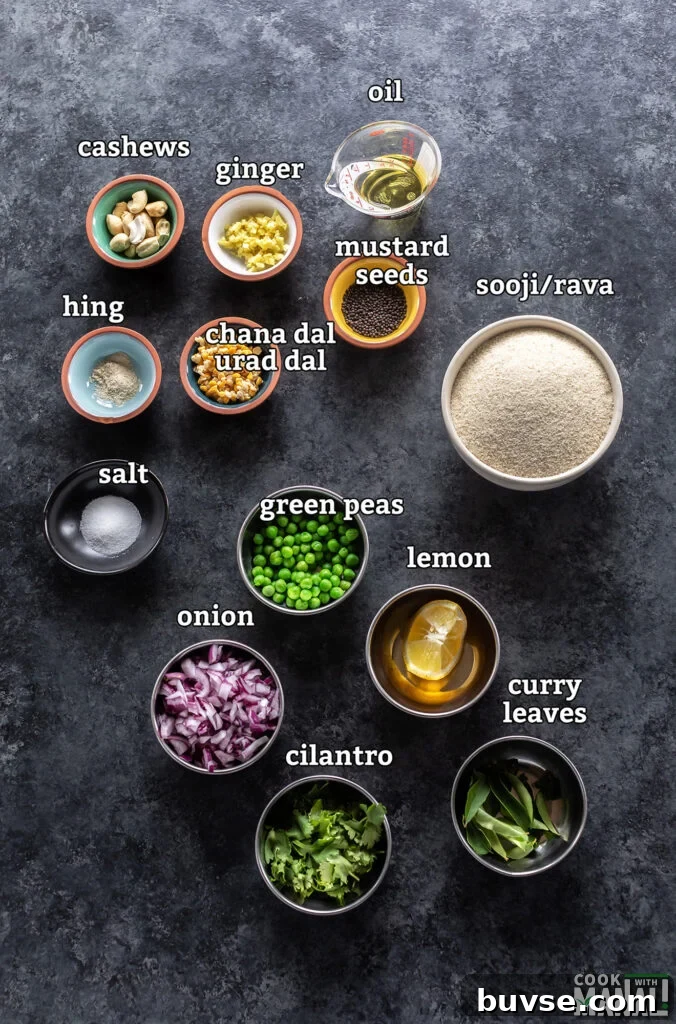
- Sooji / Rava (semolina) – coarse semolina is typically used for upma for a pleasant texture.
- Oil and optional ghee – for tempering and finishing.
- Seasonings – mustard seeds, hing (asafetida), chana dal and urad dal add texture and flavor.
- Aromatics – fresh ginger, green chili, red onion and curry leaves.
- Vegetables – peas are common; you can add carrots, bell peppers, cauliflower or other finely chopped vegetables.
- Cashews – optional, for crunch.
- Cilantro and lemon – for freshness and acidity.
Getting the Water to Sooji Ratio Right For Upma
Texture is everything with upma. If it turns out too dry it won’t have that soft, restaurant-style mouthfeel. While many sources suggest a 1:2 ratio (sooji to water), I find a 1:3 ratio consistently gives a soft, melt-in-the-mouth upma. In other words, for every 1 cup of semolina use 3 cups of water.
How To Make Rava Upma
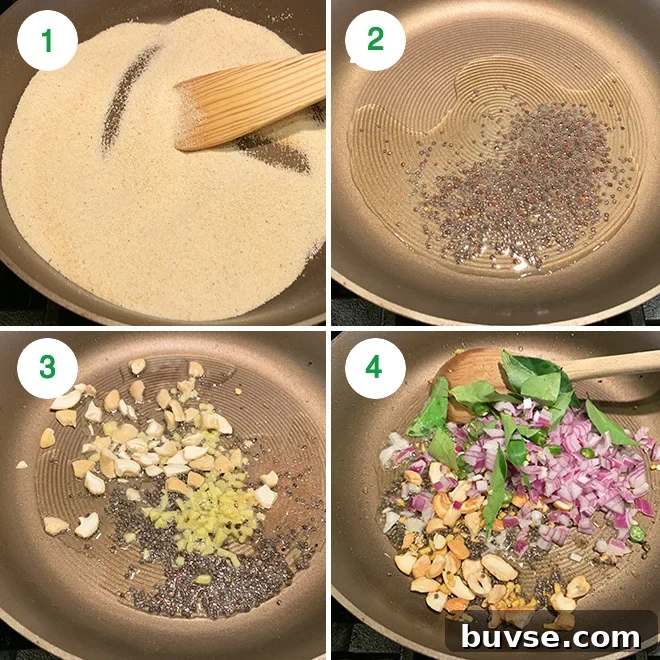
- Roast 1 cup sooji/rava on medium heat until fragrant, about 5–6 minutes. Stir continuously and avoid browning. Transfer to a bowl when done. Roasting can be done ahead to save time.
- In the same pan, heat 1½ tablespoons oil over medium heat. Add 1 teaspoon mustard seeds and let them pop.
- Add a pinch of hing, 7–8 broken raw cashews, 1 teaspoon chana dal and 1 teaspoon urad dal (these can be soaked for 10 minutes beforehand), and 1 teaspoon finely chopped ginger. Sauté until the dals and cashews start to color, about 1 minute.
- Add 1 small finely chopped red onion, 1 chopped green chili and about 12 curry leaves. Cook for 2–3 minutes until the onion softens.
- Add 3 tablespoons green peas (if using frozen, soak in warm water for 10 minutes before adding). Cook for about 2 minutes to remove the raw smell.
- Pour in 3 cups (24 oz) water, 3/4 teaspoon salt (or to taste), and 1 tablespoon chopped cilantro. Add 1 teaspoon lemon juice. You can add 1/2 teaspoon sugar if you prefer a slight sweetness—this is optional.
- Bring the water to a rolling boil, then add the roasted sooji gradually, a little at a time, stirring in one direction with a wooden spatula to avoid lumps. Continue until all the semolina is incorporated.
- Cover the pan, reduce heat to low, and let the upma rest for 2 minutes. Remove the lid, add 1 teaspoon ghee (optional) for extra flavor, mix gently, and cover briefly again.
- Fluff with a fork and serve hot with coconut or peanut chutney and lemon wedges.
Make Ahead Options For Upma
Upma tastes best fresh, but you can speed up weekday mornings by pre-roasting the sooji. Pre-roasted semolina saves 5–6 minutes. Leftovers reheat well in a microwave or on the stovetop—add a splash of water while reheating and use a potato masher or fork to break up clumps for a consistent texture.
Manali’s Expert Tips
- Use a 3:1 water-to-sooji ratio for soft, restaurant-style upma.
- Don’t skimp on fat – use oil generously and finish with a little ghee for flavor if not vegan.
- Add more vegetables like carrots, bell peppers or finely chopped cauliflower for extra color and nutrition.
- Add semolina gradually (1–2 tablespoons at a time) while stirring to prevent lumps.
- Finish with lemon juice to brighten the flavors just before serving.
- Serve immediately—upma is at its best when warm and freshly made.
Different Upma Recipes
If you want a variation, try substituting semolina with quinoa for a higher-protein, gluten-free quinoa upma. Bread upma is another quick option that makes great use of leftover bread. You can also make oats upma, rava upma with mixed vegetables, or vermicelli upma depending on preference and pantry staples.
This post has been updated from the recipe archives, first published in January 2019.
Upma Recipe (How to Make Rava Upma)
Servings: 3 | Prep time: 5 mins | Cook time: 20 mins | Total time: 25 mins
Ingredients
- 1 cup sooji / rava (semolina)
- 1½ tablespoons oil (or ghee)
- 1 teaspoon mustard seeds
- Generous pinch hing (asafetida)
- 7–8 raw cashews, broken
- 1 teaspoon chana dal (soaked 10 mins)
- 1 teaspoon urad dal (soaked 10 mins)
- 1 teaspoon chopped ginger
- 1 small red onion, chopped (about 70 g)
- 1 green chili, chopped (or to taste)
- 12 curry leaves
- 3 tablespoons green peas (frozen or fresh)
- 3 cups water (24 oz)
- 3/4 teaspoon salt (or to taste)
- 1 tablespoon chopped cilantro, plus more to garnish
- 1 teaspoon lemon juice
- 1 teaspoon ghee (optional)
- Lemon wedges, to serve
Instructions
- Roast the sooji on medium heat for 5–6 minutes until fragrant. Transfer to a bowl.
- Heat oil in the pan, add mustard seeds and let them pop. Add hing, cashews, chana dal, urad dal and ginger; sauté until light golden.
- Add onion, green chili and curry leaves; cook until onions soften.
- Add peas and cook for 1–2 minutes. Pour in water, then add salt, cilantro and lemon juice. Bring to a boil.
- Add roasted sooji gradually while stirring to prevent lumps. When all sooji is absorbed, cover, lower heat and cook 2 minutes.
- Turn off heat, add ghee if using, mix, cover briefly. Fluff with a fork and serve hot with chutney and lemon wedges.
Notes
- Skip ghee to keep the dish vegan.
- Use a 3:1 water-to-sooji ratio for the best texture.
- Add a variety of vegetables for more flavor and nutrition.
- Don’t skip the cashews—they add a pleasant crunch.
Nutrition (approx.)
Calories: 340 kcal | Carbohydrates: 50 g | Protein: 9 g | Fat: 10 g | Fiber: 5 g