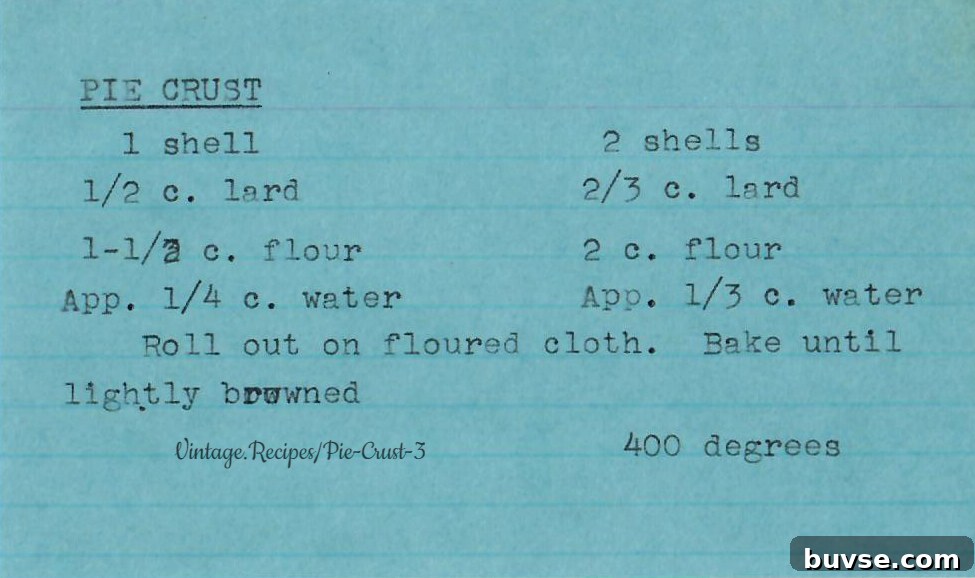
Ingredients
One Shell
1/2 cup lard
1 1/3 cup flour
Approximately 1/4 cup water
Two Shells
2/3 cup lard
2 cups flour
Approximately 1/3 cup water
Method
This simple lard pastry creates a tender, flaky pie shell with minimal fuss. Start with cold lard and cool water to keep the fat from melting into the flour; that cold fat is what creates the flaky layers during baking. Measure ingredients accurately and have a lightly floured cloth or work surface ready for rolling.
Combine the flour and the lard in a mixing bowl. Use a pastry cutter, two knives, or your fingertips to cut the lard into the flour until the mixture resembles coarse crumbs with some pea-sized pieces remaining. The texture should be uneven—this irregularity is what helps produce a crisp, layered crust. Add the water gradually, a tablespoon at a time, and bring the dough together just until it holds. Avoid overworking the dough; too much handling develops gluten and will make the crust tough.
If you are making one shell, shape the dough gently into a single disk, wrap it in plastic or cover it with a bowl, and let it rest for a short while in the refrigerator if you have time. For two shells, divide the dough into two portions, form each into a disk, and chill. Chilling firms the lard, which helps prevent shrinking and preserves the flakiness when you roll out the pastry.
Lightly flour your cloth or work surface and roll out the dough from the center outward with a rolling pin. Rotate the dough periodically so it expands evenly and to help maintain a round shape. For a bottom crust, drape the rolled pastry gently into a pie pan, pressing it into the corners without stretching. Trim any excess, then crimp or finish the edge as you prefer. If you are making a double-crust pie, roll the second disk to cover the filling and trim and seal the edges well. For tarts or galettes, follow the same rolling technique but shape as desired.
To bake, follow the original guidance: bake at 400 degrees until the crust is lightly browned. Watch the crust for even coloring—if the edges brown faster than the center, protect them with a strip of foil or a pie shield. A lightly browned surface indicates the pastry has cooked through and the lard has created a flaky texture.
There are a few simple techniques to improve results. For a crisper bottom, prebake or blind-bake the bottom shell briefly before adding a wet filling. Docking (pricking the base with a fork) helps steam escape and keeps the crust flat. If the recipe calls for a shiny, golden top, you can brush the surface with an egg wash or a little milk before baking; this will encourage even browning and a polished appearance.
Storage and reuse: Unbaked dough can be wrapped and refrigerated for a day or frozen for longer storage. Thaw frozen dough in the refrigerator before rolling. Baked shells keep well at room temperature for a short time, and refrigerated leftovers should be stored in an airtight container to preserve crispness. Reheat gently in an oven or toaster oven to refresh the texture instead of using a microwave, which can make the pastry soggy.
Variations and substitutions: Lard is traditional and yields excellent flakiness, but you can experiment with part lard and part butter or vegetable shortening if you prefer different flavor notes or a slightly different texture. When making substitutions, keep the ratios similar and maintain cold ingredients. For added flavor, a pinch of salt or a teaspoon of sugar can be mixed into the flour depending on whether you are preparing a savory or sweet pie.
Troubleshooting: If the crust turns out tough, you likely overworked the dough or added too much water. If it shrinks during baking, the dough may have been stretched when fitted into the pan or insufficiently chilled. If the center is undercooked while the edges are done, reduce oven temperature slightly or shield the edges and give the center a bit more time.
This straightforward lard-based pastry is ideal for rustic pies, savory pot pies, and classic fruit-filled desserts. With a little practice, you’ll develop a feel for the right dough texture and rolling pressure, and you’ll reliably produce flaky, flavorful pie shells every time.