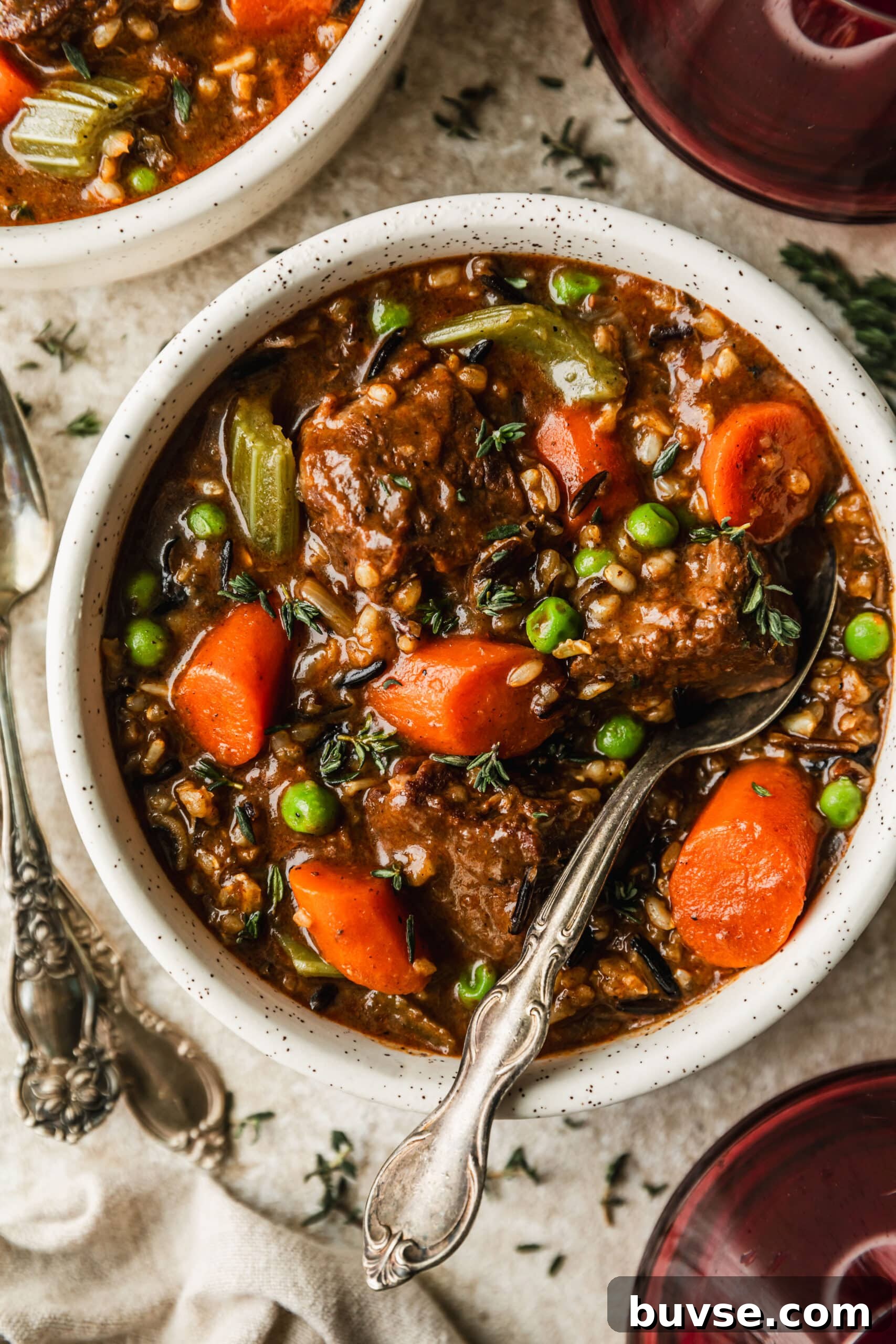
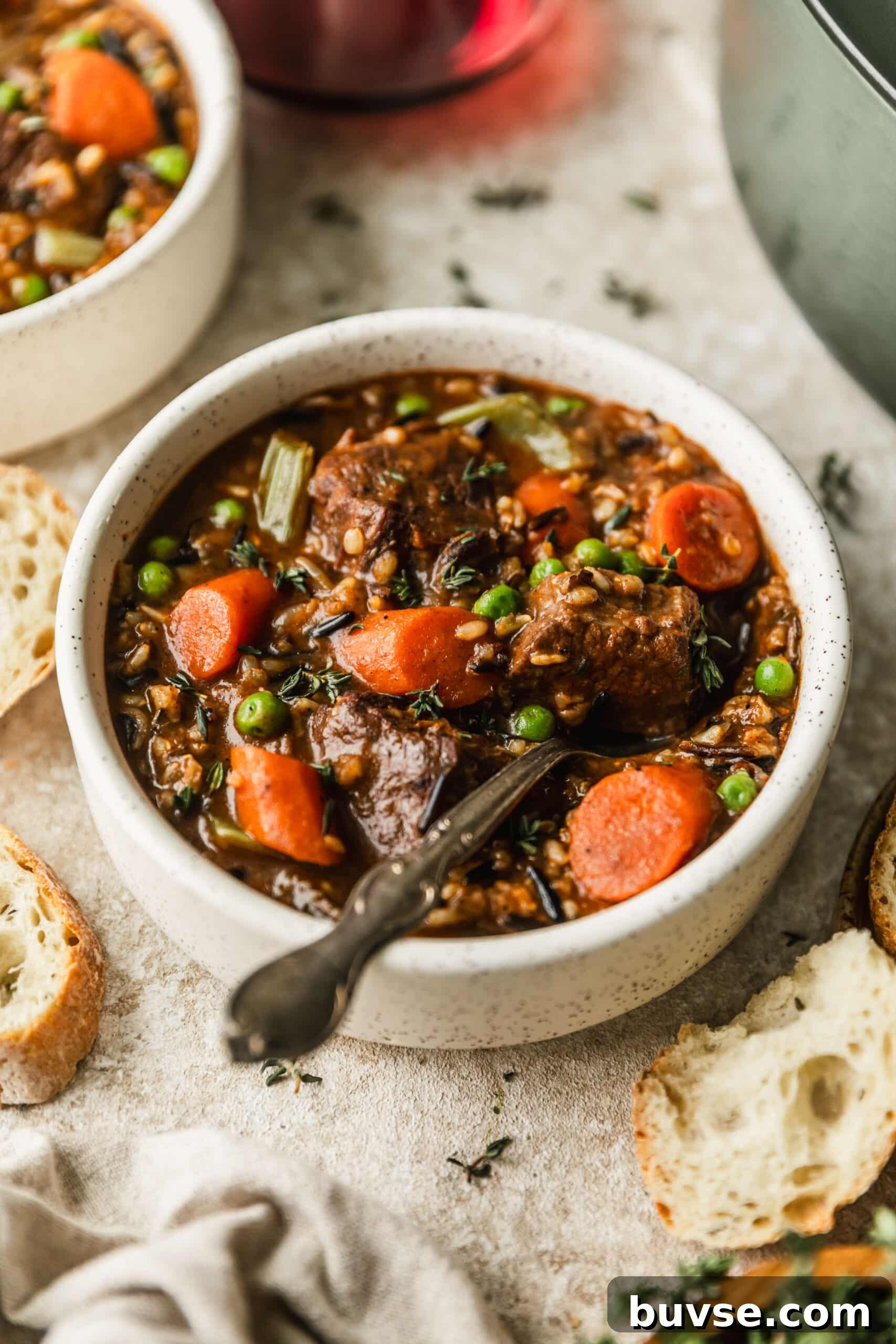
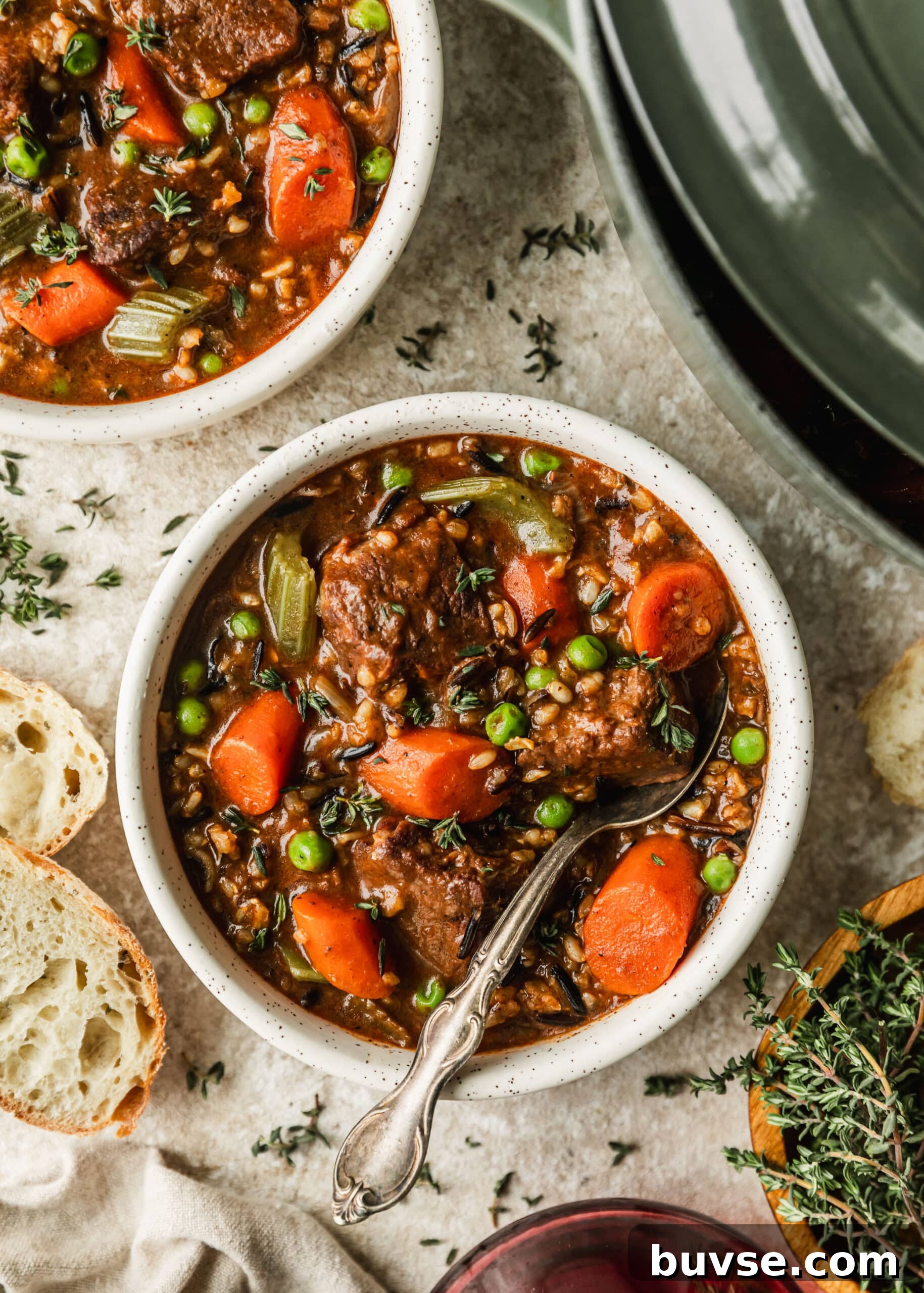
I could eat this brisket beef stew every single day. Loaded with wild rice, vegetables, fresh herbs, and a savory red wine broth, it’s cozy, decadent, and richly flavorful. Save this recipe for dinner parties, family dinners, or chilly nights in—it’s comforting, simple to make, and stores well for leftovers.
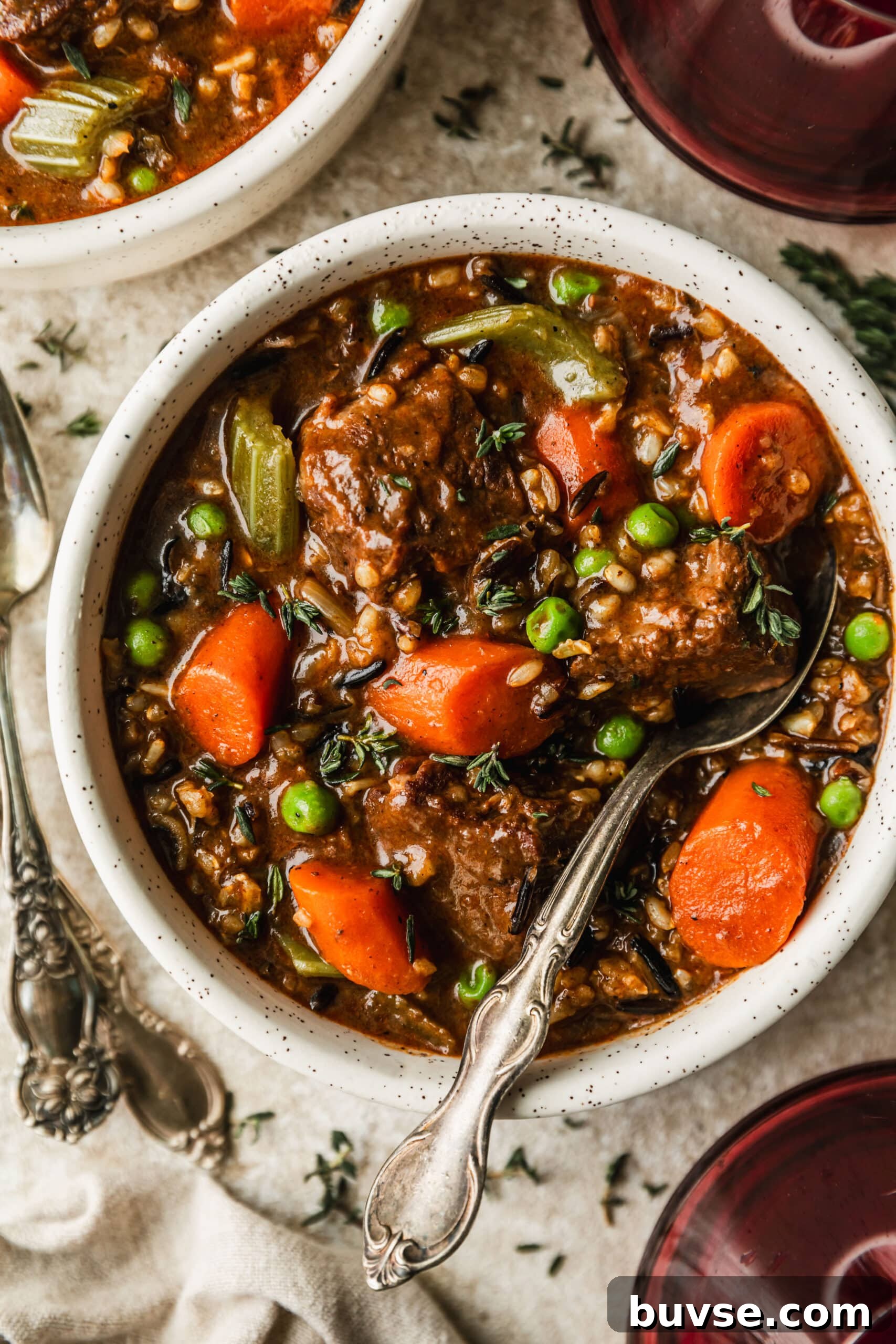
Reno has felt like an endless, slushy winter lately. To shake off the gloom I headed to San Francisco for the weekend—shopping for pottery and eating lots of Chinese food—but before I left I made this stew to brighten cold mid-day lunches at home. When the weather is raw I gravitate toward slow-simmered beef dishes such as short rib beef bourguignon or a pot roast with red wine and shallots; this brisket stew sits comfortably in that same comforting category.
Back when I was in culinary school we braised and barbecued brisket frequently. Finding a piece of leftover brisket in the freezer inspired this stew: after a long, gentle simmer the meat becomes super tender, juicy, and deeply flavored. What sets this version apart is the wild rice—its chewy, nutty character adds texture and earthiness you don’t usually find in a classic stew, making every bowl more satisfying.
Use brisket flat
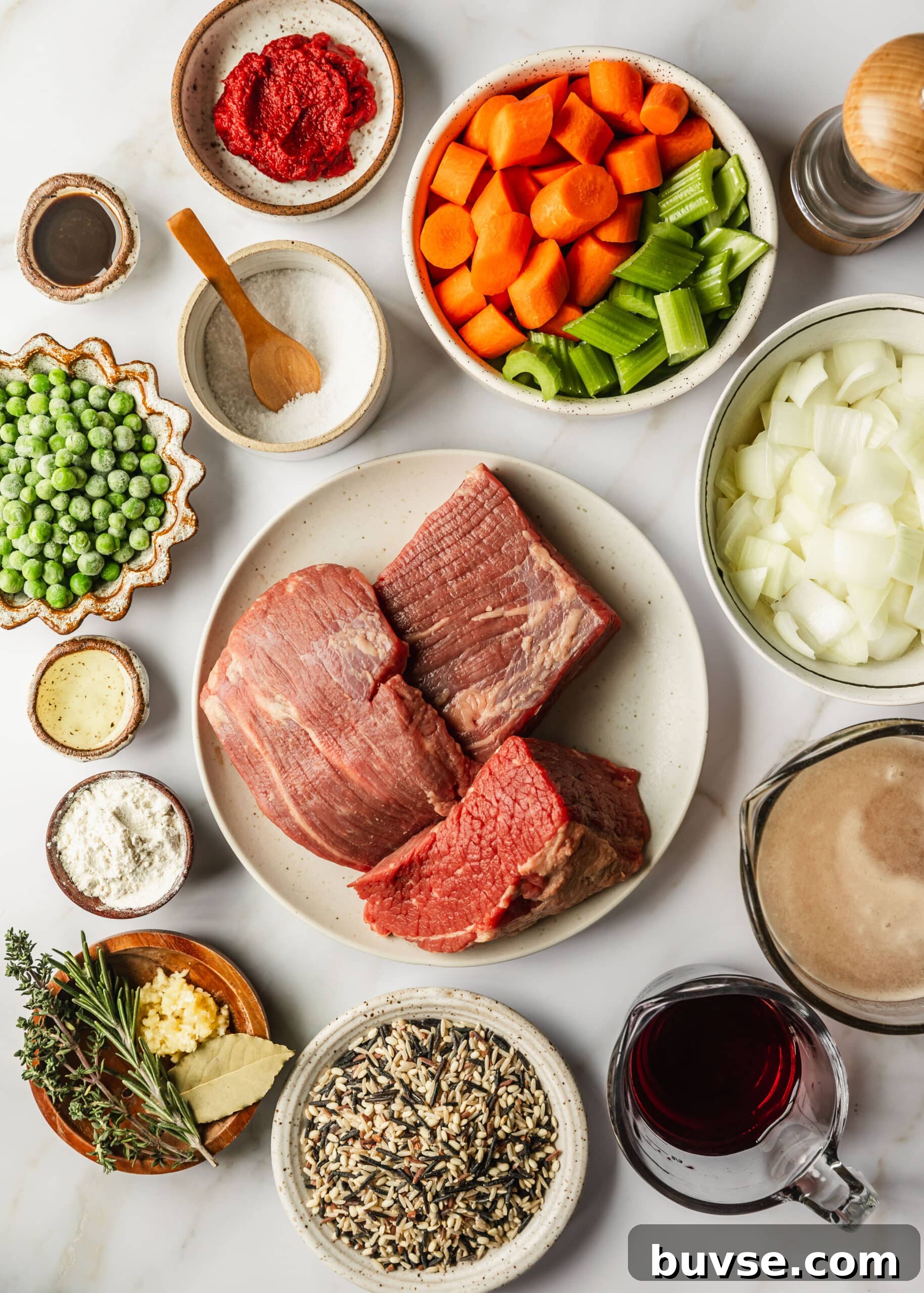
Look for brisket flat at the butcher or grocery meat counter. The flat cut is leaner and holds up well to a long braise; avoid the point if you want to stew the meat instead of shredding it for barbecue. For this recipe you’ll also need kosher salt, freshly ground black pepper, neutral oil, flour, unsalted butter, onions, carrots, celery, garlic, rosemary, thyme, a bay leaf, tomato paste, red wine, good-quality beef broth, Worcestershire sauce, wild rice, and frozen peas (optional).
If you can only find a very large brisket, ask the butcher to portion it for you, or vacuum-seal and freeze the extra for future recipes.
Sear the brisket
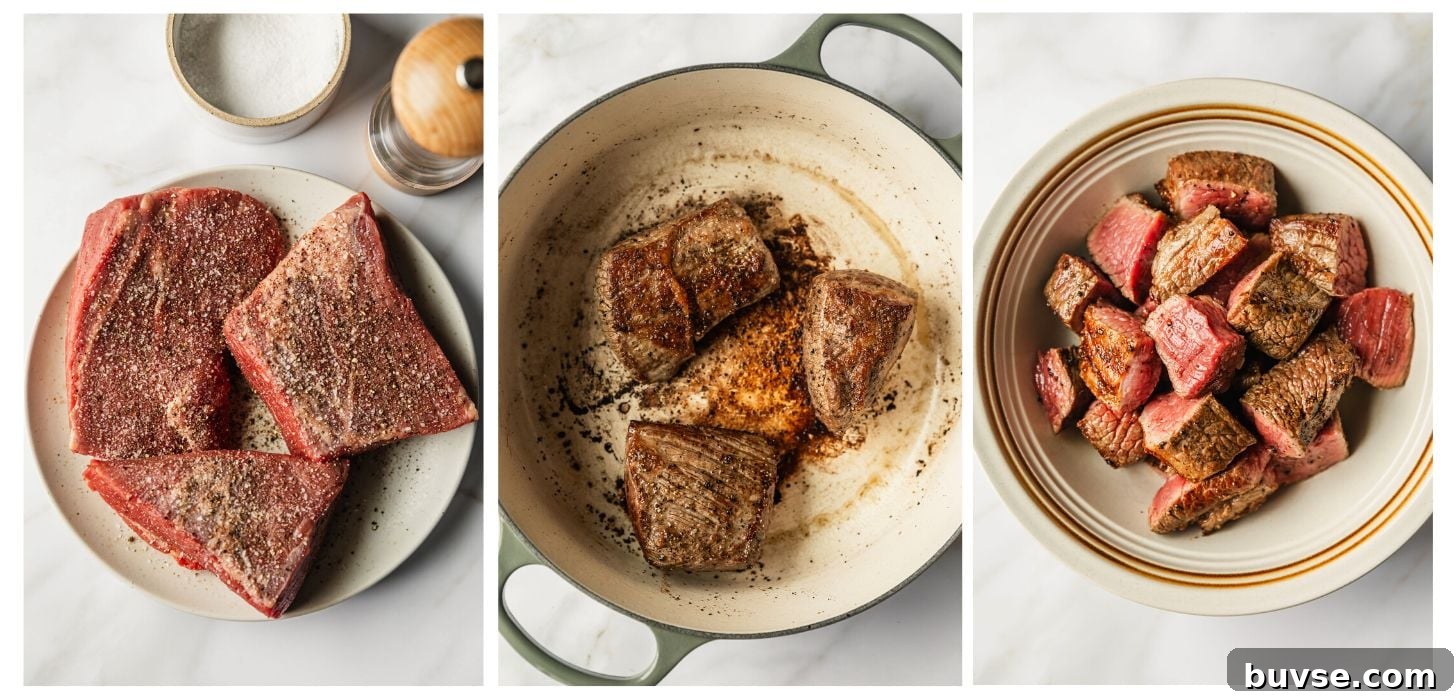
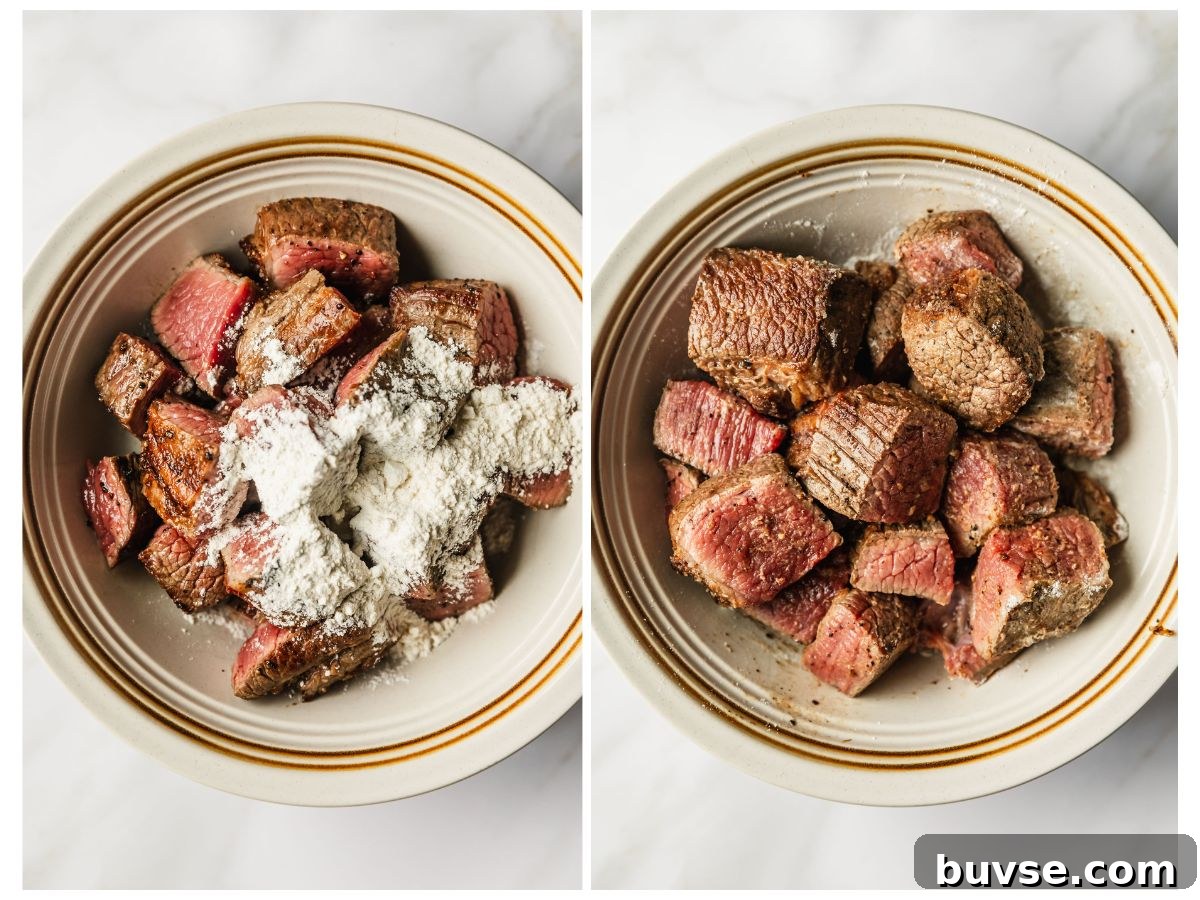
I prefer searing whole steaks before cutting them into cubes. Searing steaks keeps the meat juicier and creates a better crust than searing many small cubes in batches, which can overcook the beef and takes a long time.
Make the stew
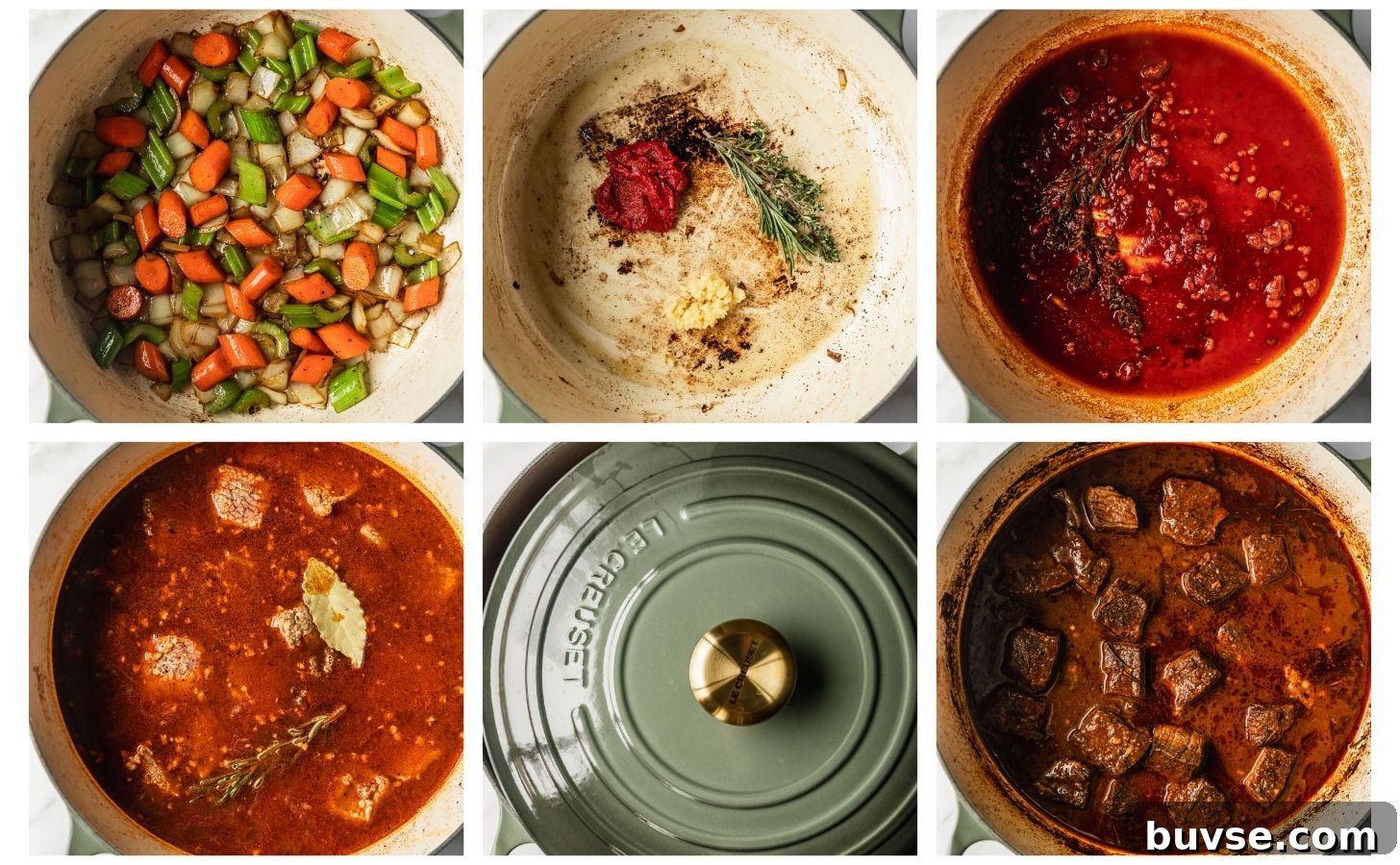
Keeping the meat moist during braising is essential so it becomes fork-tender and juicy. If the liquid reduces too much in the oven, add more beef broth as needed. Braise gently and check after the minimum time; it may need a bit longer depending on the cut.
Add the rice & veggies
A heavy Dutch oven is ideal for braising: the thick cast iron retains heat and moisture for consistent, even slow cooking that yields very tender meat.
Slow cooker instructions
This stew can be made in a slow cooker if needed. It may not develop quite as deep a richness as oven braising, but it’s a convenient option when you’re out for the day.
- Follow the recipe through reducing the red wine, then transfer the wine-tomato mixture to the slow cooker.
- Add seared brisket, sautéed vegetables, beef broth, Worcestershire sauce, bay leaf, and wild rice to the slow cooker. Stir to combine.
- Cover and cook on HIGH for 6–7 hours, until the beef is fork-tender.
- Stir in the frozen peas at the end and heat until warmed through.
Make-ahead & refrigerating
This stew is an excellent make-ahead meal. Flavors often deepen after a day in the fridge. For large batches, cool to room temperature for about an hour, transfer to airtight containers, and refrigerate for up to 4 days. Reheat gently on the stove, adding a splash of broth if the stew has thickened too much.
If you make this recipe, please leave a star rating and review — feedback is always appreciated.
Brisket Beef Stew with Wild Rice & Vegetables
I could eat this brisket beef stew every single day. Loaded with wild rice, vegetables, fresh herbs, and a savory red wine broth, it’s cozy, decadent, and full of flavor. Perfect for dinners, leftovers, and gatherings.
Yield: 6 servings
Prep Time: 30 mins | Cook Time: 4 hrs | Total Time: 4 hrs 30 mins
Ingredients
- 2 pounds brisket, flat cut (about 900 grams)
- Kosher salt and freshly-ground black pepper
- 2 Tablespoons neutral oil (30 ml)
- 2 Tablespoons all-purpose flour (15 g)
- 1 Tablespoon unsalted butter (14 g)
- 1 large sweet onion, diced (about 2 1/2 cups / 280 g)
- 5 large carrots, peeled and cut into 1-inch chunks (about 1 1/2 cups / 215 g)
- 3 celery stalks, cut into 1/2-inch chunks (about 1 1/4 cups / 140 g)
- 1 Tablespoon minced garlic (about 4 large cloves)
- 1 sprig fresh rosemary
- Small bunch fresh thyme
- 2 Tablespoons tomato paste (about 40 g)
- 1/2 cup dry red wine (120 ml)
- 6 cups low-sodium beef broth, plus more as needed (1.4 L)
- 1 Tablespoon Worcestershire sauce (15 ml)
- 1 bay leaf
- 1 cup wild rice, rinsed well (180 g)
- 3/4 cup frozen peas (about 130 g), optional
Equipment
- Heavy Dutch oven or large oven-safe pot with lid
- Chef’s knife and cutting board
- Tongs
- Fine-mesh sieve for rinsing rice
Instructions
Sear the beef
- Trim the fat cap on the brisket to about 1/4-inch thickness and discard excess fat. Cut the brisket into 3–4 steaks roughly 1½–2 inches thick. Pat dry and season generously with salt and pepper.
- Heat oil in a large Dutch oven over medium-high heat until shimmering. Sear the steaks until deeply browned, about 2–3 minutes per side, working in batches to avoid overcrowding. Let the steaks rest about 10 minutes.
- Slice the rested steaks into 1–2 inch cubes. Toss the beef cubes with the flour until the flour is mostly dissolved; set aside.
Make the stew
- Preheat the oven to 300°F (150°C). Return the Dutch oven to the stovetop and melt the butter over medium-high heat. Add the onions, carrots, celery, and a large pinch of salt. Sauté briefly until the edges begin to brown. Transfer the vegetables to a bowl and refrigerate for later.
- Reduce heat to medium. Add garlic, rosemary, thyme, and tomato paste. Cook, stirring constantly, until the tomato paste darkens and the herbs release their aroma.
- Deglaze the pot with the red wine, scraping up browned bits, and simmer until the wine is reduced by half.
- Add beef broth, Worcestershire sauce, bay leaf, and the seared brisket with any accumulated juices. Stir and bring to a gentle boil.
- Remove from the stove, cover the pot (tilt the lid slightly so steam can escape), and transfer to the oven. Braise for 2½–3 hours, or until the brisket is fork-tender. If not tender after 3 hours, continue cooking and check every 30 minutes.
Add the rice & veggies
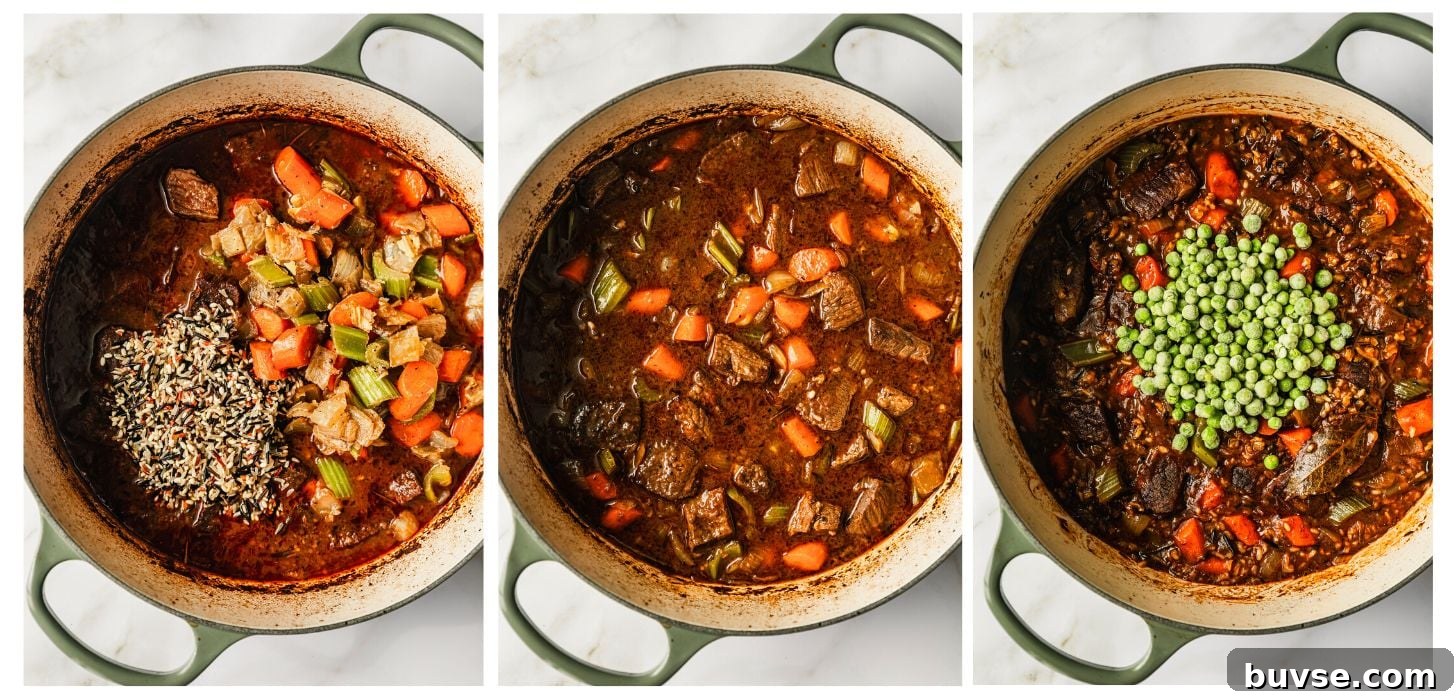
- When the brisket is tender, move the pot back to the stovetop. If the liquid has reduced too much, add another cup of beef broth.
- Rinse the wild rice in a fine-mesh sieve until water runs clear. Add the rinsed rice and the reserved vegetables (and any juices) to the pot.
- Bring to a boil, then cover and reduce heat to low. Simmer gently until the wild rice is tender, about 45–50 minutes (follow package directions if different).
- Stir in frozen peas right before serving and heat until warmed through. Discard the bay leaf and herb stems, season to taste with salt and pepper, and serve.
Notes
- If you only find very large briskets, ask the butcher to trim and portion it for you, or freeze extra portions for another time.
- Searing steaks before cutting into cubes yields a better crust and juicier meat than searing many small cubes.
- Coating the beef cubes thoroughly in flour helps thicken the broth without creating lumps. Make sure the flour is mostly dissolved into the meat.
- Braise until fork-tender; times vary from about 2 hours up to 3½ hours depending on the meat and oven.
- For a soupier stew, add more beef broth, but avoid diluting the flavor too much.
- Add the reserved sautéed vegetables during the final 45 minutes of cooking so they stay tender but not mushy.
Nutrition (approximate)
Serving: 1 | Calories: 481 kcal | Carbohydrates: 34.6 g | Protein: 49.9 g | Fat: 13.8 g | Sodium: 379 mg | Fiber: 4.8 g
Did you make this recipe? Tag @sundaytable.co on Instagram to share your photos and feedback.
Originally posted on October 10, 2014.