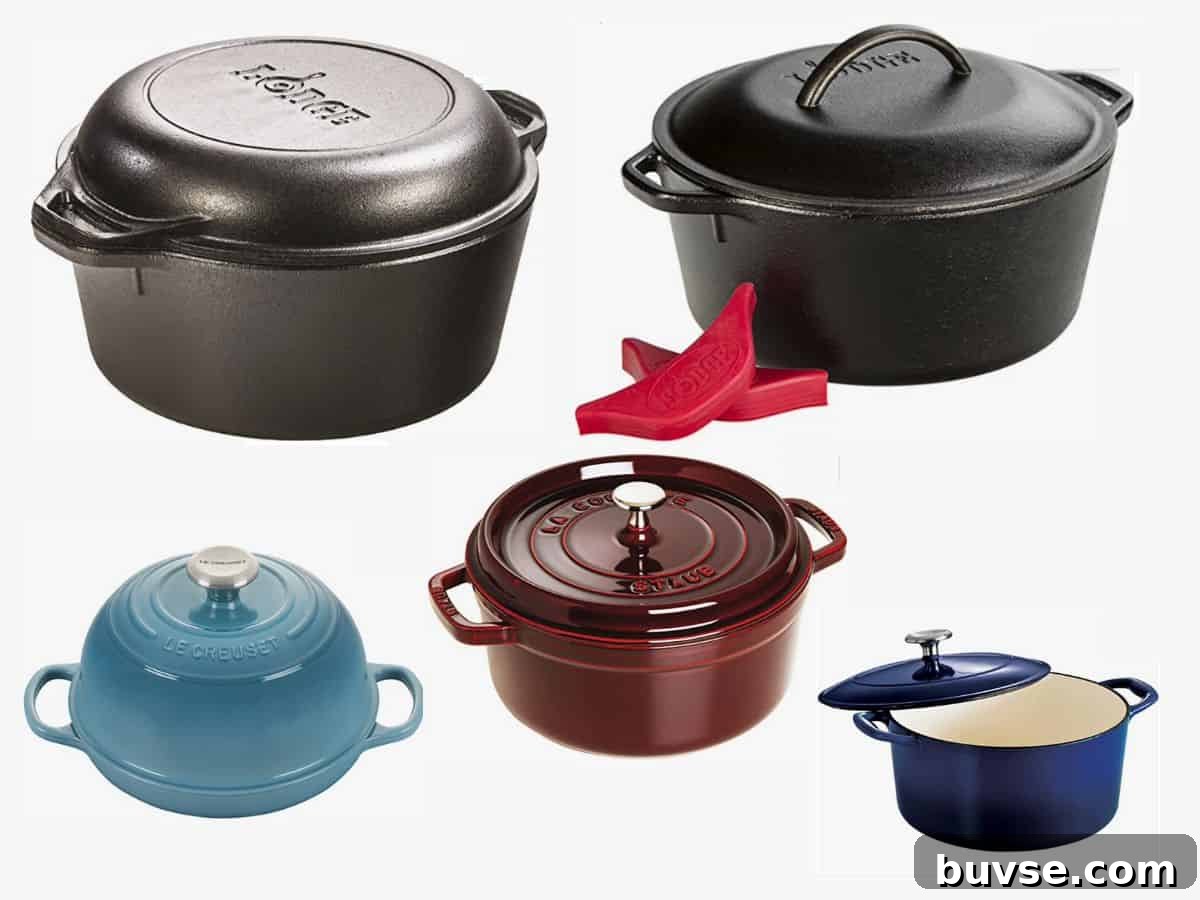
Best Dutch ovens for making bread: Want a loaf with a crisp, golden crust and a soft, tender crumb? A good Dutch oven can transform homemade bread into an artisan-style rustic loaf. With many options available, this guide helps you choose the best Dutch oven for bread baking—practical, durable, and worth your investment.
Baking in a Dutch oven produces consistent results: the heavy pot traps steam, maintains even heat, and creates the high temperatures needed for excellent oven spring. If you love rustic, crusty bread, a quality Dutch oven is one of the most useful tools you can add to your kitchen.
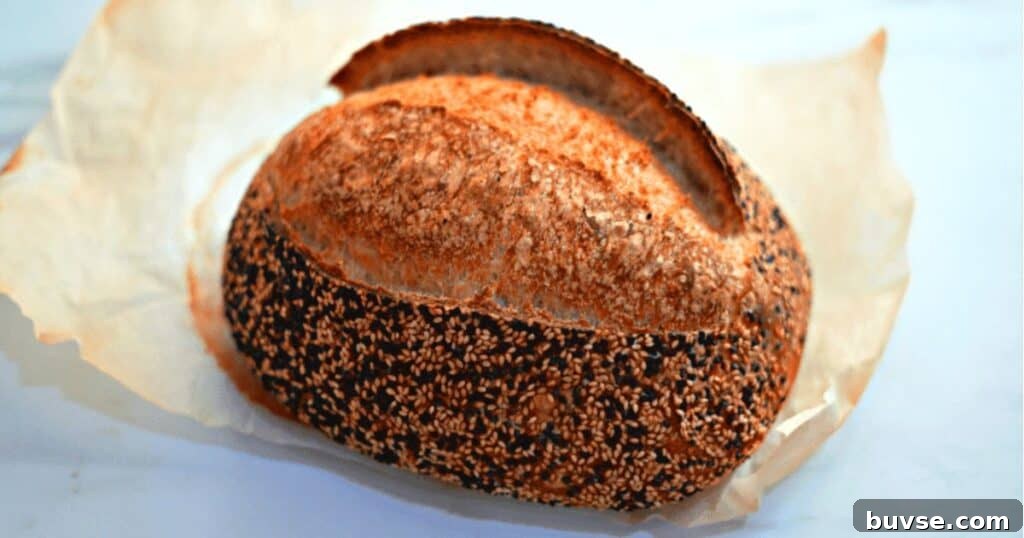
Because Dutch ovens vary in material, size, and design—and because they can be an investment—it helps to understand the key features to look for before buying. Below we explain what makes a Dutch oven ideal for baking bread and highlight several top recommendations for different budgets and preferences.
What is a Dutch Oven?
A Dutch oven is a heavy cooking pot with thick walls, typically made of cast iron or enameled cast iron, and a tight-fitting lid. It has a flat bottom and deep sides, and it’s made to retain heat and moisture. Dutch ovens are extremely versatile: you can brown, bake, braise, roast, and simmer in them.
Different Types of Dutch Ovens
Traditional Dutch ovens are cast iron, but you’ll also find enameled cast iron, ceramic, and stainless steel versions. For bread baking, the important differences relate to heat tolerance, maintenance, and moisture retention. The main types for bread baking are:
Cast Iron Dutch Oven
Uncoated cast iron is extremely durable, distributes heat evenly, and tolerates very high oven temperatures—ideal for bakery-style loaves. Raw cast iron requires seasoning and occasional maintenance to preserve the nonstick qualities.
Enameled Cast Iron
Enameled Dutch ovens have a porcelain coating inside and out. They don’t require seasoning and are easier to clean, but enamel can chip if handled roughly. If you choose an enameled pot for bread, confirm that the entire oven (including handles and knob) is rated for the high temperatures used in bread baking—typically up to about 450–480°F (230–250°C).
- The heavy walls and lids trap steam, which is crucial for a crisp crust and open crumb.
- Quality Dutch ovens can last for decades with proper care.
- They withstand high baking temperatures that promote good oven spring.
- Excellent heat retention and even heat distribution yield consistent baking results.
- Most models can move easily from stovetop to oven, and some work over campfires.
Why a Dutch Oven Is Ideal for Rustic and No-Knead Bread
The tight-fitting lid and thick walls mimic the humid, high-heat environment of a professional steam oven. The trapped steam softens the crust during the first part of baking, allowing the loaf to rise fully before the crust sets. The result: a crackly exterior with a moist, tender interior. With a Dutch oven you usually don’t need extra oil or special trays—the pot itself creates the conditions that produce artisan-style bread.
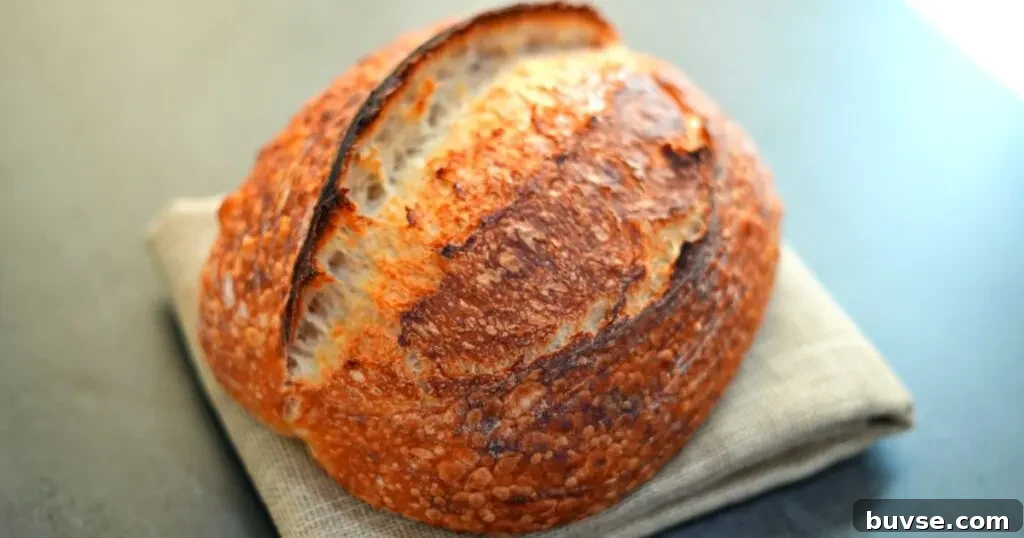
How to Pick the Right Dutch Oven for Baking Bread
Choosing the right Dutch oven depends on material, size, lid design, and whether you prefer a coated or uncoated interior. Here are practical tips to help you decide:
Best Material for Bread
Raw cast iron is often preferred by bakers because it tolerates higher temperatures and provides excellent heat retention. Enameled cast iron and ceramic can also work very well—just check temperature limits and durability.
What Size to Choose
For most home bakers, a 4.5 to 5.5 quart Dutch oven is the sweet spot. A five-quart pot comfortably accommodates a typical no-knead or sourdough boule and is easier to handle when hot. Larger pots (6–7 quarts) are great for stews and roasts but can be heavy and awkward when lifting in and out of the oven while hot.
Baking Bread in a Dutch Oven
While home ovens can produce sandwich bread or dinner rolls, recreating a bakery-style crust is much easier with a Dutch oven. The pot creates steam and retains heat so your loaf develops a deep golden crust and a tender crumb. If you don’t have a Dutch oven, you can simulate steam by placing a tray with ice cubes or a water-soaked towel on the oven floor, but a Dutch oven is the simplest way to achieve consistent results every time.
Below are five reliable Dutch ovens that perform well for bread baking, selected for their build quality, heat retention, lid fit, and size.
5 Best Dutch Ovens for Bread
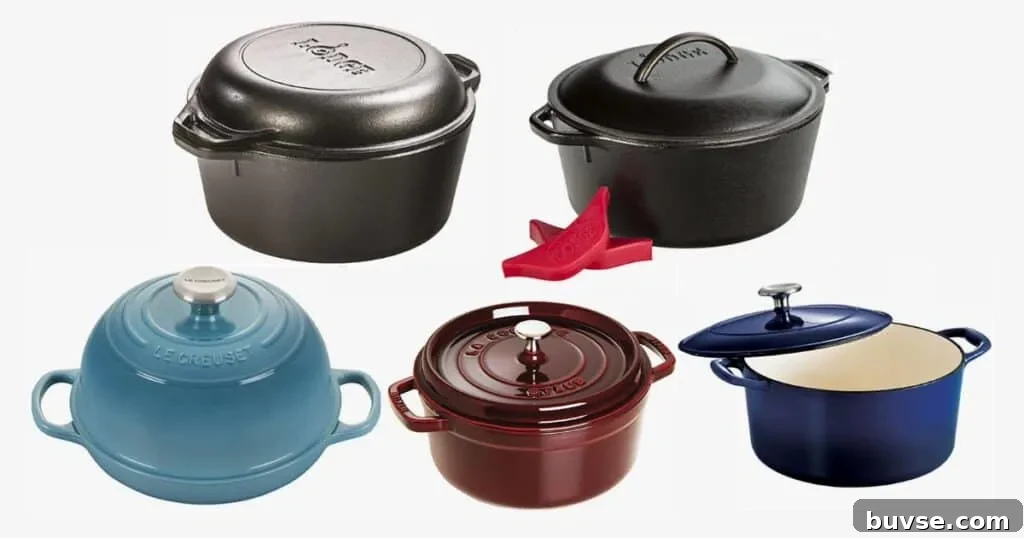
1. Lodge Cast Iron Dutch Oven, 5 qt
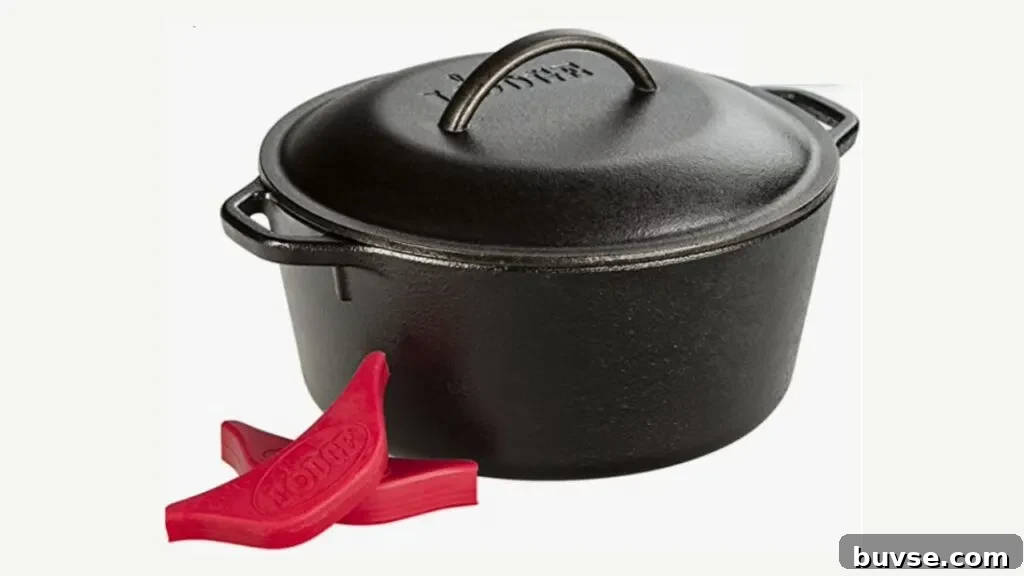
Key features: 5-quart capacity; heavy cast iron with a domed lid that re-condenses moisture; pre-seasoned surface; flat, thick bottom for even heating; removable silicone handle covers for safer handling.
Why it’s good for bread: Pre-seasoned cast iron gives excellent oven spring and a reliable crust. The domed lid returns moisture to the loaf during baking, and the flat bottom prevents hot spots.
| Pros | Cons |
| Pre-seasoned and durable | Requires regular care to maintain seasoning |
| Great heat distribution and retention | |
| Domed lid traps moisture |
2. Lodge Pre-Seasoned Double Dutch Oven with Loop Handles, 5 qt
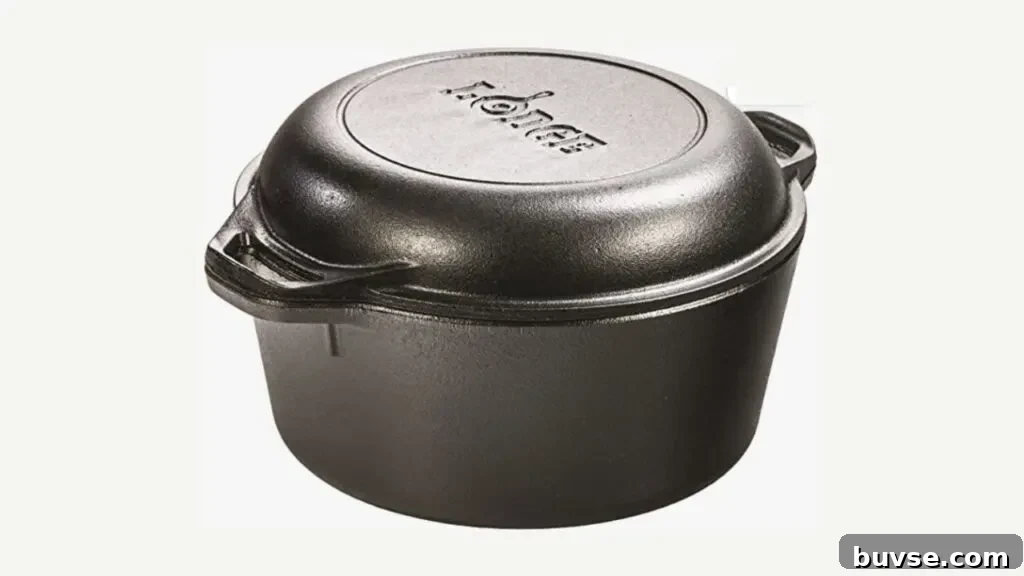
Key features: 5-quart capacity; seasoned with vegetable oil; sturdy loop handles and versatile lid design. This model is excellent for sourdough loaves and everyday baking, with a rugged construction suited to campfire or stovetop use as well.
| Pros | Cons |
| Ready to use out of the box | Seasoning can feel slightly rough initially |
| Works on all heat sources |
3. Staub Round Cocotte, 5.5 qt
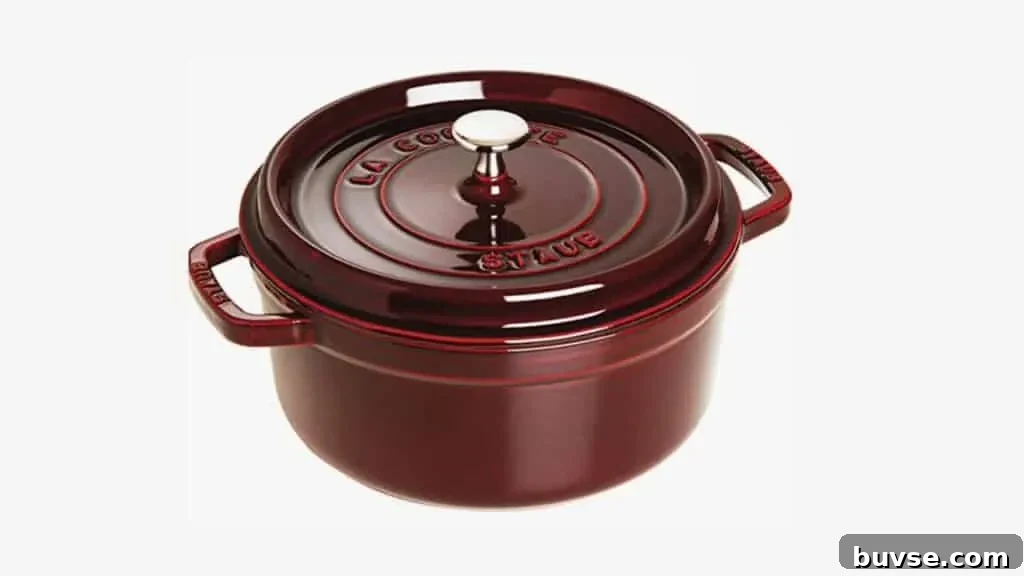
Key features: 5.5-quart enameled cast iron; smooth enamel interior for easy cleaning; excellent heat retention and a self-basting lid design that redistributes moisture. A premium option for serious home bakers who want consistent, reliable results.
| Pros | Cons |
| Even heat diffusion and moisture retention | Higher price point |
| Dishwasher-safe enamel |
4. Tramontina Enameled Cast Iron Dutch Oven, 5.5 qt
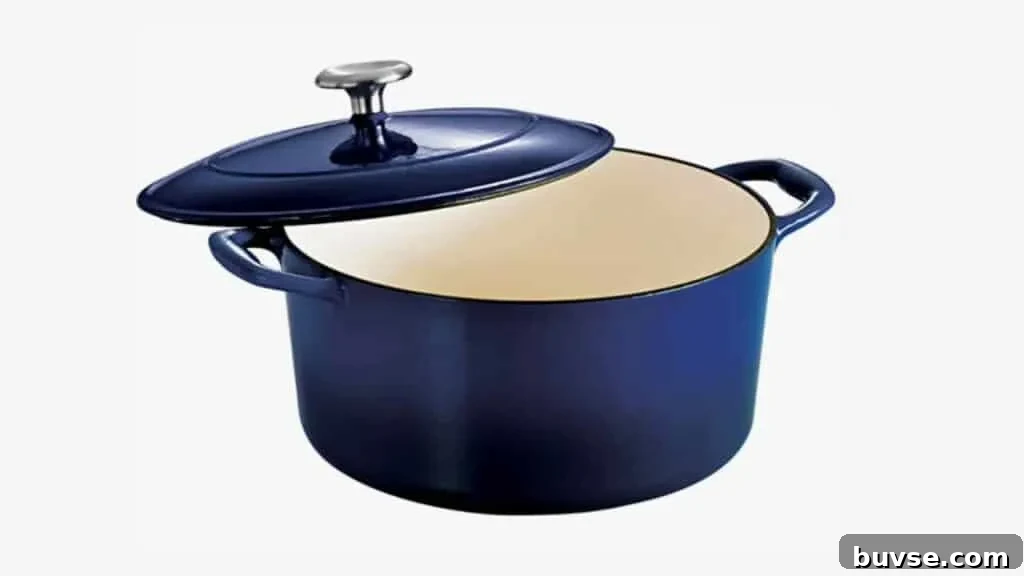
Key features: 5.5-quart capacity; PFOA- and PTFE-free porcelain enamel; self-basting condensation ridges under the lid; sturdy side handles and a heavy-gauge cast iron body with a lifetime warranty. A practical, well-priced enameled option with reliable performance for bread baking.
| Pros | Cons |
| Non-toxic enamel and easy to clean | Paint can chip if mishandled |
| Self-basting lid for consistent moisture |
5. Le Creuset Enameled Cast Iron Bread Oven
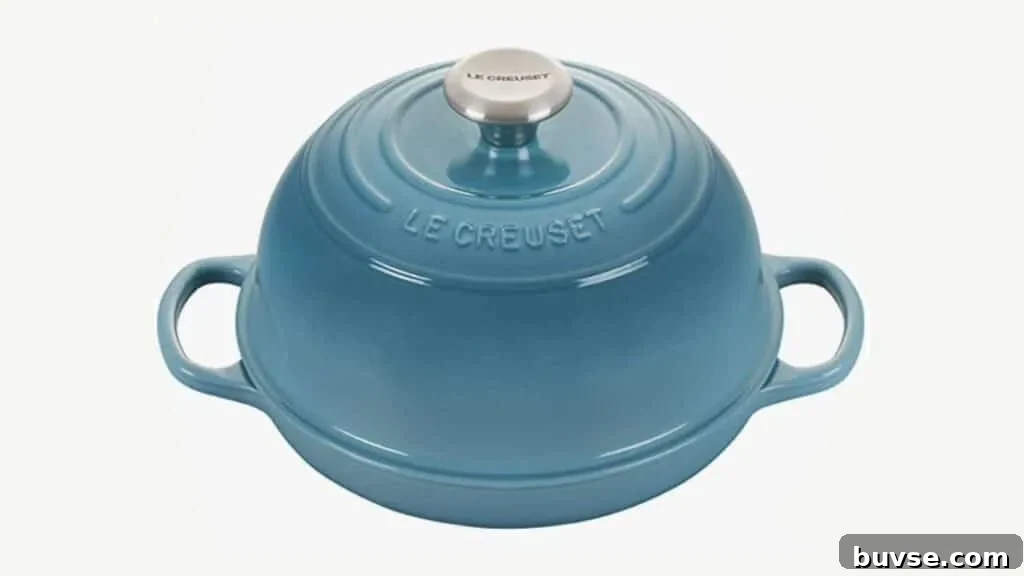
Key features: Tight-fitting domed lid, porcelain interior coating that resists staining, and a design optimized for even heat and moisture retention. Le Creuset’s quality control and durable finish make it a long-term kitchen investment for bakers who value consistency and design.
| Pros | Cons |
| Tight-fitting lid and durable enamel | Relatively heavy for its size |
| No seasoning required |
Rounding Up
If you want to bake artisan-style bread at home, a Dutch oven is one of the best purchases you can make. For pure baking performance and high-temperature use, uncoated cast iron is a top choice. If you prefer low maintenance and easy cleaning, a high-quality enameled Dutch oven will also deliver excellent results. Consider a 4.5–5.5 quart size for most home bread recipes, and prioritize a heavy lid and even, reliable heat retention.
Trusted brands and well-built models will last for years and improve your baking consistently—so choose the pot that fits your routine and space, and enjoy the difference a proper Dutch oven makes to your bread.