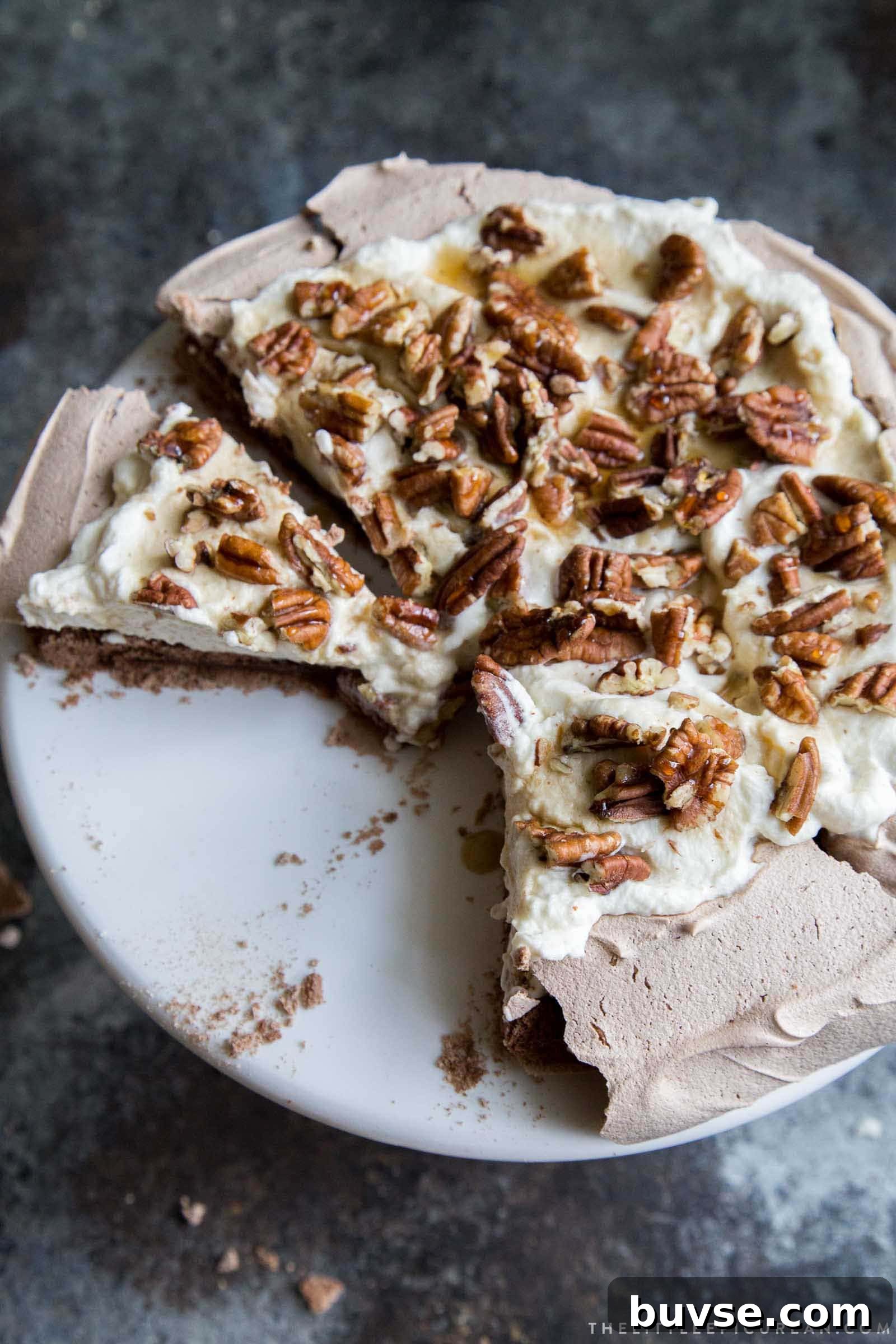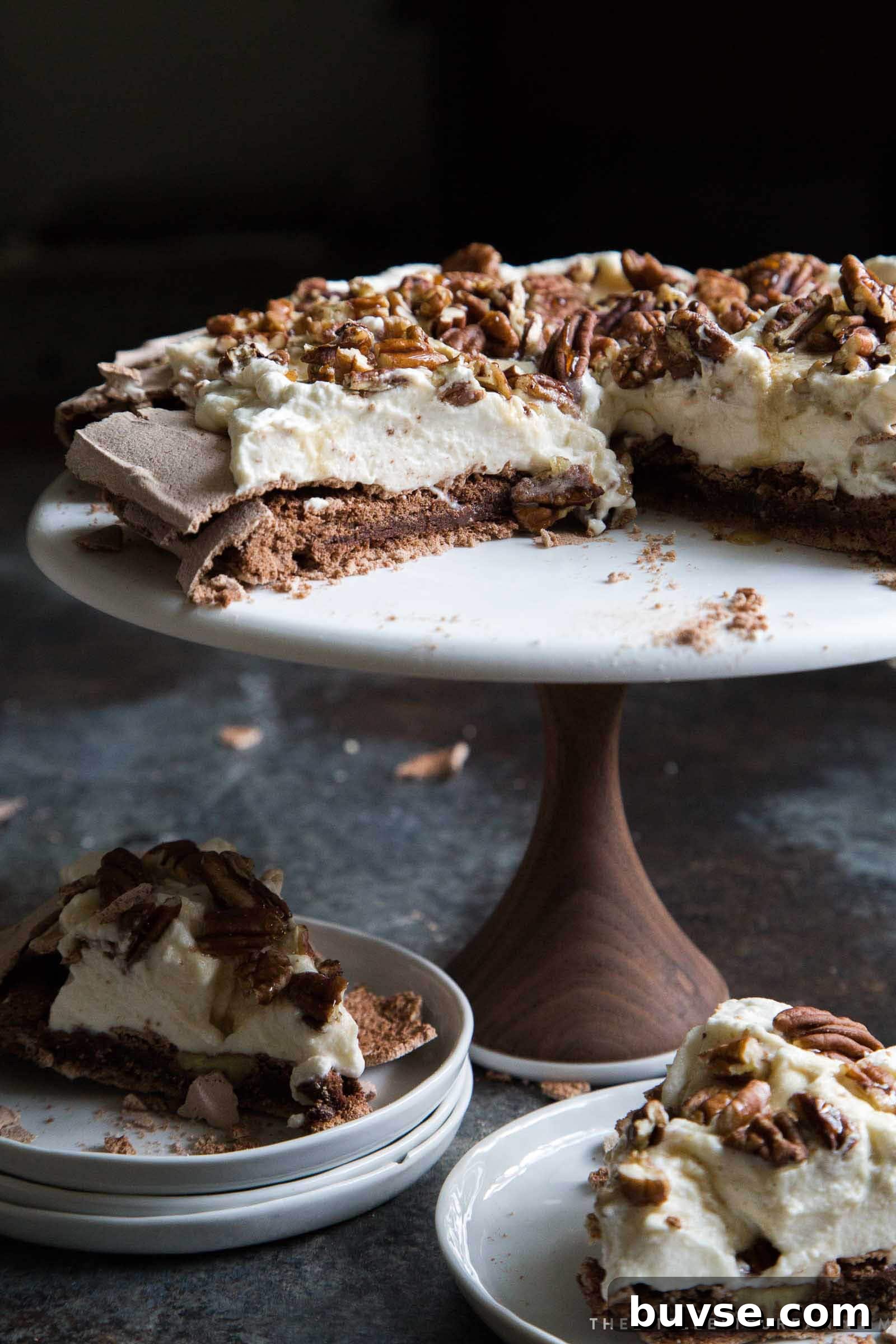
An autumn twist on the classic pavlova: this chocolate pavlova is delicate, lightly crisp on the outside, marshmallow-soft inside, and finished with maple-sweetened whipped cream and toasted pecans.
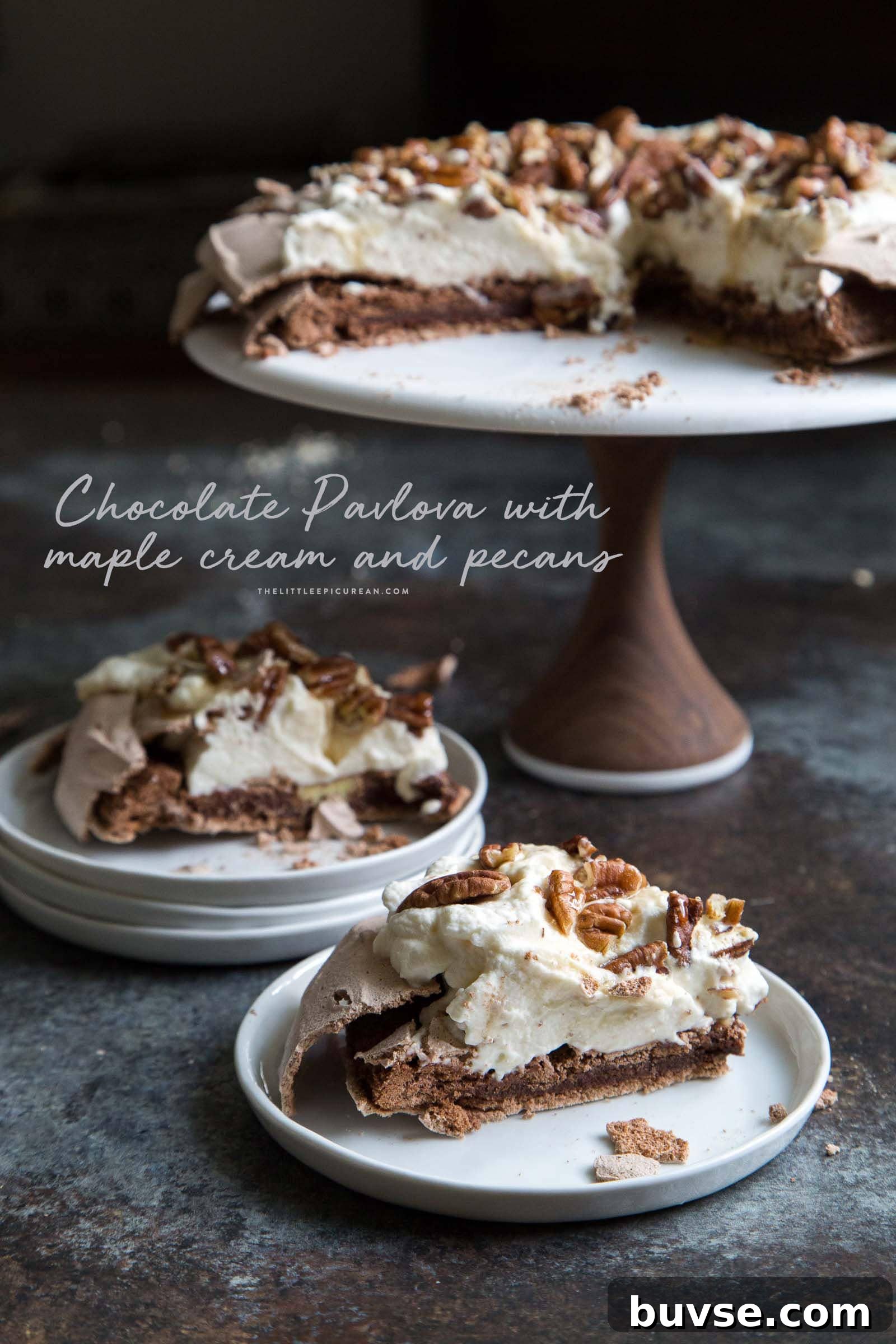
Chocolate Pavlova
I have a bit of a love/hate relationship with pavlova. Over the years I’ve made it countless times and learned a few reliable techniques that turn temperamental meringue into a dependable dessert. This chocolate version is my autumn adaptation — rich with cocoa, balanced by maple-sweetened cream and crunchy toasted pecans. I made this successfully three times in a row, and it has since become a regular fall treat.
What is Pavlova?
Pavlova is a meringue-based dessert named for the Russian ballerina Anna Pavlova. It’s baked until the exterior is dry and crisp while the interior remains soft and marshmallow-like. Traditionally it’s finished with whipped cream and fresh fruit; this chocolate interpretation substitutes unsweetened cocoa into the meringue and uses maple whipped cream and pecans as toppings for a cozy, seasonal flavor profile.
Egg Whites in Meringue Desserts
Egg whites are the foundation of any great pavlova. A few simple precautions will improve your odds of success:
- Keep yolk out of the whites — even a trace of fat will prevent proper whipping.
- Separate eggs while cold (they’re easier to handle), then let the whites come to room temperature before whipping; room-temperature whites reach full volume more reliably.
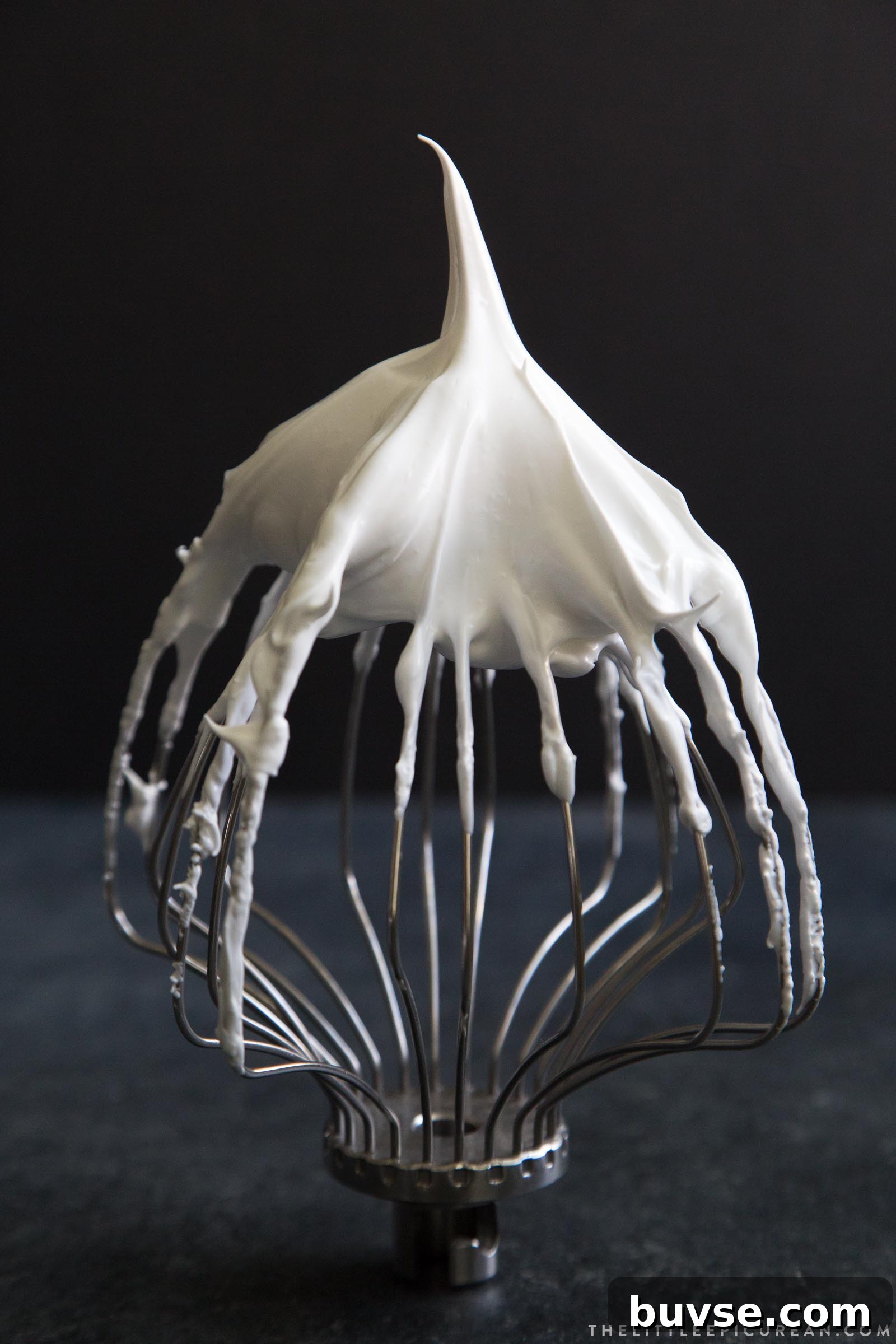
- Beat whites to stiff peaks, then add sugar gradually, a tablespoon at a time, for even dissolution and stability.
- When properly whipped, the meringue should be glossy, thick, and able to hold its shape. It should be firm enough that you could invert the bowl briefly without the mixture sliding out.
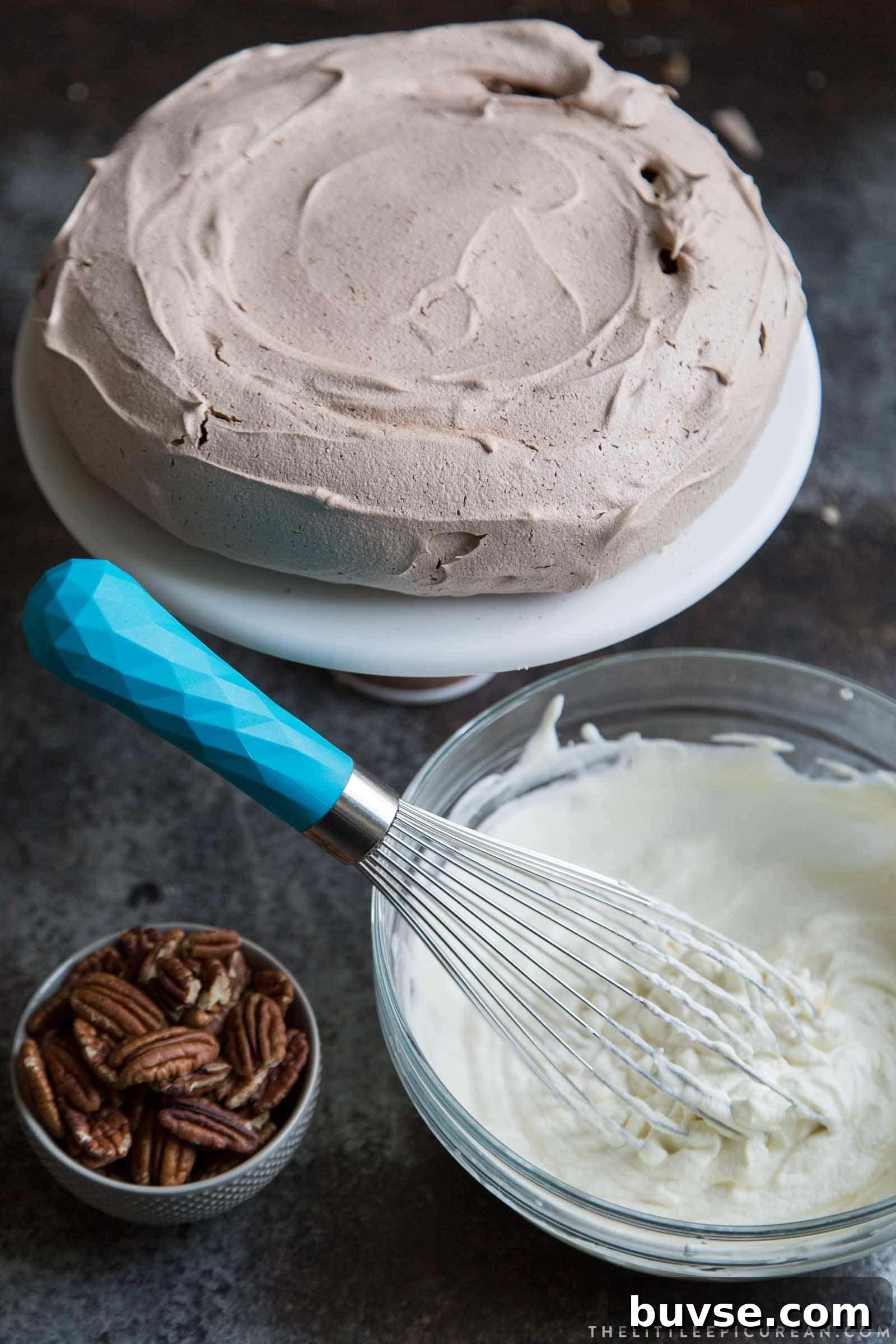
Fresh Whipped Cream
Freshly whipped cream is worth the effort. Avoid aerosol or pre-whipped toppings — they lack the texture and flavor of real cream. Use chilled heavy cream and a cold bowl; an electric mixer speeds things up, but finishing by hand with a whisk helps avoid over-whipping. Aim for medium-firm peaks so the cream holds its shape under the weight of the pavlova without becoming grainy.
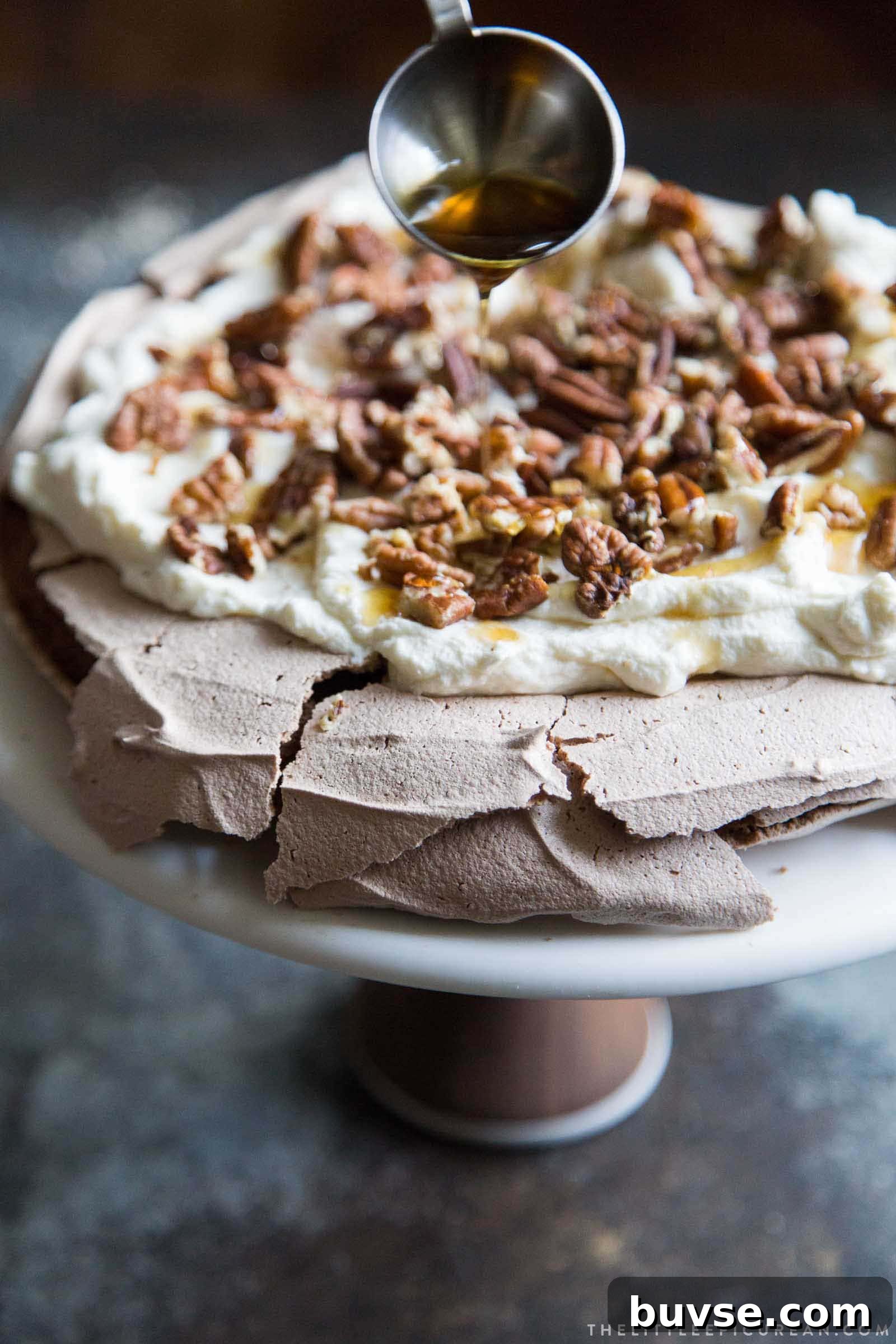
Traditional pavlova vs. chocolate version
A classic pavlova tends to be lighter and airier inside. Adding unsweetened cocoa introduces a small amount of fat and solids that slightly reduce that pillowy lift, but the trade-off is a bold chocolate flavor — think brownie-like notes without the richness of butter or whole eggs. Paired with maple-sweetened whipped cream and toasted pecans, this dessert is a great match for tea or coffee and fits right into autumn celebrations.
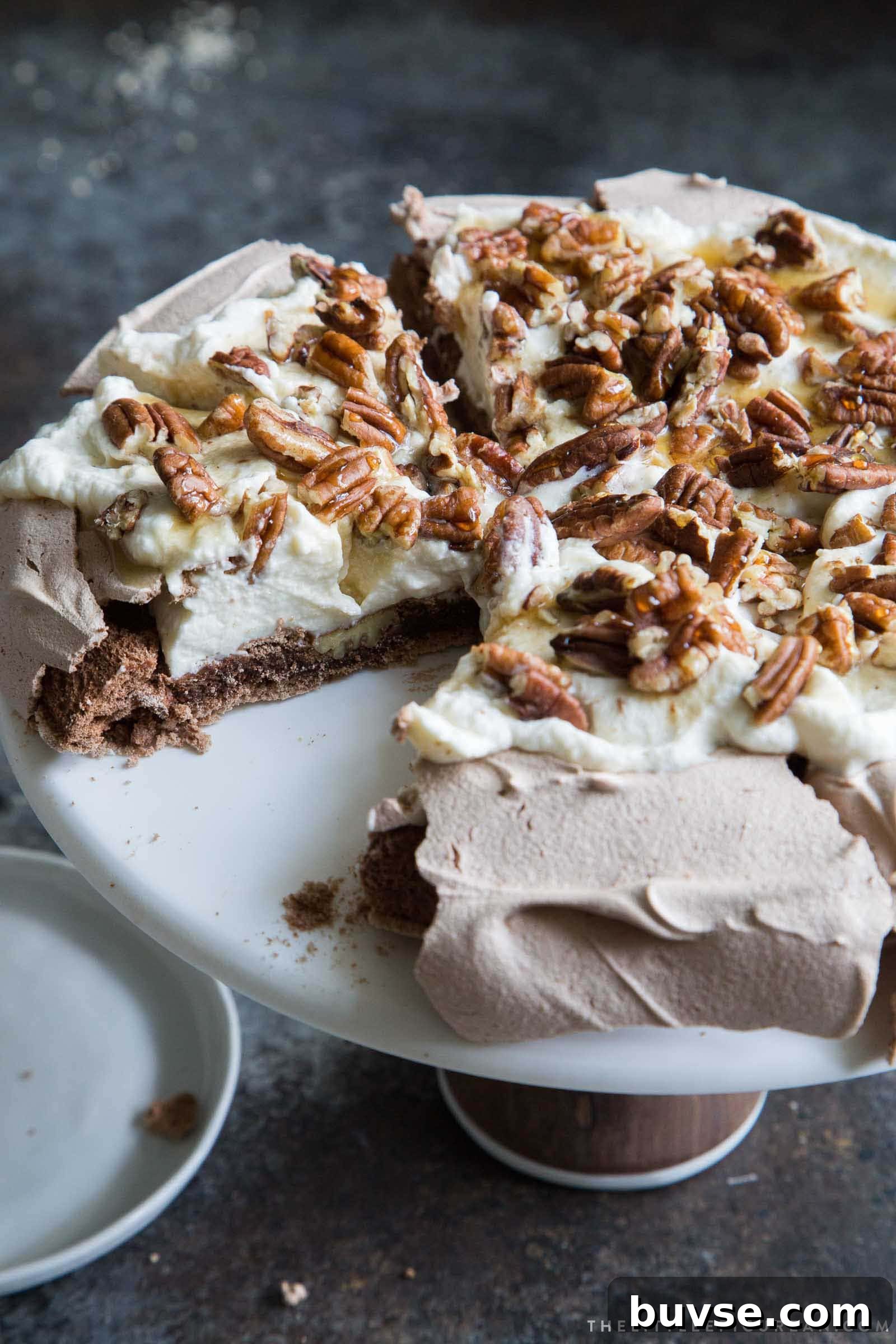
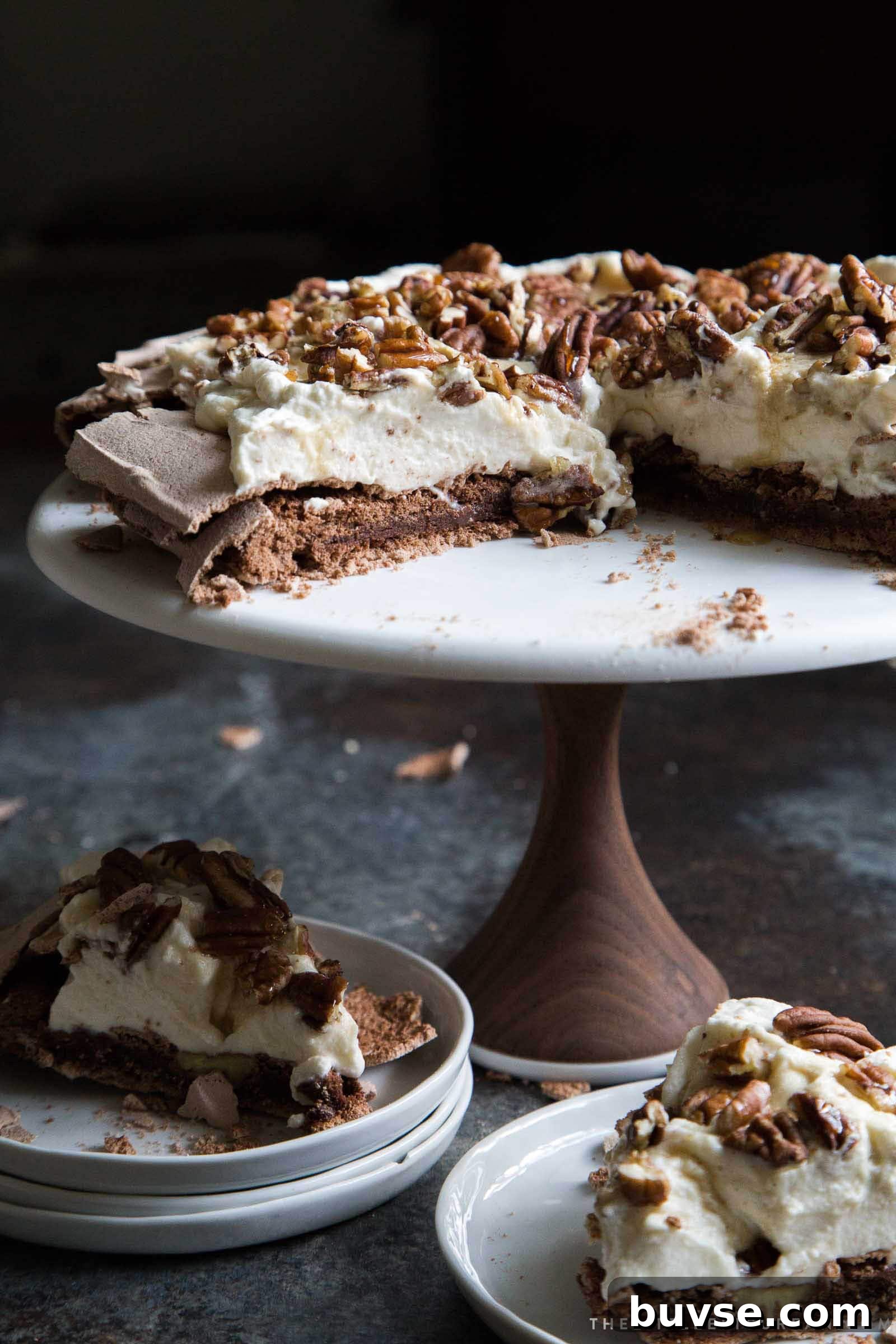
If the pavlova cracks or collapses, don’t worry — broken meringue still tastes excellent. Break it up and serve as a layered parfait or an Eton Mess-style dessert with whipped cream and fruit or compote.
Bake Ahead of Time
You can bake the pavlova up to two days ahead. Store it in a cool, dry place at room temperature and add the maple whipped cream and pecans just before serving so the shell stays crisp.
Chocolate Pavlova with Maple Cream and Pecans
Servings: 10
Prep Time: 20 mins | Cook Time: 1 hr | Cooling: 1 hr 30 mins | Total Time: 2 hrs 50 mins
Ingredients
Chocolate Pavlova:
- 4 large egg whites, room temperature*
- 1 cup granulated sugar
- 3 tablespoons unsweetened cocoa powder, sifted
- 1 teaspoon cornstarch, sifted
- 1 teaspoon distilled white vinegar
Maple Whipped Cream:
- 1 cup heavy cream, chilled
- 3 tablespoons dark maple syrup, cold
- Pinch of kosher salt
Topping:
- Toasted pecans, roughly chopped or whole
- Additional maple syrup for drizzling (optional)
Instructions
Chocolate Pavlova:
- Preheat the oven to 300°F (150°C). Line a baking sheet with parchment paper. Trace a 7-inch circle on a separate piece of parchment and cut a 9-inch square around the traced circle. Place the traced piece, trace-side down, on the lined baking sheet and set aside.
- Using a stand mixer with a whisk attachment (or a hand mixer), beat the egg whites on medium speed until they form stiff peaks. Add the sugar one tablespoon at a time, allowing it to incorporate before adding the next. When all sugar is added, increase speed to medium-high and beat until the meringue is thick and glossy.
- Gently fold in the sifted cocoa powder, cornstarch, and vinegar with a large spatula until no streaks of cocoa remain.
- Dollop the meringue onto the prepared parchment and shape it into a round mound using the traced circle as a guide. The meringue will expand slightly as it bakes.
- Bake for 65–70 minutes without opening the oven door. After about 60 minutes, you may check to confirm the exterior is dry. Turn off the oven and allow the pavlova to cool inside for 1 hour. After that hour, prop the oven door open with a wooden spoon and let it cool for another 30–45 minutes.
Maple Whipped Cream:
- Pour chilled heavy cream and maple syrup into a cold mixing bowl. Whip with an electric mixer to soft peaks, then finish by whisking by hand to reach medium-firm peaks. Fold in a pinch of salt. Use immediately or refrigerate briefly.
Assembly:
- When the pavlova is completely cool, remove the parchment square from the baking sheet and gently peel the pavlova from the parchment. Transfer the pavlova to a serving plate.
- Just before serving, top with the maple whipped cream. The top may crack or collapse under the cream’s weight — that’s fine. Scatter toasted pecans over the top and drizzle with extra maple syrup if you like. Serve immediately.
Notes
- Ensure egg whites are free of any yolk or grease to maximize volume.
- Cold eggs separate more easily; allow whites to come to room temperature before whipping.
- Add sugar gradually to strengthen the meringue and avoid graininess.
- Do not open the oven during the first 60 minutes of baking. Allow the pavlova to cool gradually to prevent sudden collapse.
- If the pavlova cracks or breaks, repurpose it as a layered parfait or an Eton Mess with cream and fruit.
Nutrition (approx. per serving)
Calories: 185 kcal; Carbohydrates: 26 g; Protein: 2 g; Fat: 9 g; Saturated Fat: 6 g; Sugar: 24 g; Fiber: 1 g. Nutrition is an estimate and should be used as a guideline only.
 Like this recipe? Rate & comment below!