
I adore citrus, and salty, mouth-puckering preserved lemons are a bright, savory way to lift many dishes. If you can’t find jarred preserved lemons at the store, don’t worry — there are several easy substitutes you can make at home.
Traditional salt-preserved lemons take weeks to ferment, but there are quick alternatives that capture that tangy, salty, slightly sweet complexity. Below I share a fast “cheat” preserved lemon that mimics the flavour and texture of Moroccan preserved lemons, plus a few other simple swaps for when a recipe calls for preserved lemon peel, purée, or just a lemony, salty kick.

Jump to an easy preserved lemon substitute:
- Quick cheat’s preserved lemon
- Salted lemon paste
- Lemon zest, juice and salt
- Salted lemon rind
- Dried lemon zest + sea salt flakes
Best lemons for a preserved lemon substitute
If you’ve tried Moroccan-style Beldi preserved lemons, you know they have an almost candy-like lemon flavour — small, round fruit with thin fragrant skin and sweet flesh. Those specific Beldi or Doqq lemons are hard to find outside Morocco, but there are great substitutes.
Meyer lemons are my top recommendation for homemade preserved lemon substitutes. They’re sweeter and floral, a cross between lemon and mandarin, and they work beautifully in recipes where you want both brightness and a touch of sweetness. Seedless varieties like LemonGold are convenient because you don’t have to fish out seeds.
You can also use standard Eureka or Lisbon lemons. If you want more sweetness, add a little mandarin zest or a teaspoon of mandarin juice to mimic Beldi complexity.
Preserved lemon substitutes: what to use when
Preserved lemons are used in different ways: some recipes call only for the peel, others for chopped or puréed whole preserved lemons. Below are versatile options that cover most needs: a fast cheat’s preserved lemon for general use, a salted lemon paste for purées and dressings, a fresh zest-and-juice mix for vinaigrettes, a simple salted peel for dishes that need just the rind, and a dried-zest finishing salt for garnish.
While these substitutes work for many recipes, try to make true preserved lemons if you can — they add depth that only time provides. But when you need that lemon-salty hit today, use one of the quick methods below.
1. Cheat’s preserved lemon: the best quick substitute
This quick method, adapted from a technique popularized by the Ottolenghi Test Kitchen, yields soft, syrupy lemon slices with a preserved-lemon-like texture and a salty-tart flavour. It’s fast, simple, and excellent as an all-purpose substitute.
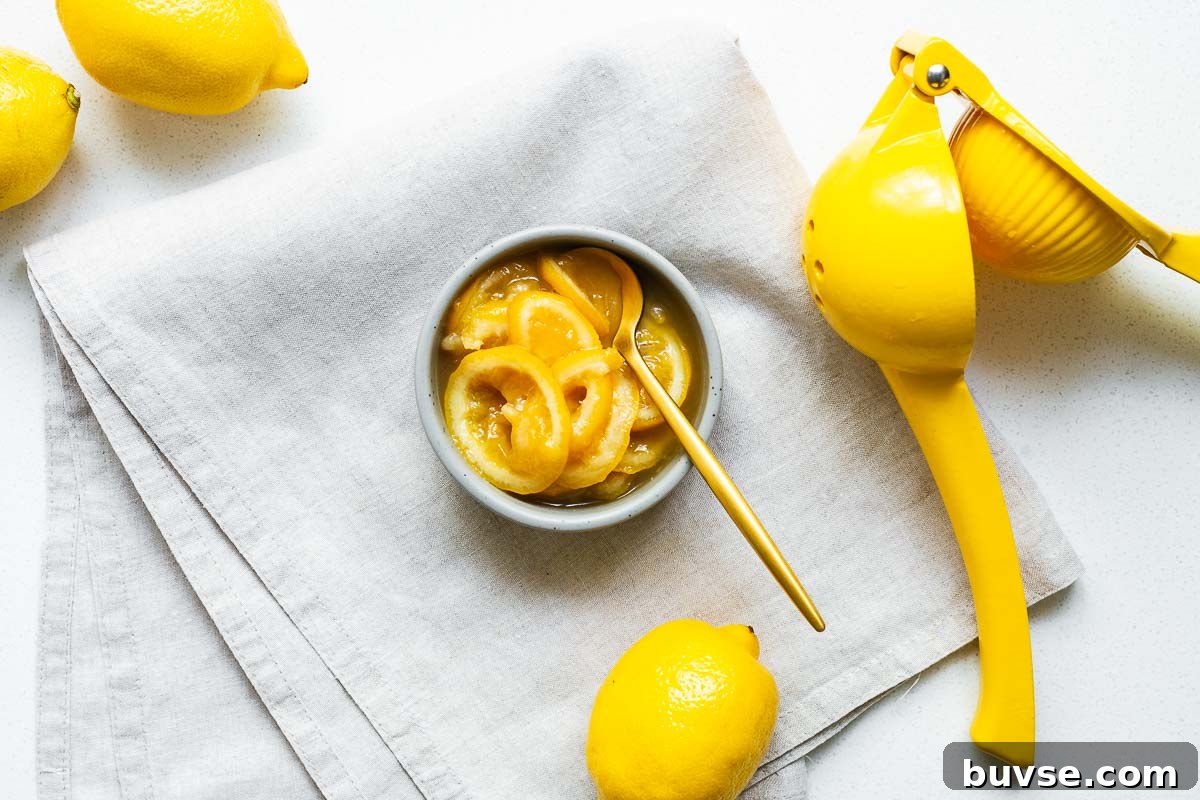
How to make the quick preserved lemon substitute
The trick to a preserved-like texture is gentle simmering in lemon juice so the rind softens and the juice reduces to a syrup.
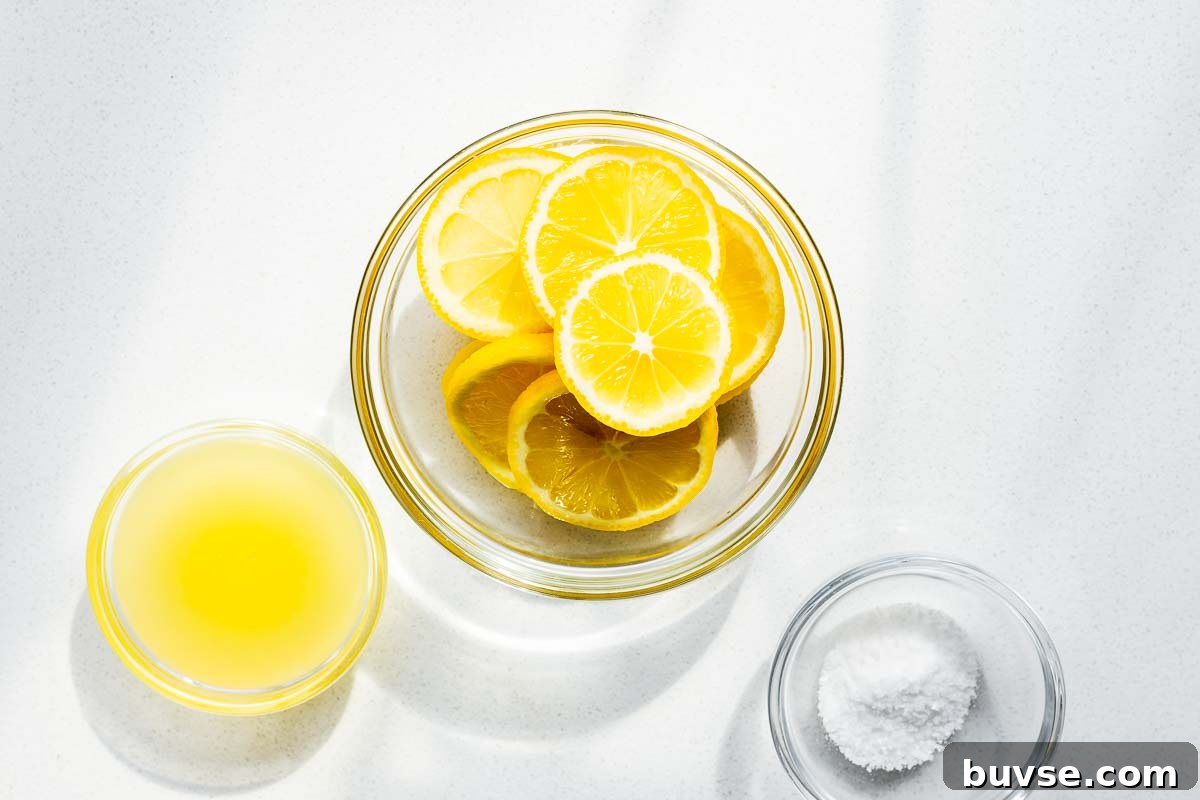
- Trim the ends off two small lemons (or one large) and slice thinly into rounds, about ½ cm thick. Remove and discard any seeds.
- Place the slices in a small saucepan. Add 2½ teaspoons of salt (about a heaped teaspoon per small lemon) and ⅓ cup (80 ml) fresh lemon juice — roughly 2–3 small lemons’ worth.
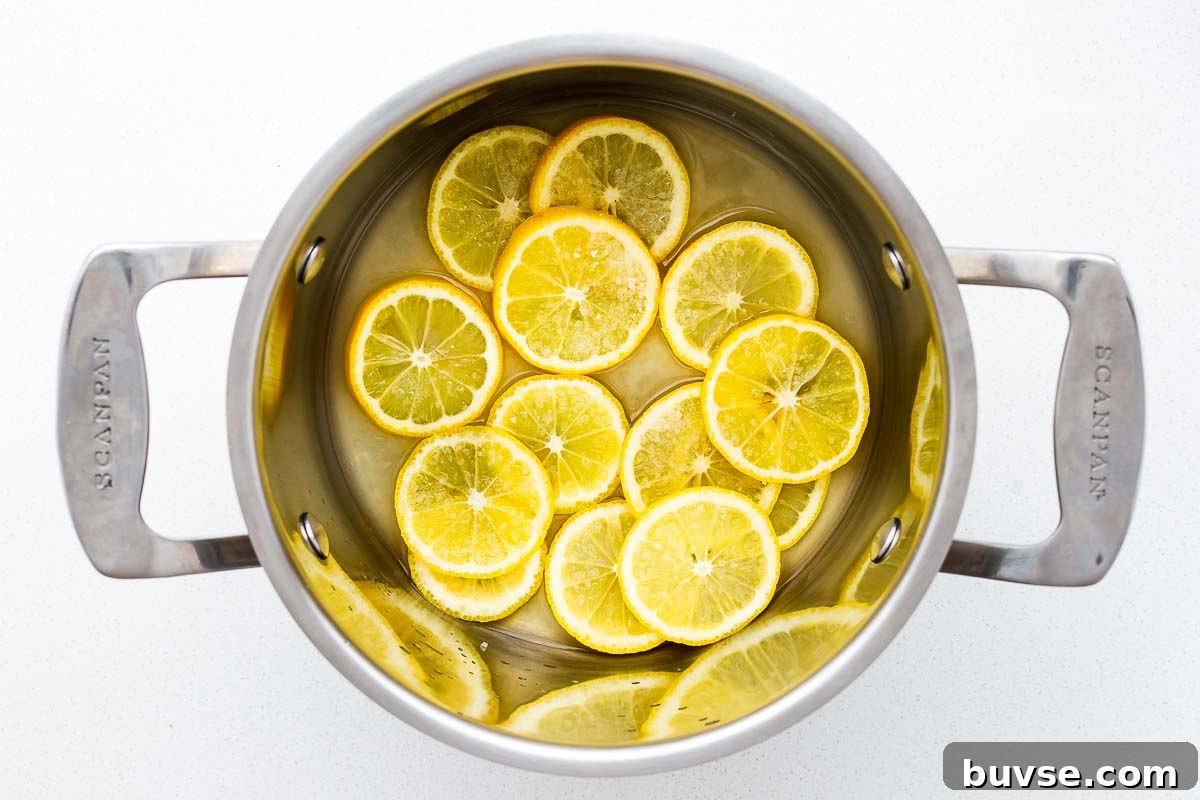
- Cover the pan and bring the juice to a simmer over medium heat. As soon as it simmers, lower to the smallest flame and cook, covered, for 12–14 minutes, stirring gently halfway through. The liquid should reduce to a thick, syrupy consistency while the slices soften and become glossy.
- If the pan looks dry before the lemons are soft, add a splash of water. Watch carefully to avoid burning the syrup.
- Allow the cooked lemons to cool to room temperature before using or refrigerating.
2. Salted lemon paste: preserved lemon purée alternative
If a recipe asks for preserved lemon purée, you can use thick lemon paste sweetened and salted to taste. Make a basic lemon purée or commercial lemon paste, then add about 1 teaspoon of salt per tablespoon of paste. This gives you a spreadable, intensely lemony substitute suitable for dressings, marinades, and sauces.
3. Lemon zest + juice + salt: ideal for dressings and marinades
This simple mix won’t replicate the depth of aged preserved lemons but is perfect in vinaigrettes, marinades, and quick dressings. Grate fresh zest into a bowl, add fresh lemon juice, and stir in a pinch of sea salt (about 1 teaspoon per lemon zest/juice amount). Make fresh as needed; leftovers keep in the fridge for up to a week.
4. Lemon rind + salt: quick substitute for preserved peel
When a recipe needs only the preserved lemon peel, use fresh peel treated with salt. Use a sharp paring knife to remove the peel with a bit of pith, roughly mince it, then sprinkle with about ½ teaspoon of sea salt per lemon. Massage the salt into the rind and let it rest at least an hour, or overnight in the refrigerator. Store in an airtight container for up to a week.
5. Dried lemon zest + sea salt flakes: zesty finishing salt
Dried lemon zest mixed with coarse sea salt makes a wonderful finishing sprinkle for dishes that need a lemony, savory pop. Use about two parts dried zest to one part salt flakes. If you’re zesting lemons for juice, zest them first and dry the peel in a warm oven or a sunny spot for a few days to keep on hand.
How to use preserved lemon substitutes
The quick cheat’s preserved lemon is the most versatile substitute: spoon slices over grilled meats, vegetables, salads, or chop them and mix into dressings. Blitz the cooked slices with a stick blender or mortar and pestle for a purée to use in dressings or sauces. Salted lemon paste can replace preserved lemon purée directly, while salted rind, zest-plus-juice, or dried zest-salt work well when a recipe needs only the peel or a finishing note of lemony salt.
True preserved lemons are easy to make and keep for months, but they take at least four weeks to mature. Use a quick substitute when you need immediate results, then try a proper batch of preserved lemons for richer flavor in the future.

Quick Preserved Lemon Substitute Recipe
This fast method yields salty, syrupy lemon slices that work as a preserved lemon substitute in dressings, salads, roasted vegetables, and grain dishes. Ready in under 30 minutes.
Ingredients
- 2 small lemons (or 1 large), ends trimmed and sliced thinly
- ⅓ cup (80 ml) fresh lemon juice (from 2–3 lemons)
- 2½ teaspoons salt (about 1 heaped tsp per small lemon)
Instructions
- Remove any seeds from the lemon slices. Add the slices, lemon juice, and salt to a small saucepan with a lid.
- Place the pan over medium heat. When the juice just starts to simmer, reduce to the lowest heat, cover, and cook for 12–14 minutes, stirring gently halfway. The juice should reduce to a thick syrup and the slices should soften.
- Let the lemons cool to room temperature before using. Store in a clean airtight container in the refrigerator for up to a month, keeping the rind submerged in the syrupy lemon liquid.
Notes
- Watch the pan while cooking. If the liquid evaporates too quickly, add a splash of water and continue cooking on low to avoid burning.
- For a preserved lemon purée substitute, blitz the cooled lemons with a stick blender or mash with a mortar and pestle until smooth, including the syrupy liquid.
- One heaped tablespoon of this quick preserved lemon equals roughly one preserved Beldi lemon in recipes.
Use these quick preserved lemon substitutes to bring bright, salty citrus notes to salads, stews, grain bowls, and roasted vegetables. They’re an easy shortcut that delivers much of the charm of slow-preserved lemons, without the wait.