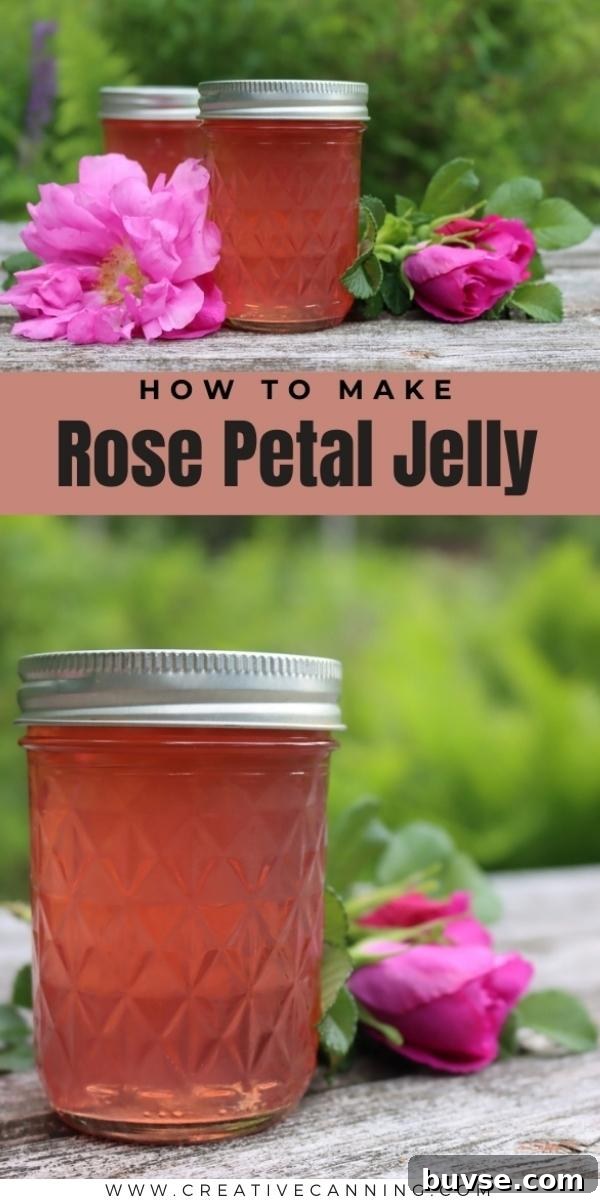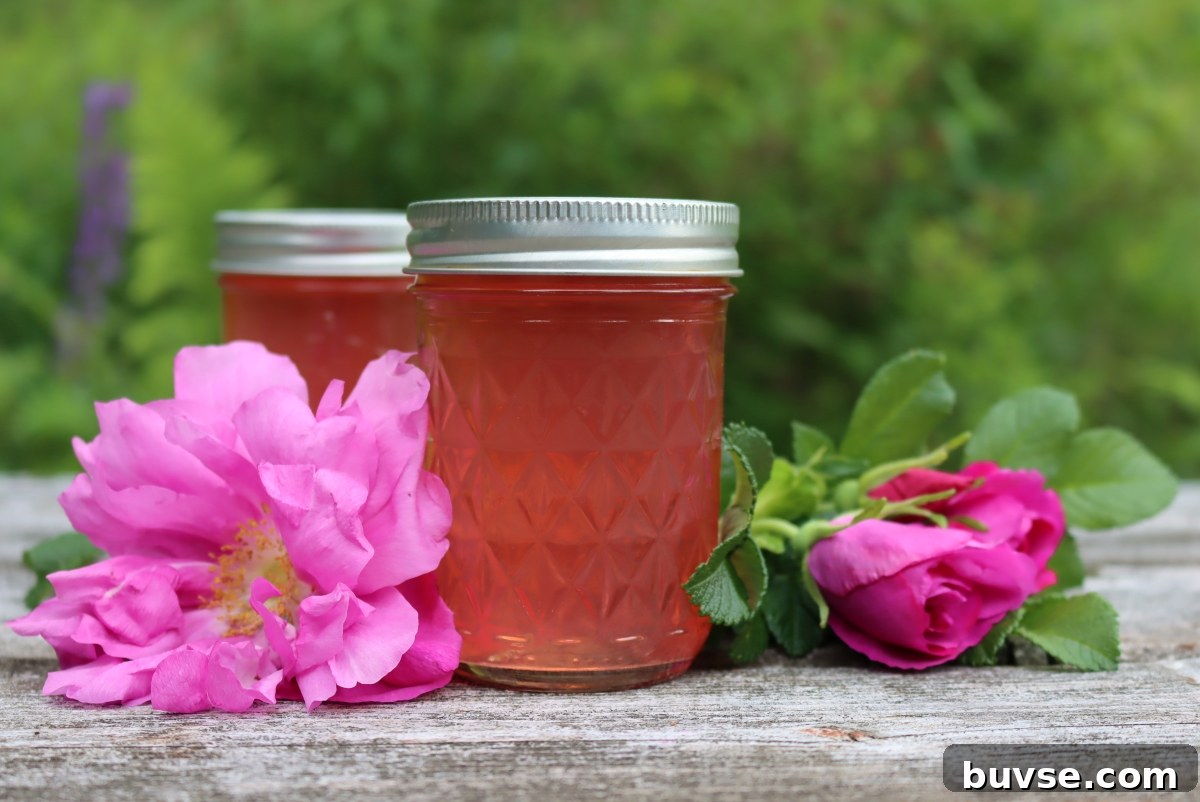
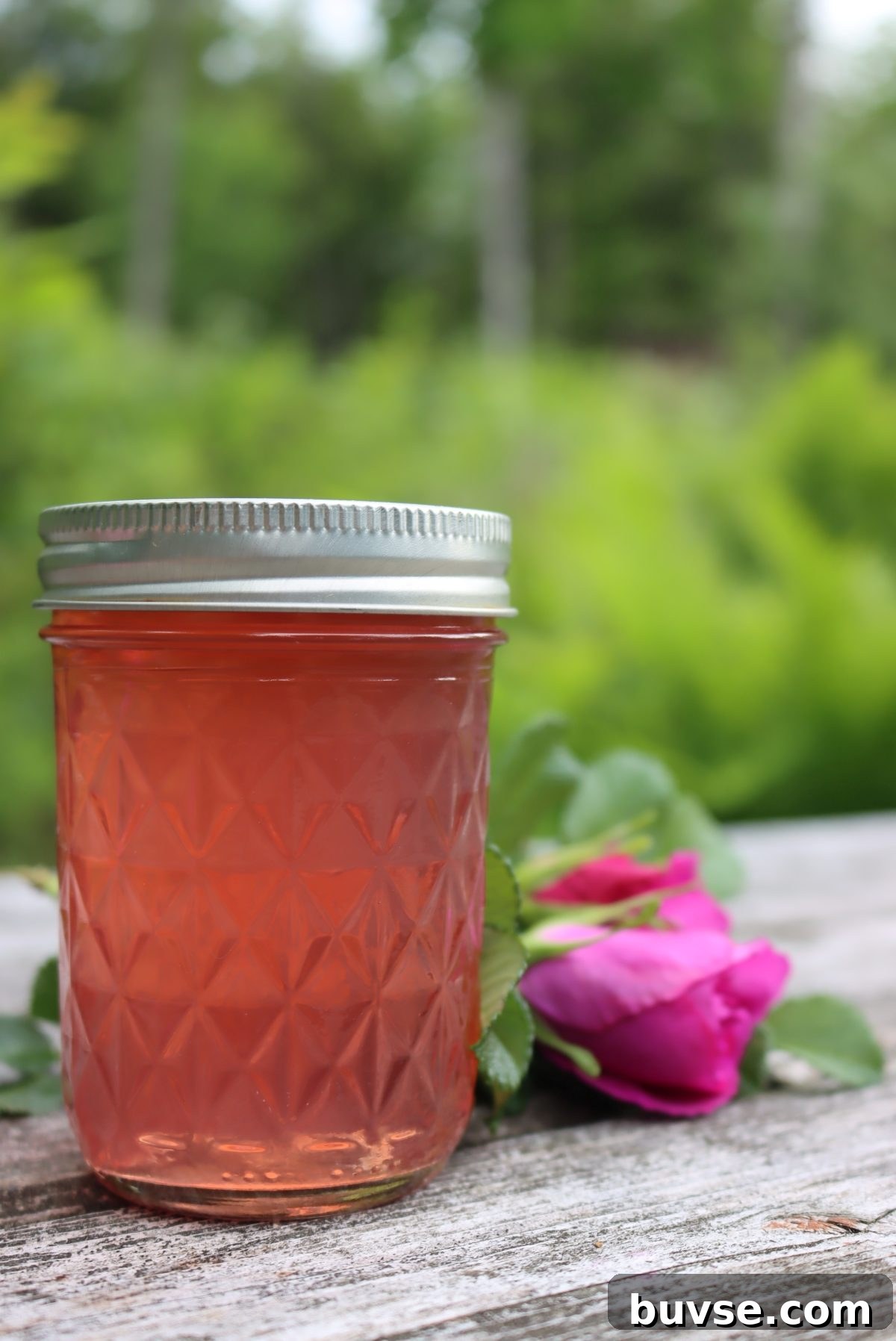
Rose petal jelly captures the scent of summer roses in an easy-to-make preserve you can enjoy year-round. This soft, pink-hued jelly tastes like a fragrant rose and makes a charming gift or a special spread for scones, toast, or soft cheeses. If you’re searching for a simple rose petal jelly recipe or a way to preserve floral flavor, this guide walks you through each step.
This recipe has been reviewed for safety and accuracy by a Master Food Preserver certified through the University of Cornell Cooperative Extension.
Rose petals offer one of the garden’s most delicate and memorable aromas. Turning them into jelly is a straightforward way to preserve that scent and enjoy it long after the blooms are gone. Although the finished jar looks special, the method is simple: steep petals to make a fragrant tea, add pectin and sugar, and finish with lemon juice for balance and safety.
Notes from My Kitchen

There’s something celebratory about rose petal jelly—like a jarred memory of early summer. My family always enjoys floral jellies; I made this one to mark a small milestone and it felt like a thoughtful, homemade gift. Floral jellies carry more than flavor; they carry a moment.
Quick Look at the Recipe
- Recipe Name: Rose Petal Jelly
- Recipe Type: Flower jelly
- Canning Method: Water bath canning (optional)
- Prep/Cook Time: About 30 minutes total (including steeping)
- Canning Time: 10 minutes (adjust for altitude)
- Yield: 5 to 6 half-pint jars
- Jar Sizes: Quarter pint, half pint, or pint
- Headspace: 1/4 inch
- Key Ingredients: Rose petals, water, bottled lemon juice, sugar, powdered pectin
- Difficulty: Easy — it’s essentially a floral tea set with pectin
What Does Rose Petal Jelly Taste Like?
Rose petal jelly tastes much like a fragrant rose smells: soft, perfumed, and lightly sweet with a subtle fruitiness. Think of the gentle floral notes in rose water or Turkish delight but milder and spreadable like jam. The jelly’s flavor depends heavily on the petals’ scent—strongly fragrant roses yield the most character.
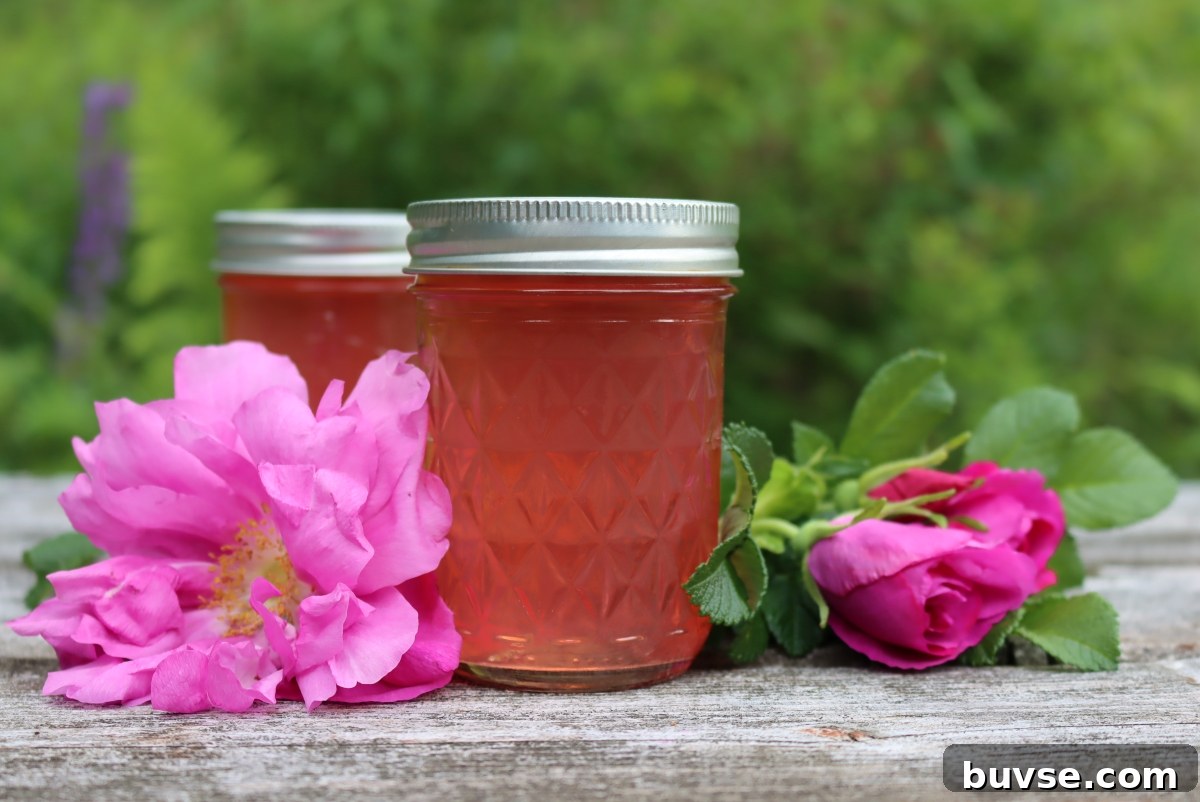
The finished jelly is a delicate pink. The color often develops after adding lemon juice, which shifts the pigments in the rose tea. Deeper pinks and reds create a more intense color than pale or white petals.
“Wonderful. Amazing!! I have used this about 5 times now, and it has always come out! Hands down, my favorite jelly.”
– Jessica
Choosing and Harvesting Rose Petals
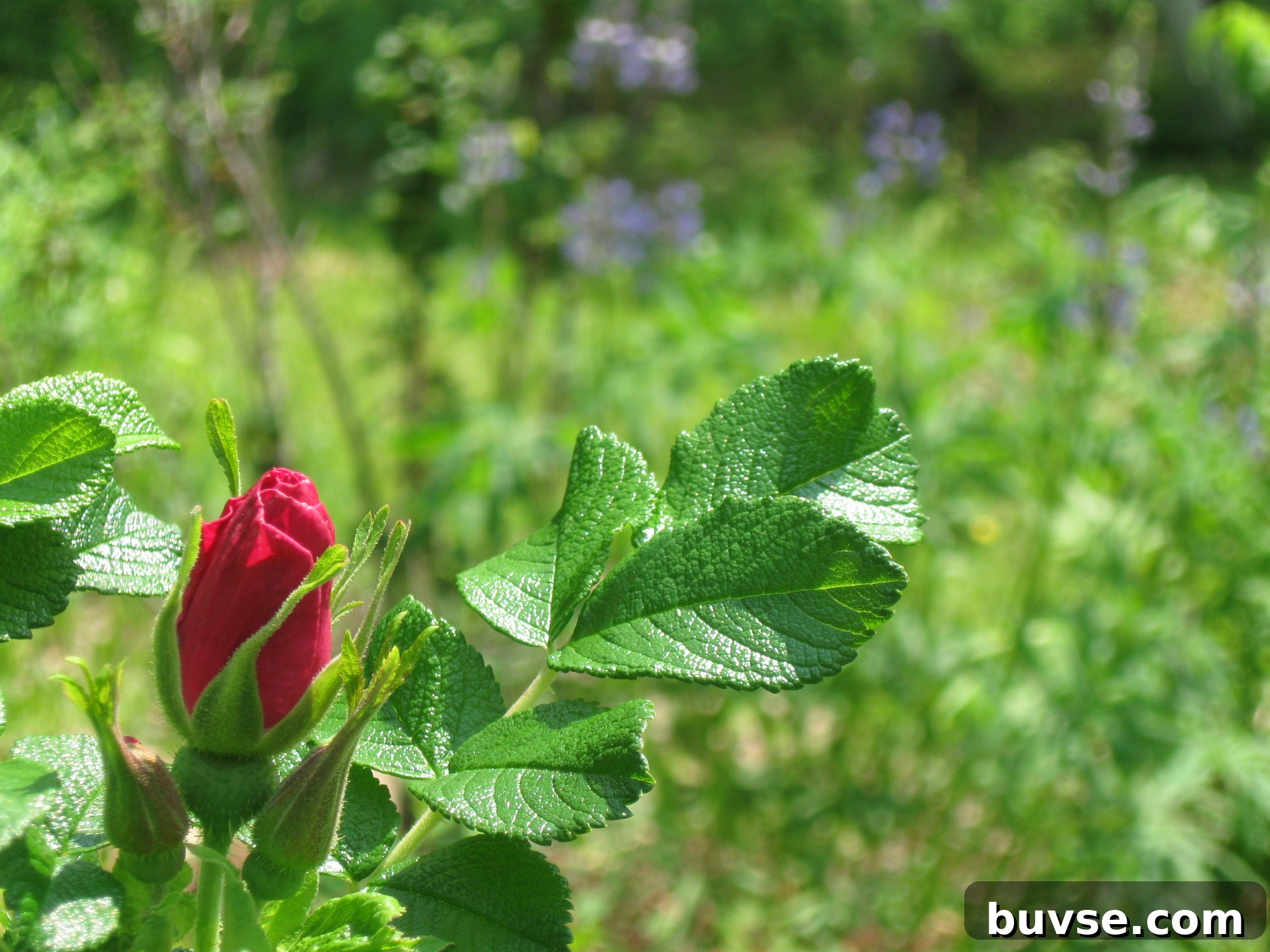
Use any edible, unsprayed roses with good fragrance. Old garden roses and rugosas are reliable for scent and flavor. Many modern hybrid teas are pretty but not very fragrant, so prioritize scent over appearance. Avoid florist roses because they’re often treated with chemicals.
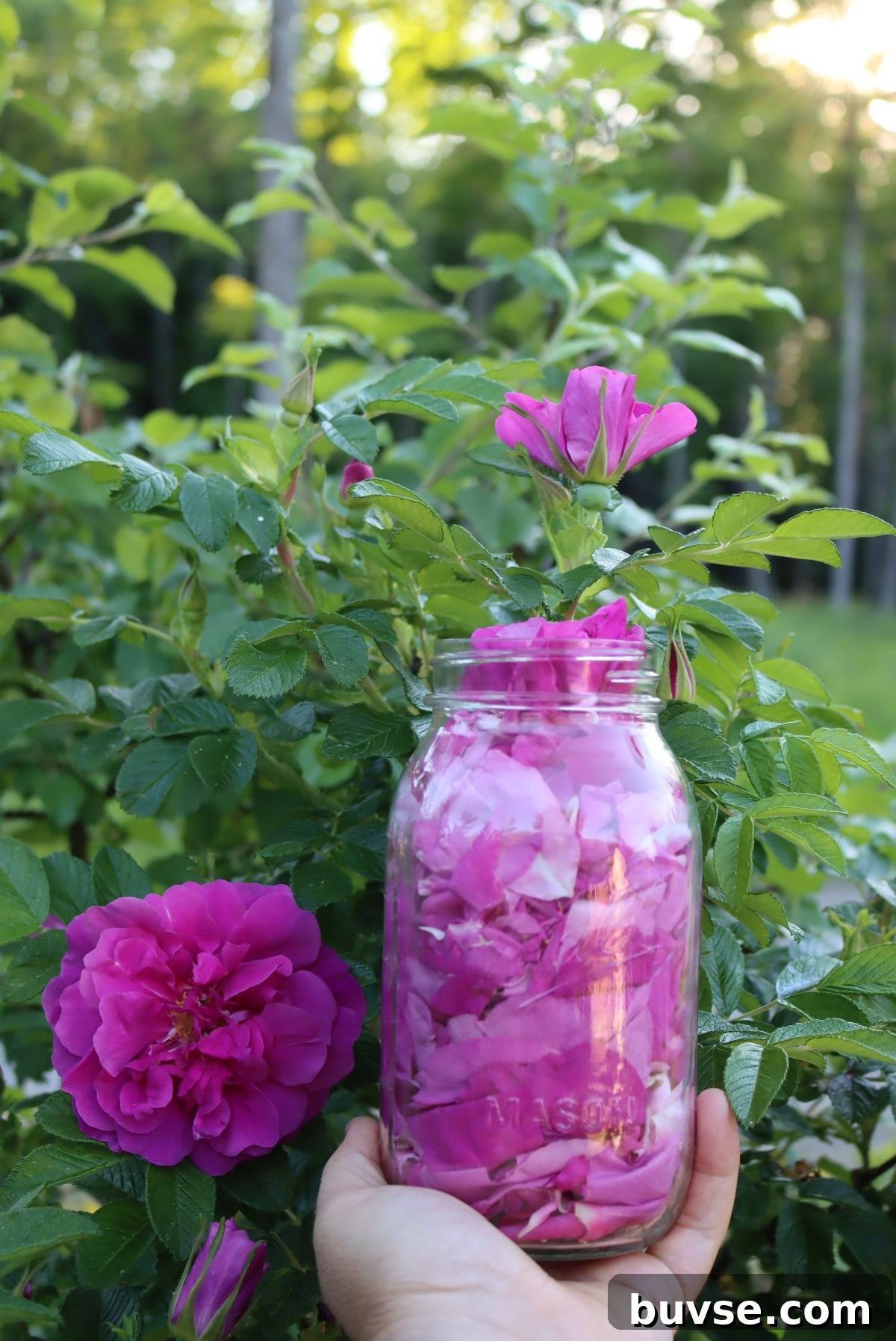
If harvesting yourself, pick petals later in the day after bees have visited the flowers. Pull the petals off, remove any dirt or insects, and pinch away the pale base (the “heel”) of each petal to avoid bitterness. You’ll need about 4 cups of fresh petals, loosely packed.
If you can’t pick your own, ask neighbors or sources in your community for unsprayed petals or purchase food-grade petals from reputable suppliers. Aim for roughly a quart jar of petals (about 4 cups) for one batch.
Ingredients for Rose Petal Jelly
This recipe follows a classic flower jelly formula: steep the petals into tea, then set the liquid with powdered pectin and sugar, finishing with bottled lemon juice for flavor, color, and safe acidity.
- Fresh rose petals: 4 cups, clean and unsprayed, pale heels removed.
- Water: 4 cups, filtered if your tap water tastes strongly of chlorine.
- Bottled lemon juice: 1/4 cup (preferred for consistent acidity). Citric acid powder can be substituted in small amounts if needed.
- Powdered pectin: One box (about 1.75 oz) regular powdered pectin.
- Granulated sugar: 5 cups. See low-sugar options below for alternatives.
Low Sugar Options
To reduce sugar, use a low-sugar pectin or Pomona’s Universal Pectin and follow the manufacturer’s directions. Pomona’s requires a higher acid level, so increase lemon juice if using it. Low-sugar methods change texture and yield, so follow package instructions closely.
How to Make Rose Petal Jelly
The process is simple and mostly hands-off while the petals steep. Have your jars and lids ready before you start so you can move quickly once the jelly reaches a boil.
Prepare the Rose Petals
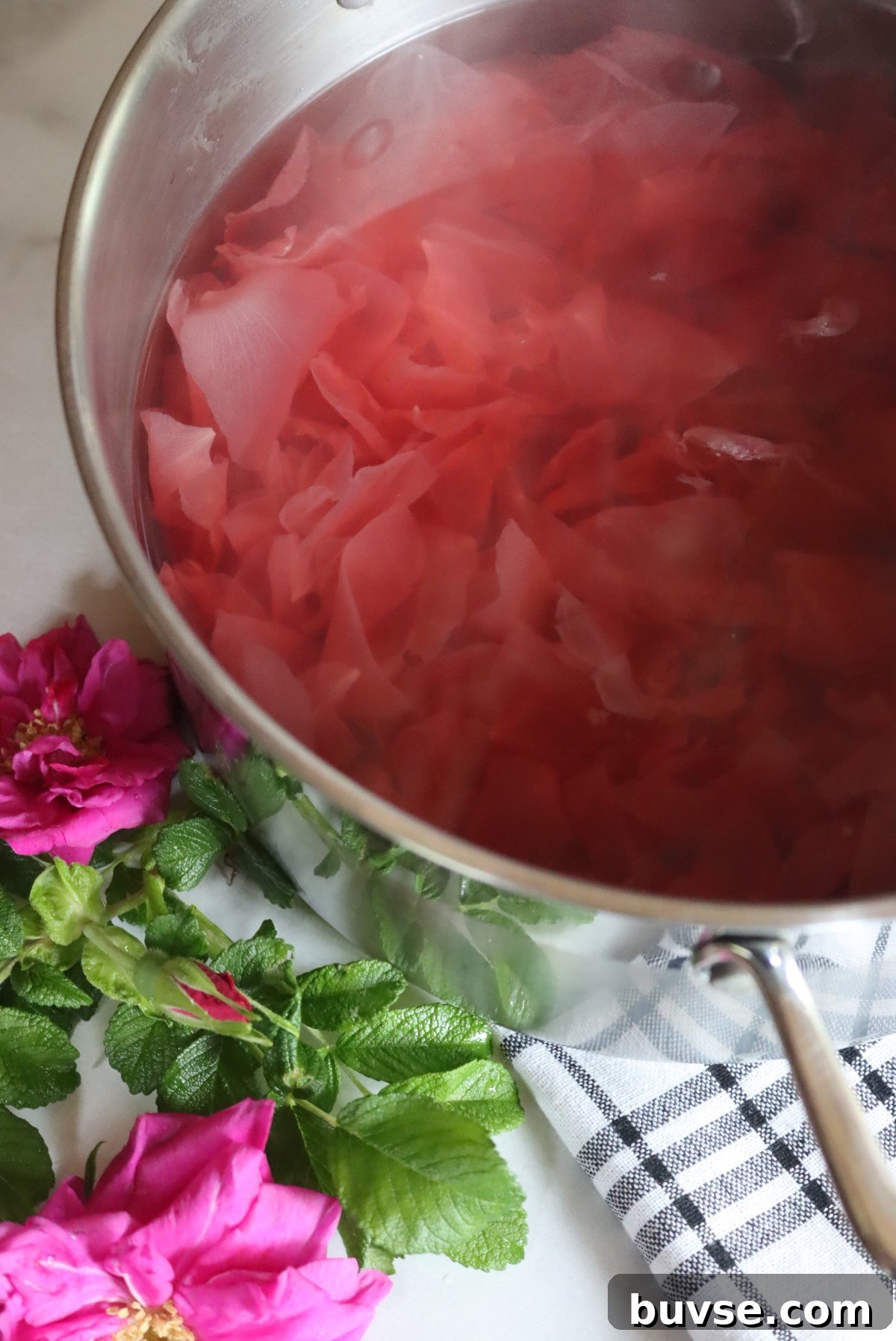
Remove debris and the pale heel from each petal. Measure about 4 cups of loose petals. Rinse quickly if necessary.
Make the Rose Tea
Place petals in a heatproof container and cover with 4 cups of boiling water. Steep 10–15 minutes, pressing petals down so they stay submerged. Strain through a fine mesh into a saucepan, pressing gently to extract liquid. Aim for 4 cups of strained rose tea; if short, add water to reach 4 cups.
Add Lemon Juice and Pectin
Stir 1/4 cup bottled lemon juice into the rose tea. Bring to a boil over medium-high heat. Whisk in the powdered pectin and boil hard for 1 full minute. Adding pectin before sugar is essential for a reliable set.
Add the Sugar
Add 5 cups granulated sugar all at once and stir until dissolved. Return to a full rolling boil and boil hard for exactly 1 minute. Remove from heat, skim off any foam, and ladle hot jelly into prepared jars, leaving 1/4 inch headspace. Wipe rims, center lids, and apply bands fingertip-tight.
Canning Rose Petal Jelly
Canning is optional. For short-term storage, cool jars and refrigerate for a few weeks, or freeze up to six months. For pantry storage, process jars in a boiling water bath for 10 minutes (adjust time for altitude). Let jars cool undisturbed for 12–24 hours and check seals; refrigerate any jars that did not seal.
Altitude Adjustments
- 0 to 6,000 feet: Process 10 minutes
- Above 6,000 feet: Process 15 minutes
Ways to Use Rose Petal Jelly
Use rose petal jelly on warm scones, toast, or stirred into yogurt. It pairs beautifully with soft, tangy cheeses like fresh goat cheese and makes an elegant filling for thumbprint cookies or layer cakes. A jar also makes a thoughtful, homemade gift.
Rose Petal Jelly FAQs
Choose unsprayed, fragrant roses. Old garden varieties and rugosas are strong-flavored choices. Avoid chemically treated florist roses.
Rose tea often looks pale until you add acid. Bottled lemon juice brightens pigments and turns the tea a soft pink; deeper-colored petals yield richer hues.
Common causes are adding sugar at the same time as pectin, not boiling for the required minute after pectin, or overcooking the finished jelly. If it remains loose after 24–48 hours, use it as a syrup or consult troubleshooting resources for pectin jellies.
Yes—use a low-sugar pectin or Pomona’s and follow package instructions. Pomona’s requires additional acid, so increase lemon juice when using it. Expect a different texture and lower yield.
Rose Petal Jelly
Ingredients
- For the rose tea: 4 cups fresh rose petals (clean, pale heels removed), 4 cups boiling water
- For the jelly: 4 cups strained rose tea, 1/4 cup bottled lemon juice (or 1 tsp citric acid), 1 box powdered pectin (1.75 oz), 5 cups granulated sugar
Instructions
- Add petals to a heatproof container and cover with boiling water. Steep 10–15 minutes, pressing petals to keep them submerged.
- Strain the tea through a fine mesh into a saucepan, pressing gently to extract liquid. Measure 4 cups and add bottled lemon juice.
- Bring the tea and lemon juice to a boil. Whisk in the powdered pectin and boil hard for 1 full minute.
- Add all the sugar at once, stirring until dissolved. Return to a full rolling boil and boil hard for exactly 1 minute. Remove from heat and skim foam.
- Ladle hot jelly into prepared jars, leaving 1/4 inch headspace. Wipe rims, center lids, and apply bands fingertip-tight.
- Process in a boiling water bath for 10 minutes (15 minutes above 6,000 ft). Cool undisturbed 12–24 hours and check seals.
Notes
- Use bottled lemon juice for consistent acidity and color.
- Do not double a single batch—cook additional batches separately.
- Allow 24–48 hours for the jelly to fully set.
- Sealed jars keep 12–18 months on the shelf; refrigerate after opening.
Nutrition (approx.)
Serving: 1 tbsp | Calories: 84 | Carbohydrates: 22 g | Sugar: 21 g
Related Jelly Recipes
Black Raspberry Jelly (Seedless)
Watermelon Jelly
Wild Grape Jelly