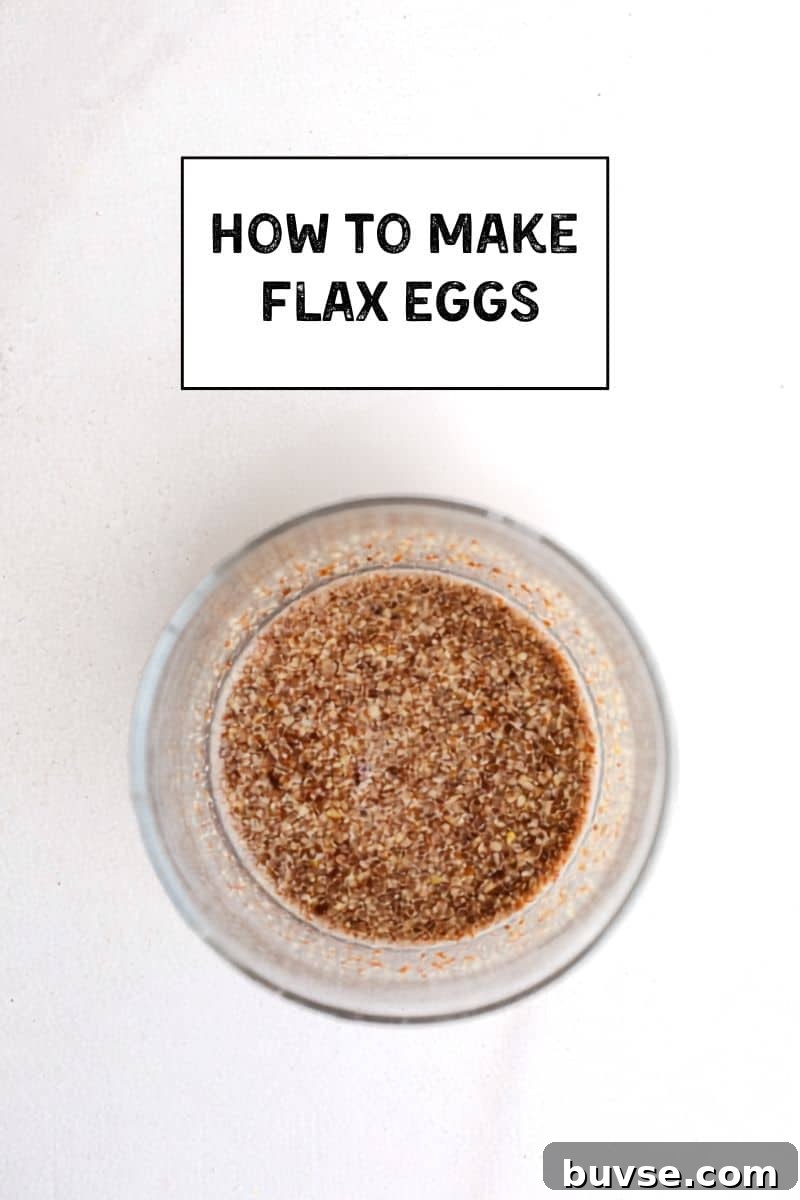
Have you ever wondered how to make flax eggs as a simple vegan or egg-free binder for baking? This guide explains exactly how much flaxseed to use per egg, step-by-step preparation, practical tips, and the kinds of baked goods where flax eggs work best.

Baking with Flax Eggs
Flax eggs are one of my go-to egg substitutes in vegan and egg-free baking. When ground flaxseed is mixed with water it forms a gel-like binder that helps batters and doughs hold together. It’s especially handy for quick breads, muffins, pancakes and many cookie recipes. I usually keep ground flaxseed in the pantry so I can mix a flax egg in minutes whenever a recipe calls for an egg.
Ingredients and Substitutions
Ground flaxseed — also called linseed — comes in golden or brown varieties. Ground flax is rich in fiber, plant-based fats and protein. When combined with water it forms a gel that mimics the moisture and binding qualities of an egg in many baked goods.
If you don’t have flax, chia seeds or psyllium husk can be used similarly to make vegan egg replacers. Each substitute varies slightly in texture and flavor, so choose one that suits your recipe.
Water — plain tap water is fine if it’s safe to drink. Warm or hot water speeds up the gelling process if you need the flax egg quickly, while room-temperature water will thicken within a few minutes.
How to Make Flax Eggs
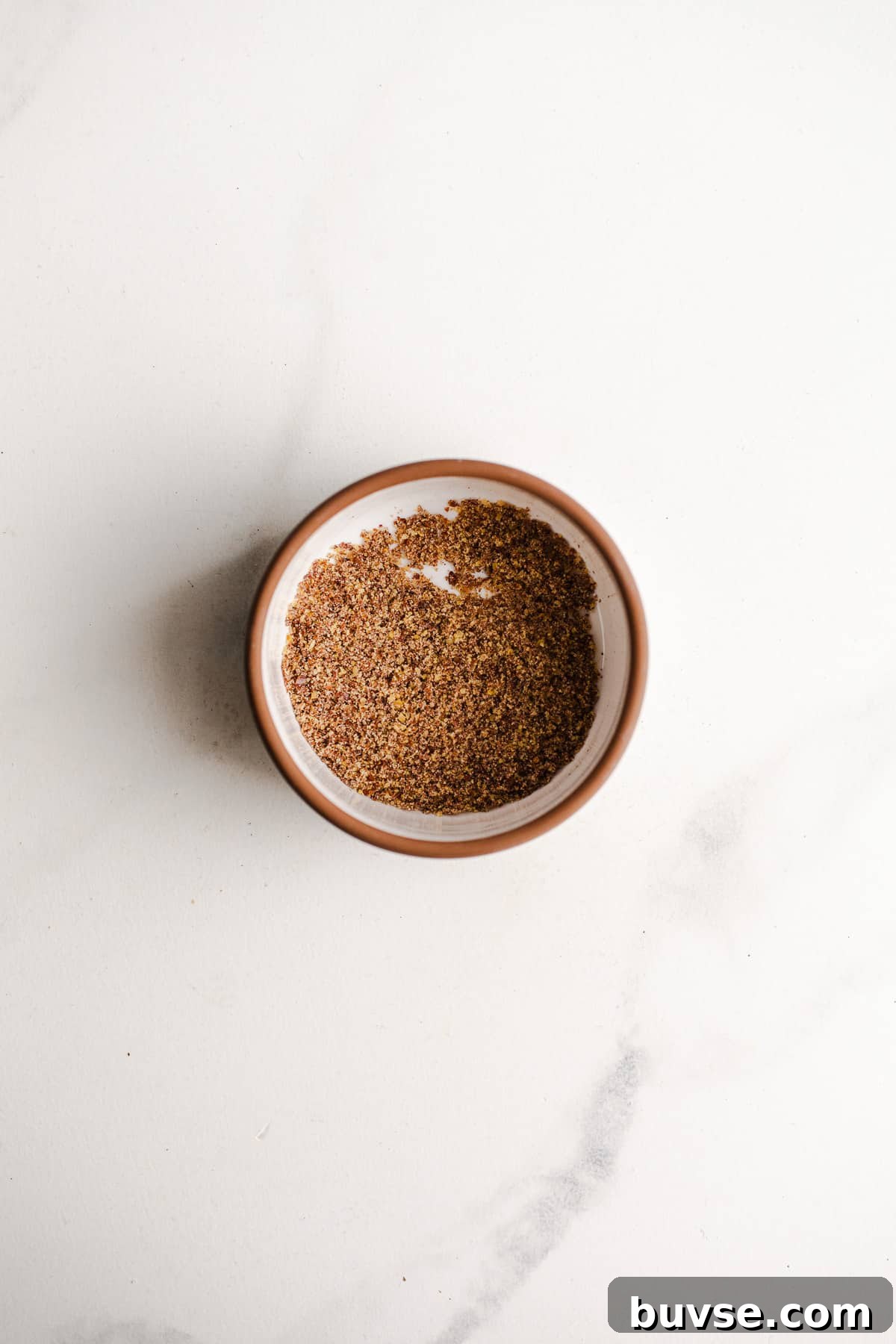
Step 1: Measure 1 tablespoon ground flaxseed into a small bowl and add 2 ½ tablespoons water. Stir until combined.
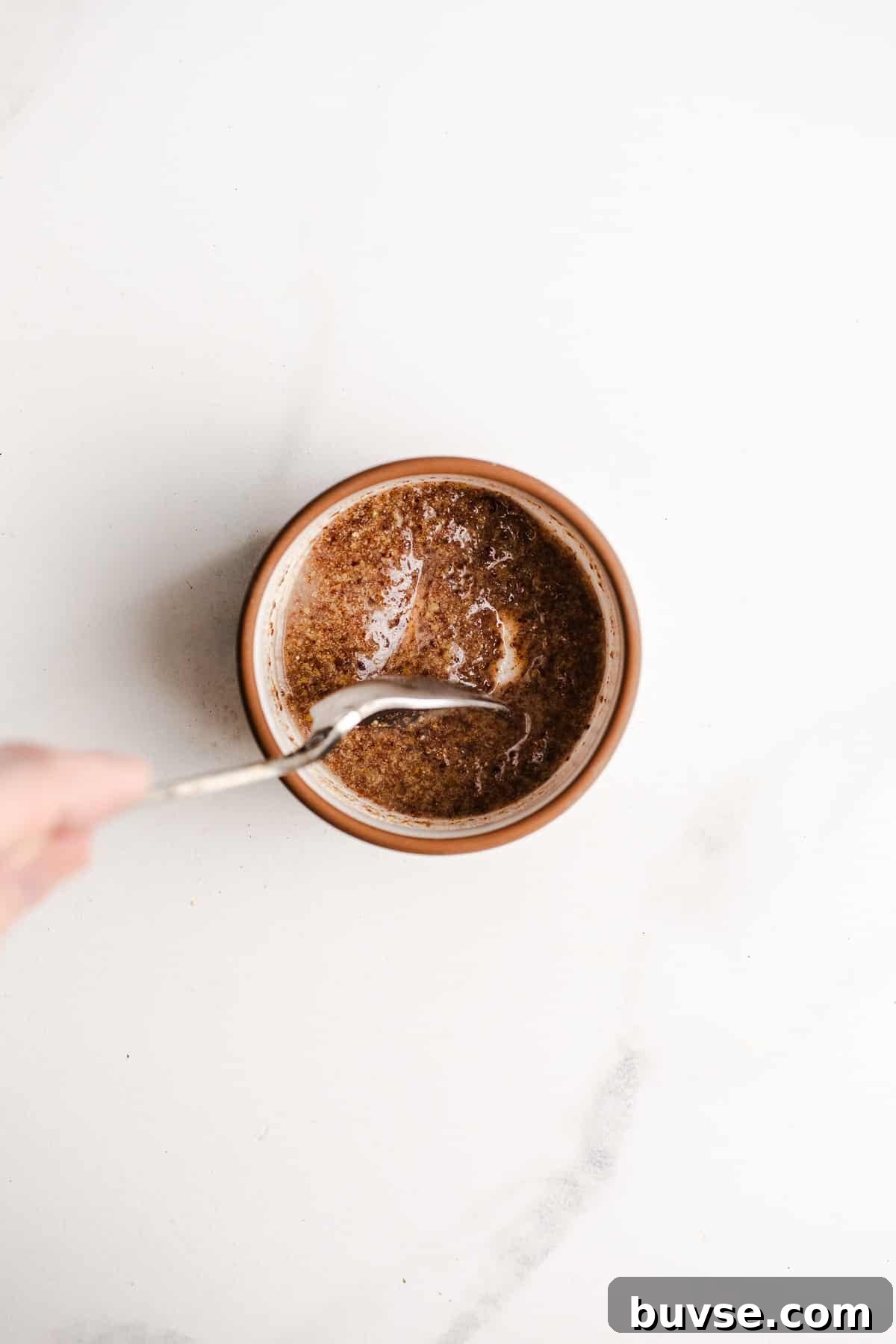
Step 2: Let the mixture sit for about 5 minutes, until it becomes thick and gel-like.
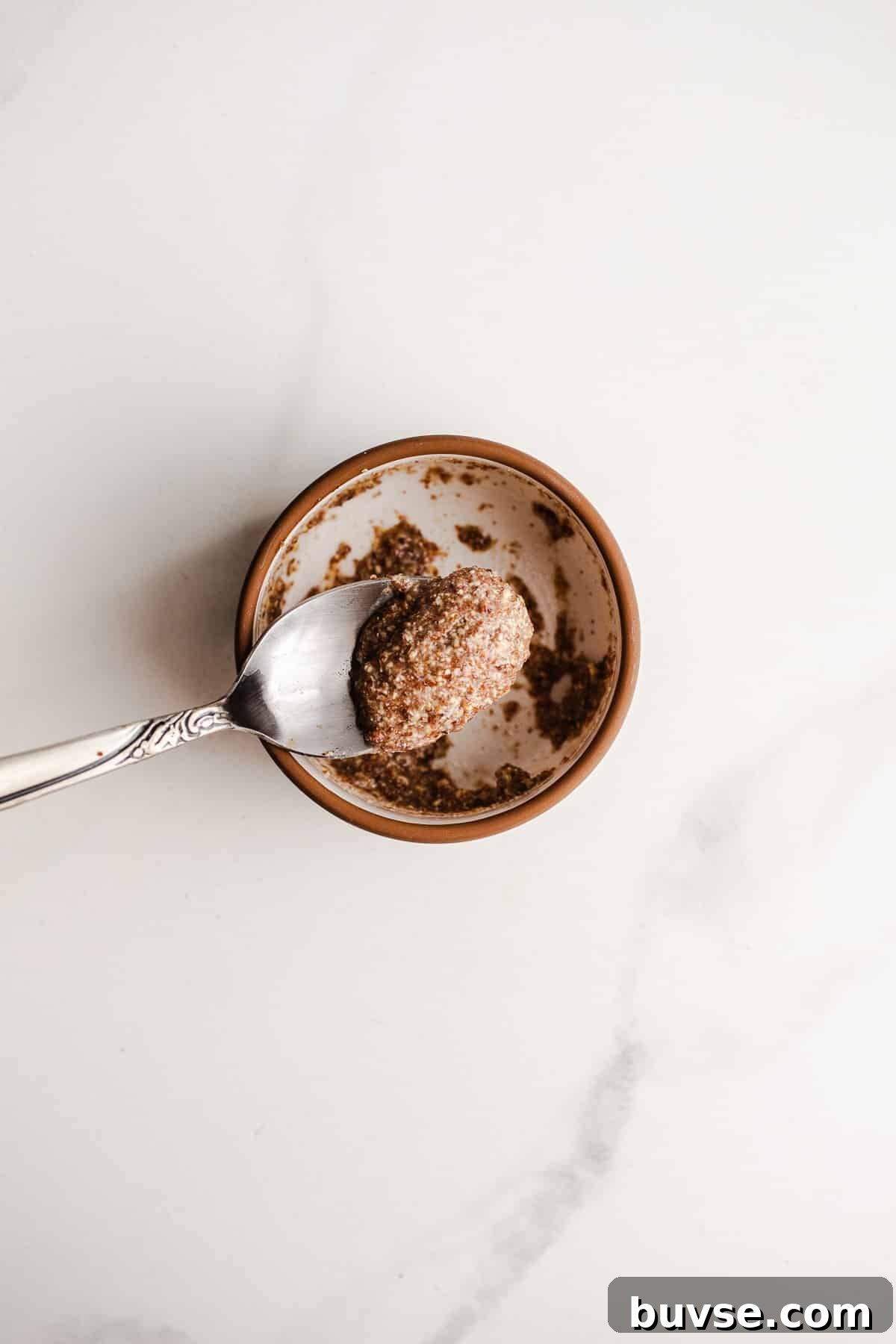
Step 3: Use this mixture in place of one large egg in your baking recipe. Flax eggs are best suited to recipes that need binding and moisture rather than lift from whipped egg proteins.
How to Use Flax Eggs as an Egg Substitute
Flax eggs are a reliable substitute in many types of baked goods. If you’re new to egg-free baking, start with recipes that are already developed for flax eggs or that note they can accept egg substitutes. With experience you’ll learn which recipes adapt well. Typical uses include:
- Muffins and quickbreads — Flax eggs add a nutty note and help crumb structure in recipes like chocolate chip muffins or banana bread.
- Pancakes, waffles and French toast — They help bind batter and add subtle toasty flavor; flax eggs can also thicken French toast batter where eggs are usually used.
- Cookies — Flax eggs add moisture and help cookie dough hold together, producing a soft, tender texture.
- Bars and brownies — Many egg-free bars and some vegan brownie recipes use flax eggs for binding. Classic fudgy brownies that rely on eggs for structure may not adapt well, so use recipes designed for egg substitutes.
- Cakes — Flax eggs work in simple cakes where eggs are not the main structural component, but they won’t replace whipped eggs in airy sponge cakes or genoise.
Recipe tips
- If you only have whole flaxseeds, grind them in a spice grinder, coffee grinder or blender before mixing with water.
- Ground flaxseed can go rancid faster than whole seeds due to its fats. Store ground flaxseed in the refrigerator or freezer to extend freshness.
- Golden and brown flaxseeds behave the same in recipes; golden flax produces a lighter crumb while brown flax can leave darker flecks.
- Allowing the flax and water to gel properly is what gives the mixture its binding power, so don’t skip the resting time.
- Flax eggs replace moisture and binding but not the aeration or lift provided by beaten eggs. Don’t expect them to work in recipes requiring whipped egg volume.
FAQs
Use 1 tablespoon ground flaxseed mixed with 2 ½ tablespoons water to replace one large egg.
They should form a slightly thick, glossy gel similar in texture to raw egg whites, with a speckled translucent brown or golden color depending on the seed used.
At room temperature, flaxseed and water usually gel in about 5 minutes. Hot water will thicken the mixture more quickly.
No. Flax eggs have a mild, nutty, toasty flavor more akin to seeds and nuts; they don’t have the sulfurous notes of chicken eggs.
More Recipes Using Flaxseeds
- Chocolate Chocolate Chip Bars (Gluten-Free, Vegan)
- Chocolate Almond Butter Protein Balls
- White Chocolate Chip Oatmeal Coconut Cookies (Gluten-Free)
- Flaxseed Porridge
If you try this method, I’d love to hear how it worked for your recipe — leave a rating and a comment on the recipe card if you can.
📖 Recipe

How To Make Flax Eggs
A simple combination of ground flaxseed and water makes a vegan egg replacer that works well in many egg-free baking recipes.
Ingredients
- 1 tablespoon ground flaxseed
- 2 ½ tablespoons water
Instructions
- Add the ground flaxseed and water to a small bowl. Stir well until fully combined.
- Let the mixture sit for 5 minutes, until thickened and gel-like.
- Use in place of 1 egg in baking recipes. Flax eggs work best in muffins, quick breads, pancakes, cookies and bars.
Notes
One tablespoon ground flaxseed combined with 2 ½ tablespoons water equals one large US egg.
Nutrition
Calories: 37 kcal | Carbohydrates: 2 g | Protein: 1 g | Fat: 3 g | Fiber: 2 g | Sodium: 4 mg