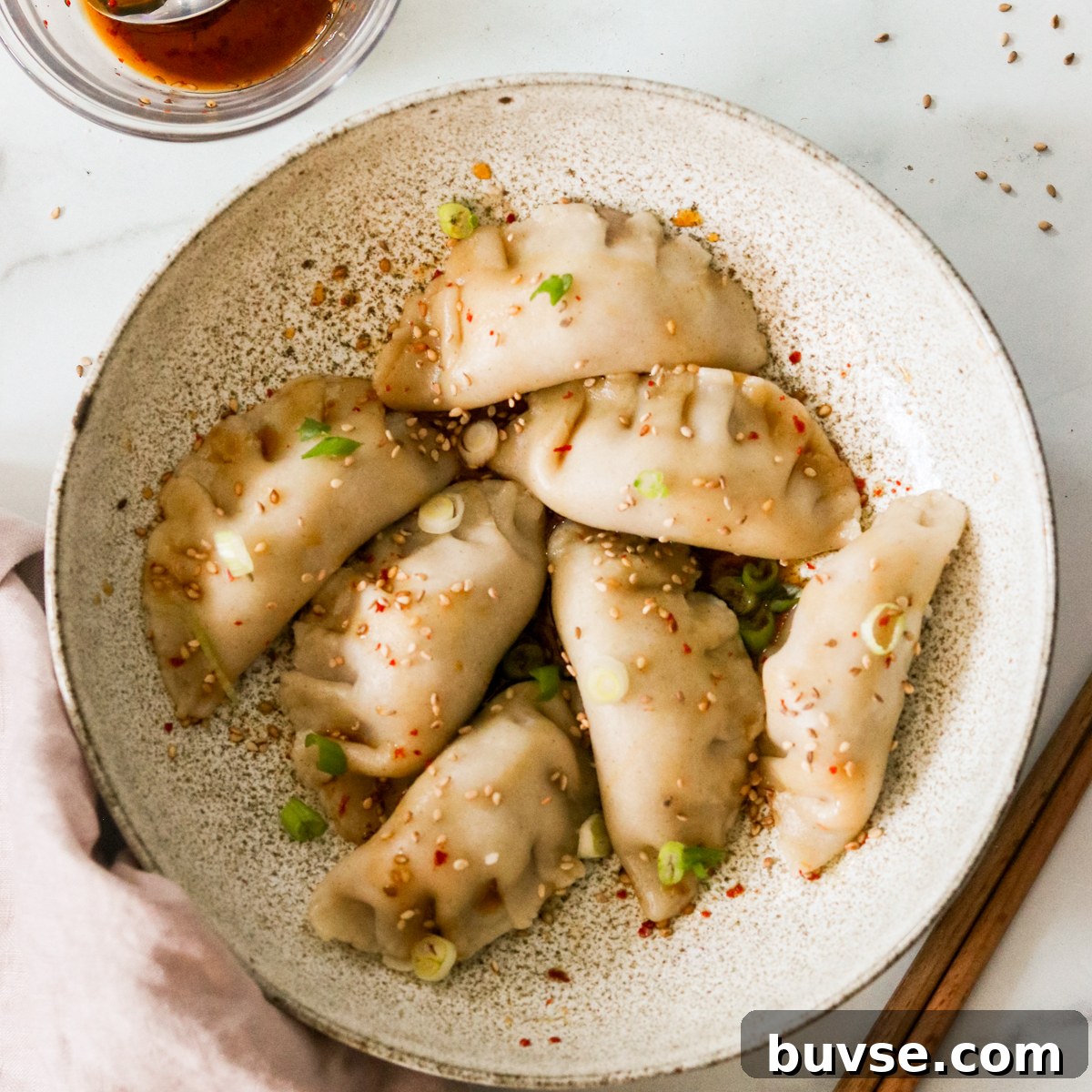
Make juicy Korean-style dumplings, or mandu (만두), from scratch. These dumplings are filled with seasoned meat and vegetables. This version includes a sturdy, easy-to-work-with gluten-free wrapper, though you can also use premade wrappers if you prefer. Serve them hot with a flavorful soy-based dipping sauce.
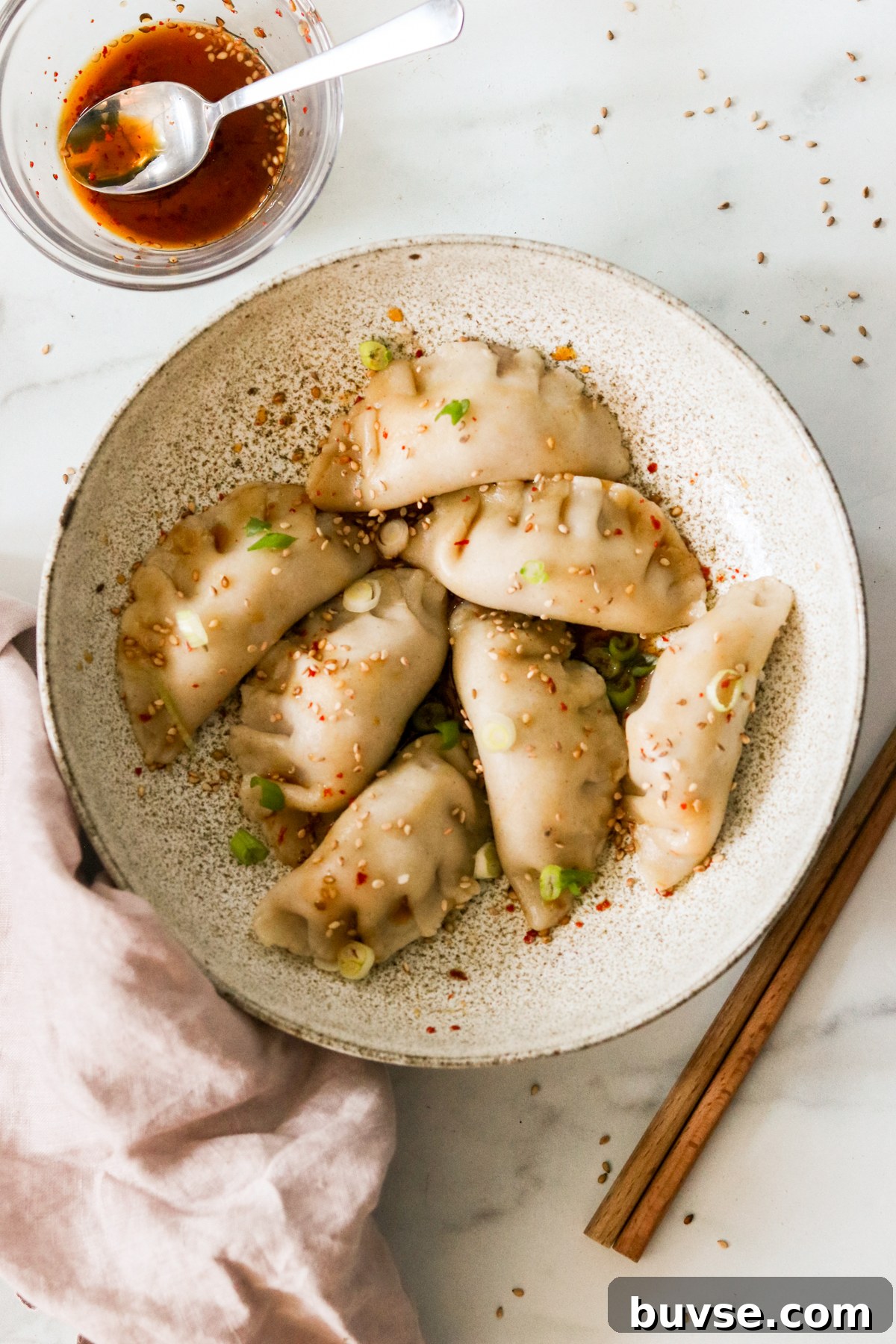
Why You’ll Love This Korean Dumpling Recipe (Mandu)
Mandu are a beloved part of many Korean celebrations and family meals — from Seollal (Lunar New Year) to Chuseok (harvest festival). Making mandu is a communal, hands-on activity: families often gather to prepare large batches, freezing extras for easy meals later. This recipe recreates that comforting experience at home, with an option for a gluten-free wrapper that still rolls thin and holds up during steaming or frying.
After switching to a gluten-free diet, many miss the texture of traditional dumpling wrappers. This recipe produces wrappers that are both resilient and delicate when rolled thin. The filling stays juicy and flavorful, and it’s flexible — swap proteins or vegetables to suit your pantry. The recipe below includes clear steps for making the filling, forming wrappers, and cooking mandu either steamed or pan-fried.
What is Mandu?
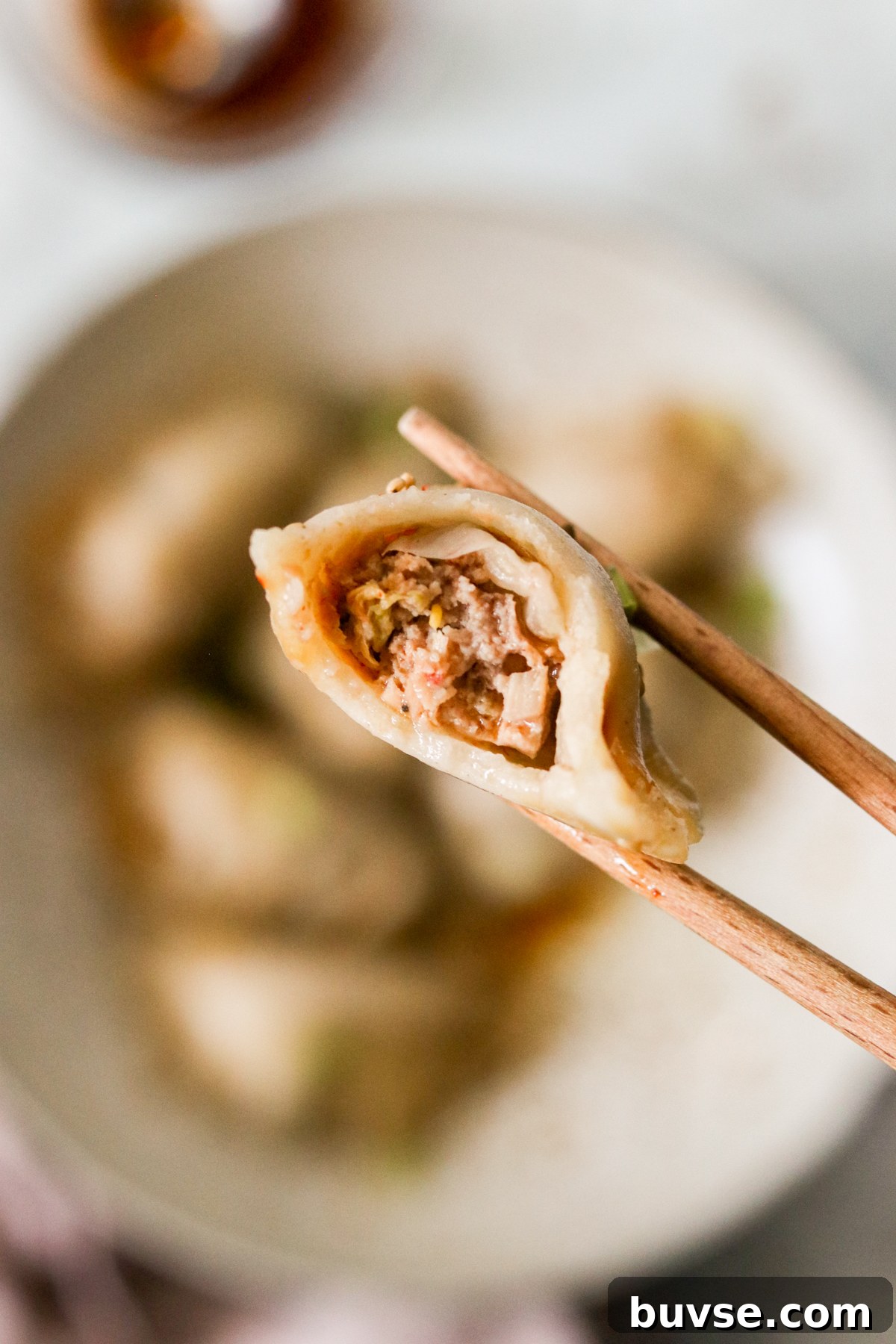
Mandu are Korean dumplings made by wrapping a seasoned filling in a thin dough. Fillings typically combine ground meat with vegetables such as chives, mushrooms, cabbage or kimchi, aromatics like garlic and ginger, and a binder like egg. Mandu take several shapes, most commonly a half-moon, and can be prepared in different ways: steamed (jjin mandu), pan-fried, or simmered in dumpling soup (mandu guk). They are traditionally served with a savory dipping sauce to enhance the umami flavors.
Ingredient Notes
If you do not require gluten-free wrappers, premade dumpling wrappers from an Asian market or grocery store will save time. For the filling, use well-fermented kimchi for robust flavor, or substitute finely chopped cabbage if kimchi isn’t available. For the gluten-free wrapper, a reliable all-purpose gluten-free flour blend plus a little xanthan gum helps produce a dough that stretches and seals well.
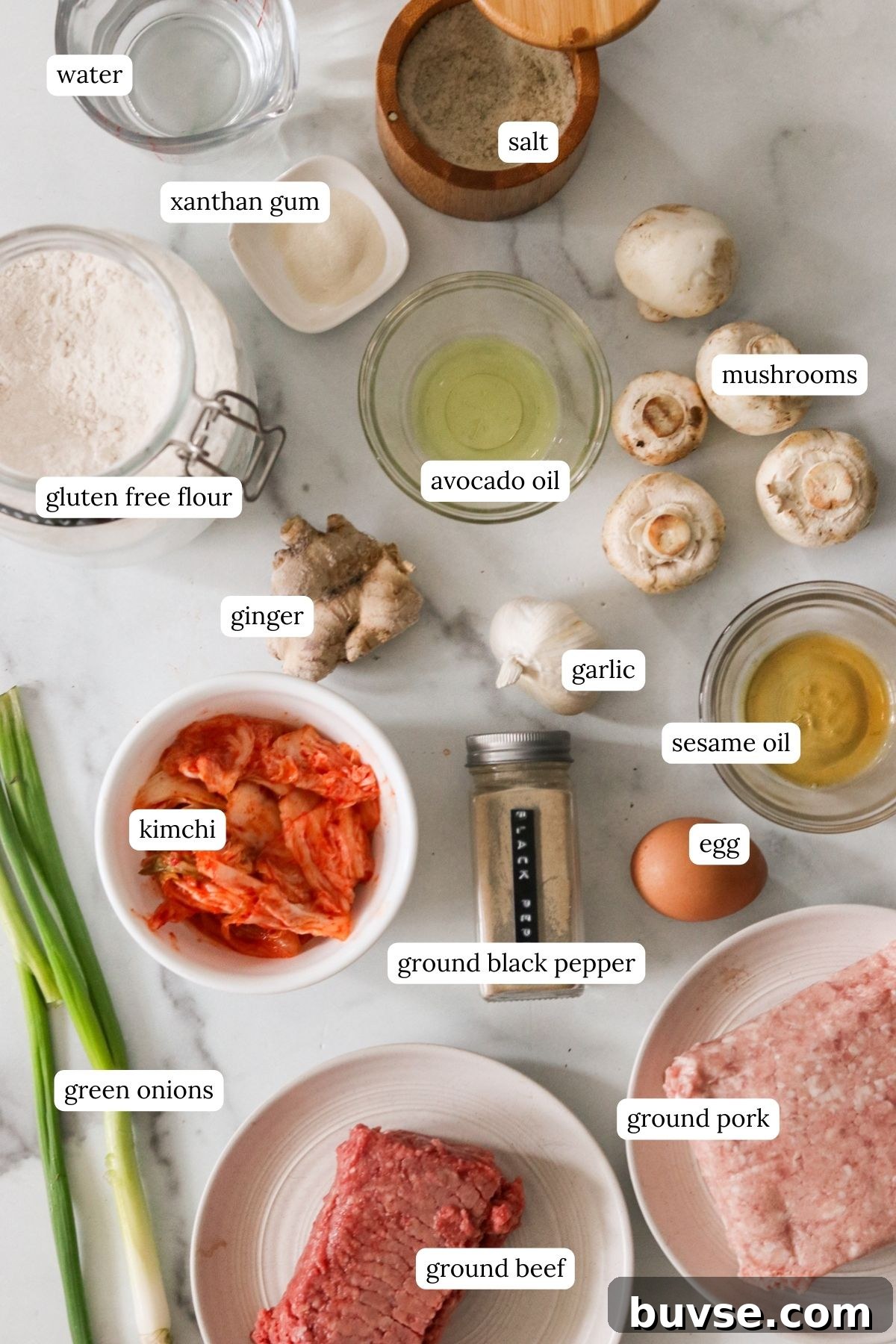
Filling Ingredients
- 1 lb ground pork
- 1/2 lb ground beef (or use ground turkey/chicken as preferred)
- 1 cup well-fermented kimchi, finely chopped (or chopped napa cabbage)
- 4 oz mushrooms, finely chopped (white or shiitake are good)
- 2 green onions, finely chopped
- 1 inch fresh ginger, grated
- 4 garlic cloves, minced
- 1 large egg (helps bind the filling)
- 2 tsp sesame oil
- 1 tsp sea salt and 1/2 tsp ground black pepper, or to taste
- Dipping sauce: a soy-based sauce to serve alongside
Gluten-Free Wrappers
- 3½ cups gluten-free all-purpose flour (use a trusted blend)
- 3/4 tsp xanthan gum (in addition to any in the flour blend)
- 1/2 tsp sea salt
- 1½ tbsp neutral oil (avocado, vegetable, or similar)
- 1½ cups hot boiled water, plus more as needed
Prepare a simple dipping sauce to taste — typically a mix of soy sauce, vinegar, sesame oil, and optional chili flakes or chopped green onion. Adjust proportions to your preference.
How to Make Mandu: Step-by-Step
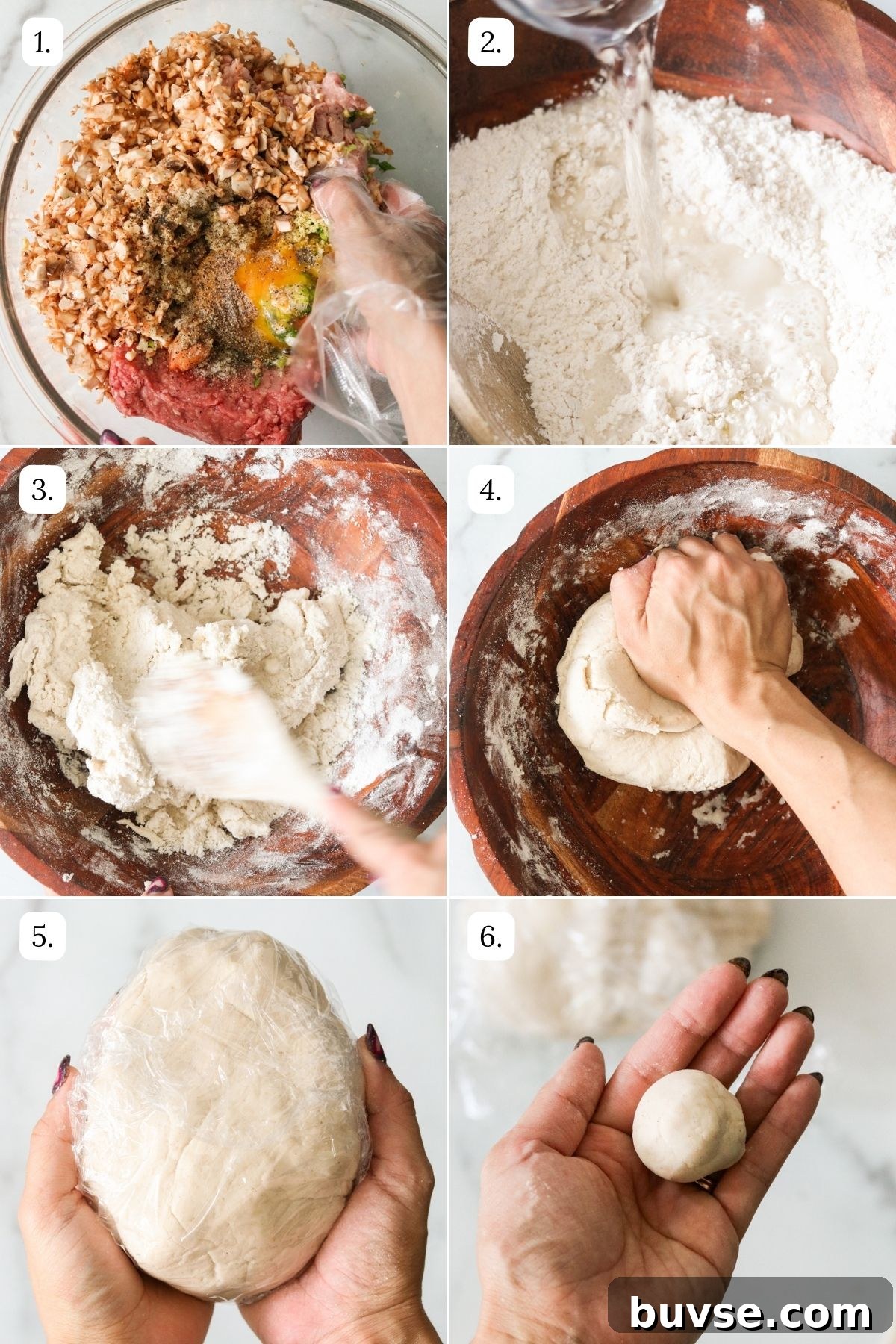
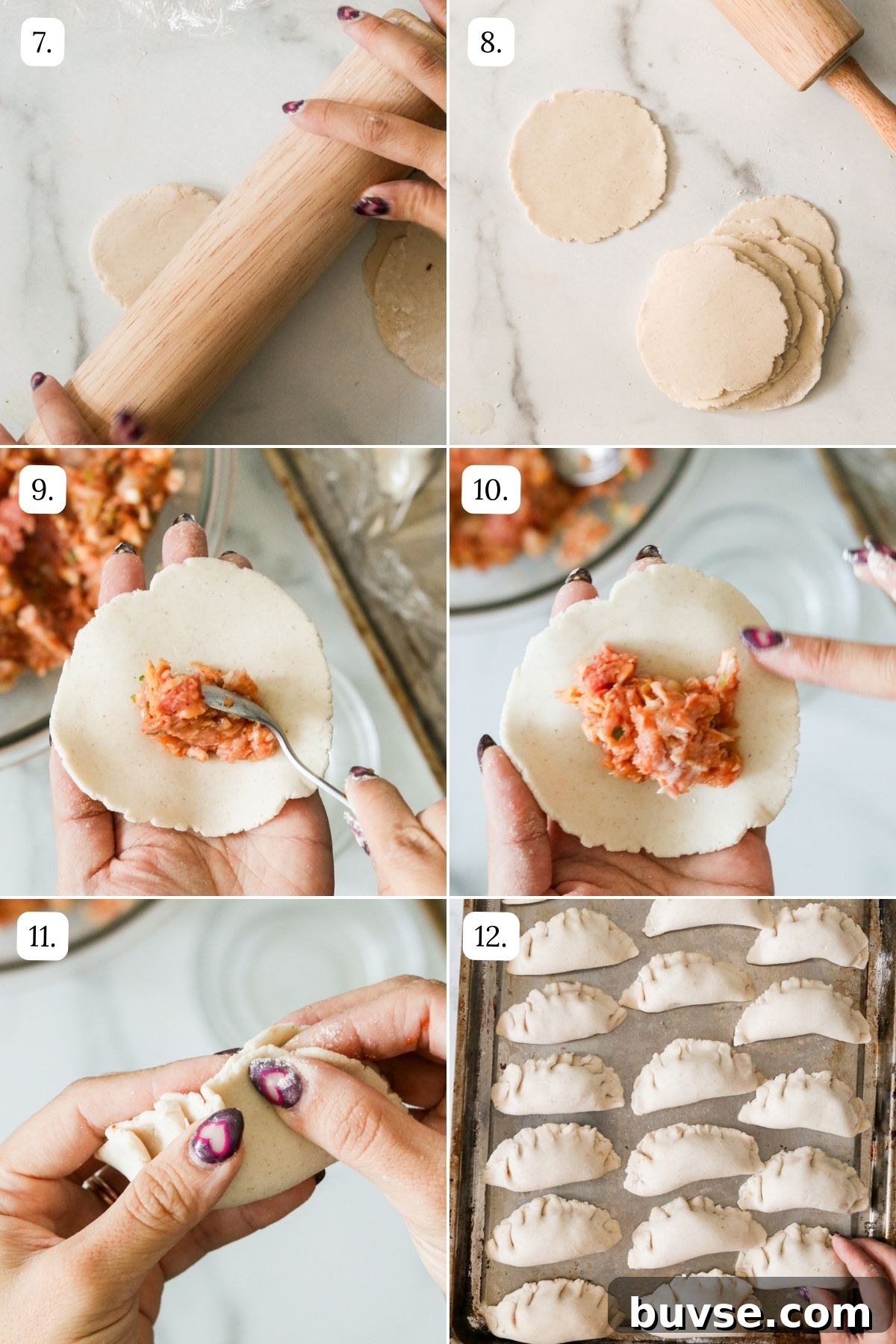
- In a large bowl combine all filling ingredients and mix until just incorporated. Cover and chill while you make the wrappers.
- Whisk together the gluten-free flour, xanthan gum, and salt in a large bowl.
- Add the oil and hot boiled water, stirring with a wooden spoon until the dough begins to come together. Add a little more water if needed to form a workable dough.
- Knead the dough by hand for about 5 minutes until smooth and slightly elastic. Wrap in plastic to prevent drying while you work.
- Divide the dough into small pieces and roll each into a 1-inch ball. On a lightly floured surface, use a rolling pin to flatten each ball into a thin circle about 1–2 mm thick and 3.5–4 inches in diameter.
- You can fill wrappers as you go, or make a stack of wrappers dusted with flour and stored in a resealable bag while you finish forming them. Wrappers freeze well if you aren’t ready to fill immediately.
- To assemble: place one wrapper in your non-dominant hand, add about 1½ tablespoons of filling to the center, and moisten the edge with water. Fold the wrapper in half and press the edges to seal; crimping with your fingers creates a neat edge.
- Set finished dumplings on a baking sheet covered with plastic wrap to prevent drying. Cook immediately or freeze (see notes).
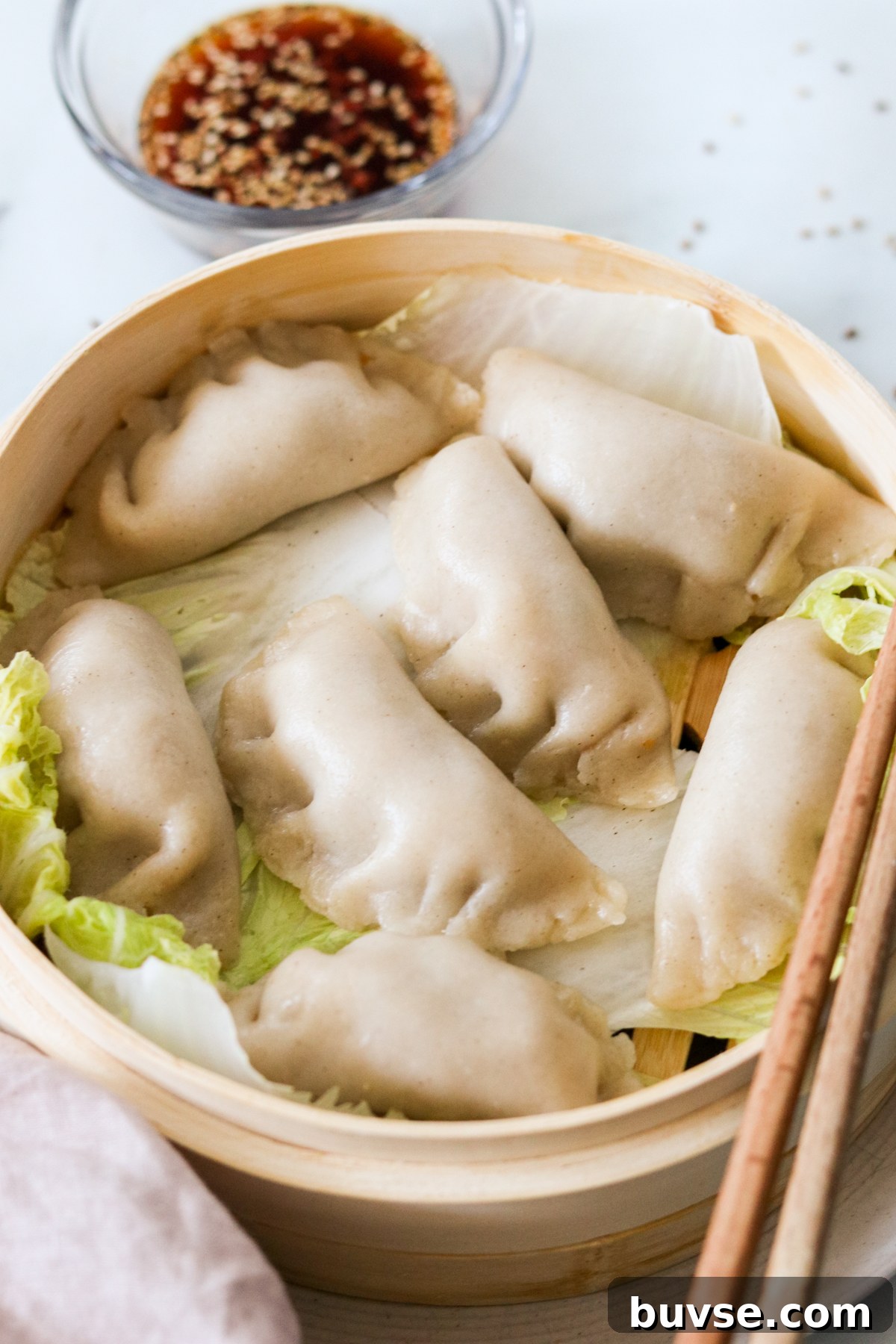
- To steam: Line a steamer basket with parchment, cheesecloth, or napa cabbage. Place dumplings in a single layer with space between them and steam over simmering water for 7–8 minutes (12–15 minutes if frozen) until fully cooked.
- To pan-fry: Heat a thin layer of oil in a nonstick skillet over medium. Brown the dumplings for 1–2 minutes, add 1/4 cup water, cover, and steam for 4–5 minutes (8–9 minutes if frozen). Uncover and cook until the water evaporates and bottoms are crisp.
- Serve hot with dipping sauce. They’re excellent drizzled with sauce or dipped for each bite.
Expert Tips
- Knead the dough well to develop elasticity and make rolling easier. Add small amounts of hot water if the dough feels too dry.
- Roll wrappers as thin as you can without tearing for the best texture and flavor.
- Avoid overfilling each wrapper — too much filling makes sealing difficult and increases the chance of leaks during cooking.
Storage Tips
- Make wrappers and filling ahead: wrappers can be frozen after step 6 in a resealable bag; the filling keeps for up to 2 days in an airtight container in the refrigerator.
- Do not store uncooked wrappers or dumplings in the refrigerator for long periods; moisture causes them to become soggy. Freeze instead.
- To freeze uncooked dumplings, arrange them on a baking sheet in a single layer and freeze for 2–3 hours until firm, then transfer to a freezer-safe bag for up to 3 months.
- Cooked mandu can be refrigerated in an airtight container for up to 3 days. Toss with a little sesame oil to prevent sticking.
More Korean-Inspired Recipes
Korean Pork Bulgogi (spicy or mild), Kimchi Pancake (Kimchijeon), Mayak Eggs (marinated eggs), Tteokguk (rice cake soup), and Instant Pot Korean Oxtail Soup are all wonderful to explore if you enjoy mandu and Korean home cooking.
Nutrition (Approximate)
Serving: 1 dumpling — makes about 50. Calories: ~68 kcal per dumpling. Carbohydrates: ~6 g. Protein: ~4 g. Fat: ~3 g. These values are estimates and will vary depending on specific ingredients and portion sizes.
Note: Some ingredient suggestions reference common product types. Affiliate or promotional relationships referenced in original posts have been removed from this version.