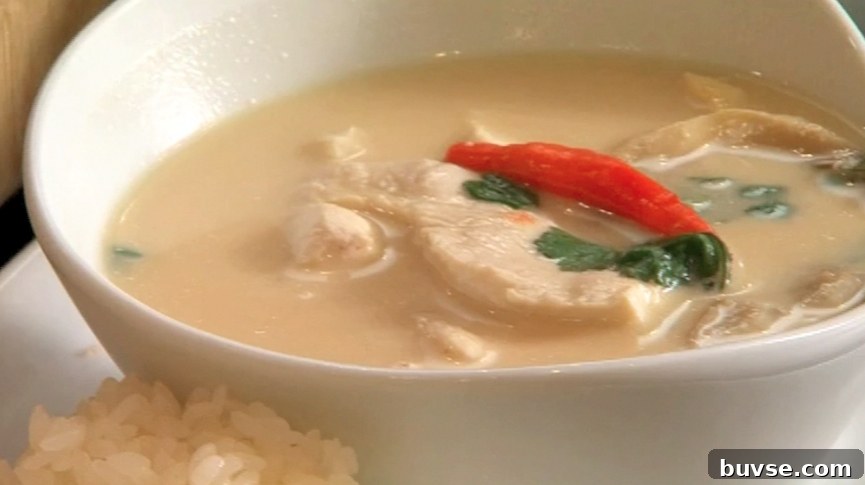
A Dish to Impress
Gai Tom Ka, better known to many as tom kha gai, is a fragrant Thai hot-and-sour coconut chicken soup that consistently ranks among Thailand’s beloved comfort foods. Its creamy coconut base balanced with citrusy lime, aromatic herbs, and a touch of heat makes it an ideal choice when you want a dish that feels special without being fussy. I love to make this soup for guests because it’s both elegant and deeply satisfying.
The charm of this Thai coconut chicken soup lies in its harmony of flavors: the richness of coconut milk, the bright acidity of lime or tamarind, the peppery bite of fresh chilies, and the warm, citrusy notes of lemongrass and kaffir lime leaves. Pieces of tender chicken and mushrooms often join the broth, turning a light starter into a comforting main. Because the ingredients are straightforward and the technique is forgiving, it’s an excellent option for entertaining—prepare most of the elements ahead of time, finish the soup quickly, and serve piping hot.
Common Ingredients and Flavor Profile
While recipes vary, some core ingredients define authentic tom kha gai: coconut milk for body and creaminess; galangal (a relative of ginger) for its distinctive, slightly floral heat; lemongrass and kaffir lime leaves for citrus perfume; fish sauce or salt to add umami; and fresh lime juice to brighten and balance. Chicken—often poached—adds protein without overpowering the aromatic broth. Mushrooms, particularly straw or oyster varieties, are a common addition, absorbing the broth’s flavors beautifully.
Serving Tips That Impress
When serving this Thai hot-and-sour coconut chicken soup to guests, presentation and timing make a big difference. Bring the soup to a gentle simmer rather than a rolling boil to keep the coconut milk from splitting and to preserve the delicate aromatics. Finish with fresh lime juice and chopped cilantro or Thai basil at the last moment for a vivid burst of color and flavor. Serve with steamed jasmine rice or a platter of lightly pickled vegetables to complement the soup’s richness.
Variations and Dietary Options
Tom kha gai adapts well to dietary preferences. For a vegetarian or vegan version, substitute vegetable broth for chicken broth and use tofu in place of chicken, adding soy sauce or miso for umami instead of fish sauce. If you prefer a milder soup, reduce the chilies and increase the citrus or coconut milk. For added texture and depth, some cooks include a splash of palm sugar or a small amount of tamarind to tweak the sweet-sour balance.
Why This Soup Works for Entertaining
This Thai coconut chicken soup feels impressive because it engages multiple senses: aroma from herbs and spices, visual contrast from fresh garnishes, and a layered palate of sweet, sour, salty, and spicy. It’s suitable for a variety of occasions—from casual dinner parties to special celebrations—because it can be portioned easily and finished at the last minute. Guests often appreciate a bowl of something warm and fragrant, and the soup’s familiar yet exotic profile tends to be a crowd-pleaser.
Whether you already know tom kha gai by name or you’re discovering Gai Tom Ka for the first time, this soup makes a memorable addition to any menu. With a few thoughtful ingredients and simple techniques, you can produce a bowl that’s comforting, elegant, and sure to impress the people at your table.