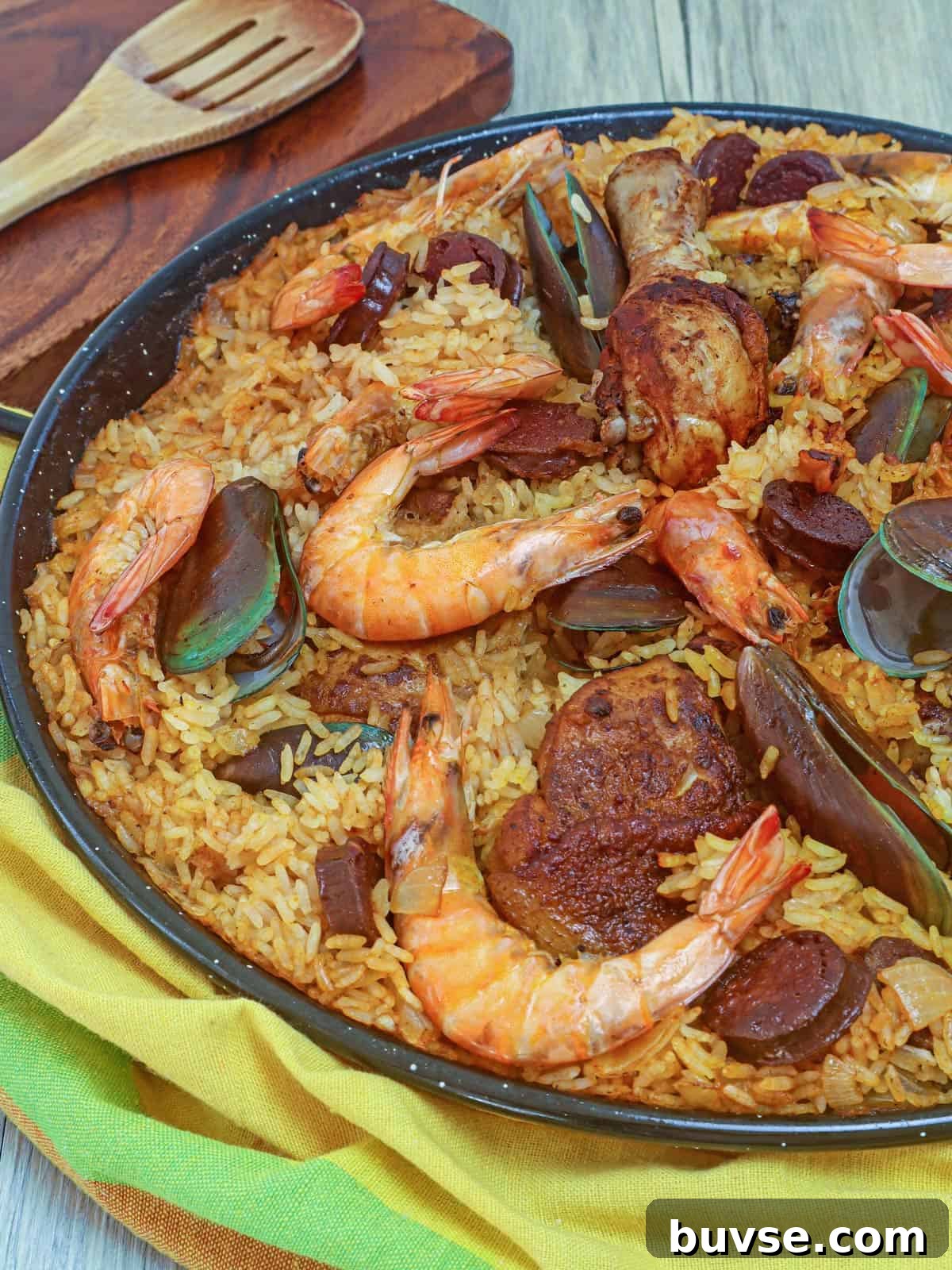
Paella made with saffron-infused rice, chicken, chorizo, and seafood is flavorful, satisfying, and a holiday favorite. This Spanish-inspired rice dish cooks in a single wide pan, making it perfect for gatherings and festive meals.
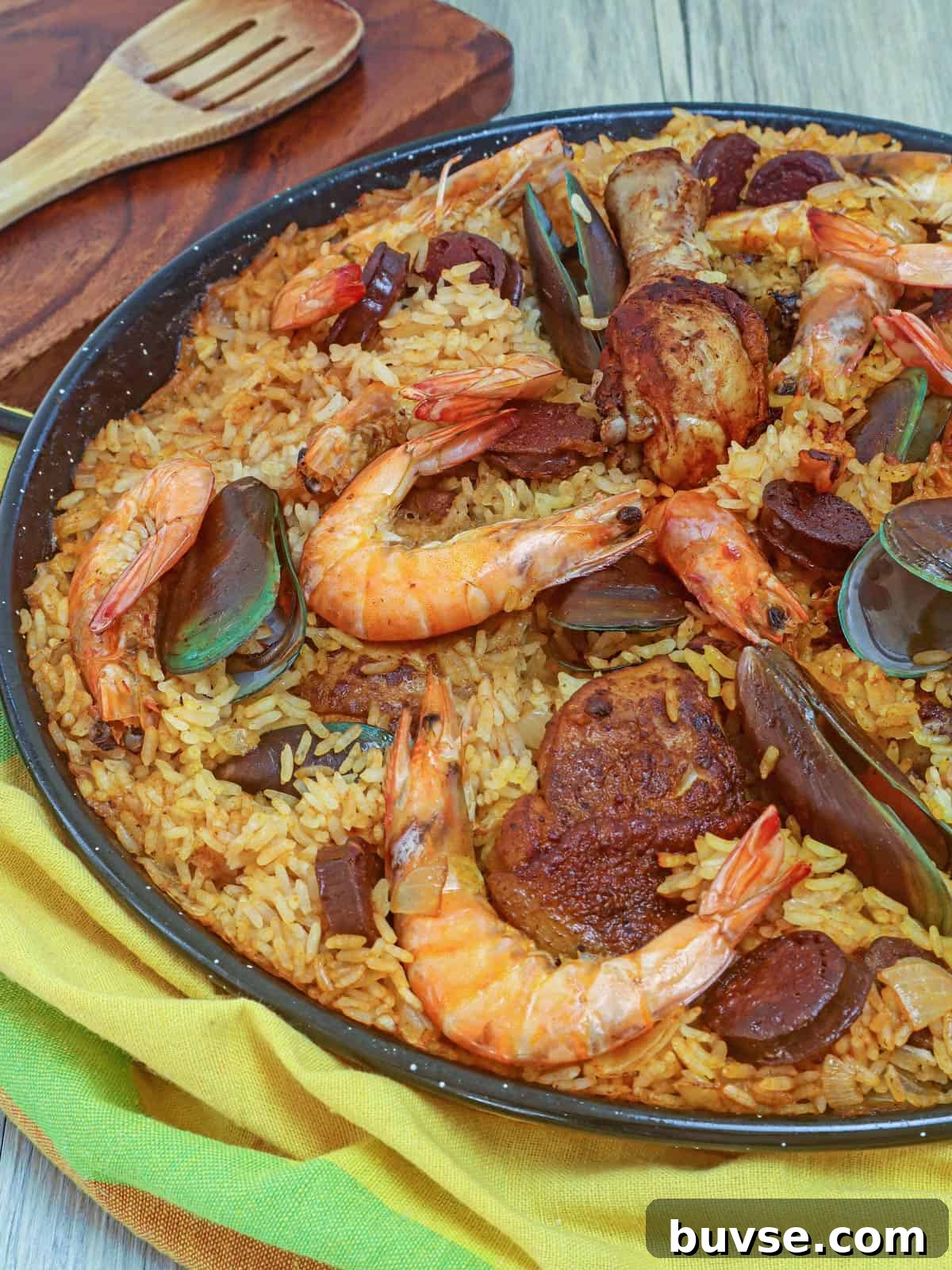
Paella is a traditional Spanish rice dish named after the paellera, the wide, shallow pan in which it is cooked and served. Classic versions use short-grain rice, local vegetables like butter beans or peas, and regional proteins—duck, rabbit, chicken, or seafood—depending on availability. Saffron threads are responsible for the dish’s warm golden color and distinctive aroma; when saffron is unavailable, turmeric or safflower can be used as a more affordable substitute.
Although many consider paella a national symbol of Spanish cuisine, its origins lie in the Valencia region. From there it evolved into many variations around the world: Paella Valenciana (the original), seafood paella (paella de mariscos), and mixed paella that combines meat, seafood, and vegetables. Each version highlights local ingredients and cooking customs.
The Philippine Paella
The Filipino version of paella—often called paelya—reflects centuries of Spanish influence blended with local tastes. Commonly made with chicken, chorizo, prawns, and sometimes coconut-flavored rice, this iteration appears at celebrations and holidays where more expensive ingredients like saffron and seafood are justified. Filipino paella is a showstopping centerpiece for Christmas and family gatherings because it’s both generous and visually impressive.
Another Filipino adaptation is Arroz Valenciana, which typically incorporates glutinous rice and coconut milk for a creamier, more locally textured dish. Both versions illustrate how versatile paella is and how it adapts to available ingredients.
Ingredient notes
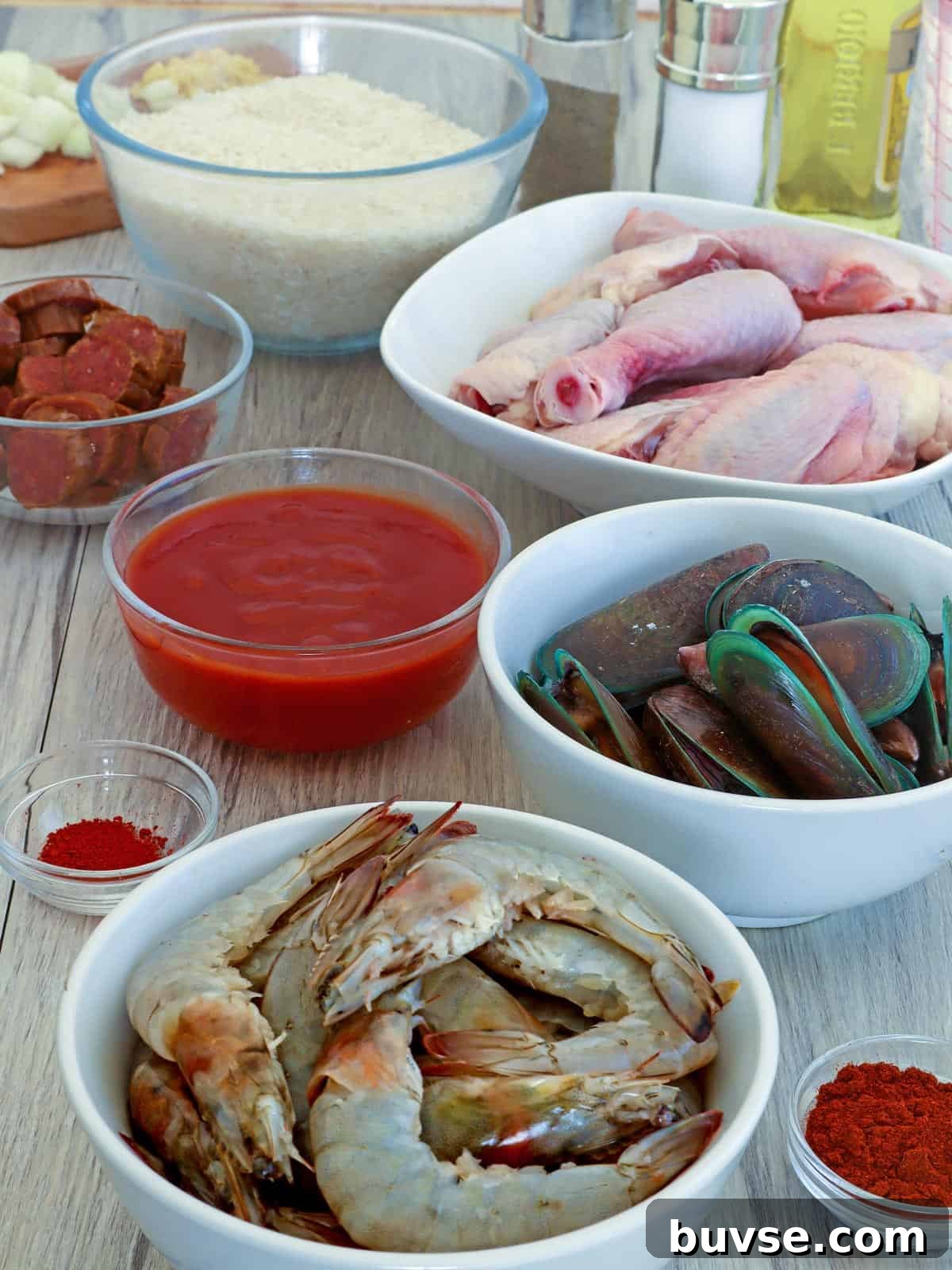
- Rice – This recipe uses long-grain rice for accessibility, but traditional paella calls for short-grain varieties such as Bomba, Valencia, or Calasparra for better absorption and texture.
- Saffron – Saffron adds a floral, slightly sweet aroma and that classic golden color. It’s expensive; turmeric or safflower (kasubha) can be used as budget-friendly alternatives.
- Chicken – Bone-in pieces give more flavor. If you prefer boneless cuts, use larger pieces so they cook evenly with the rice. Duck or other local proteins can substitute.
- Chorizo de Bilbao – A dry, semi-cured pork sausage with a smoky, slightly spicy profile. Spanish chorizo can be used as a substitute if Bilbao chorizo is not available.
- Seafood – Shrimp and mussels are common additions. For variety, add squid rings, littleneck clams, or lobster for a more luxurious paella.
Cooking tips
- Use a paellera or any wide, shallow pan so the rice cooks evenly and moisture can evaporate. The pan should be large enough to give the rice room to spread in a single layer.
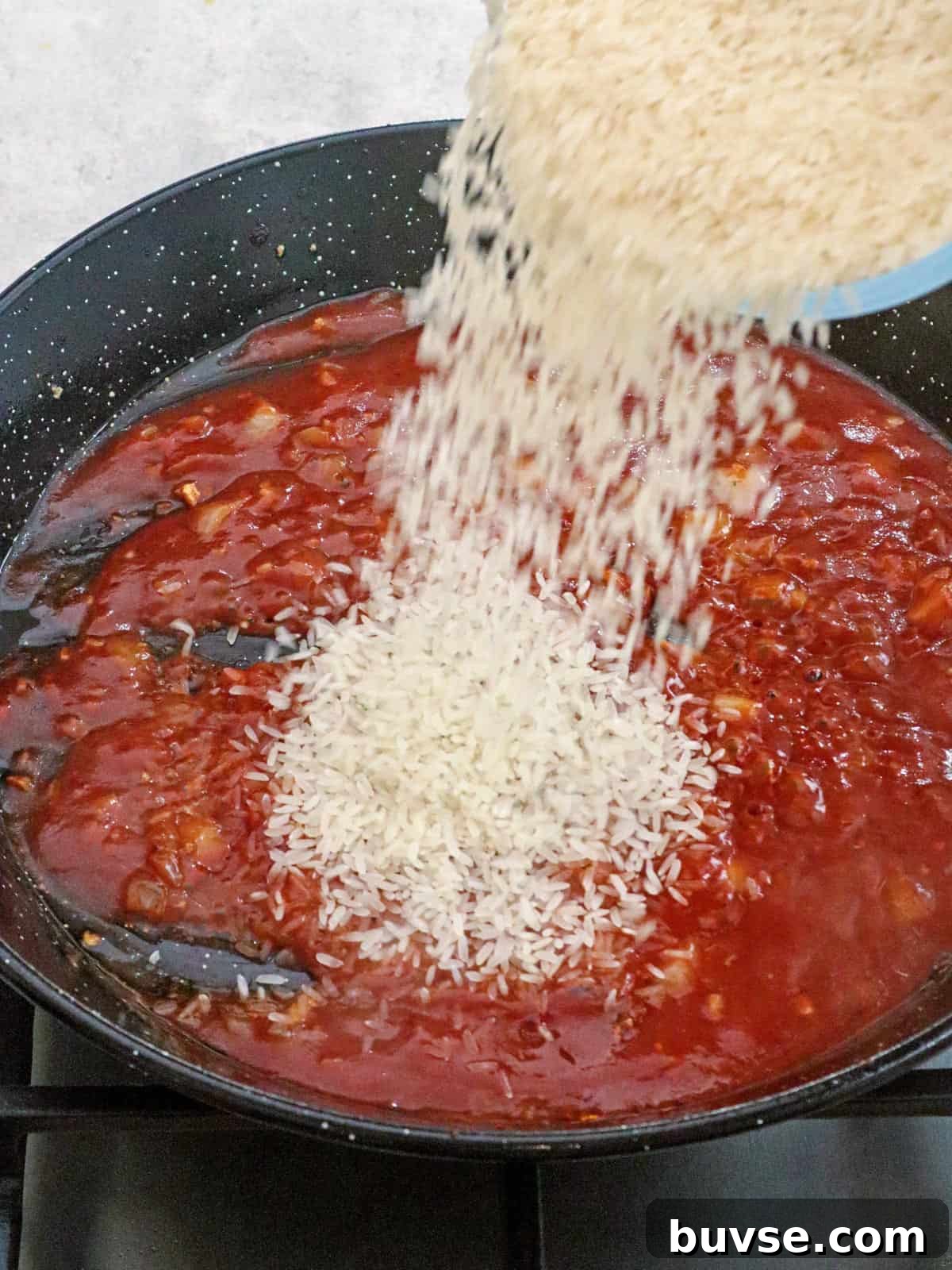
- After you briefly stir the rice to coat it in sauce, avoid stirring while it simmers. Leaving it undisturbed helps develop even cooking and the desired crust on the bottom.
- When cooking is finished, remove the pan from heat and let the paella rest, covered, for at least 10 minutes so the rice finishes absorbing liquid and the flavors settle.
What is a socarrat
The socarrat is the thin, toasted crust that forms on the bottom of a well-made paella. It develops naturally as the liquid reduces and the rice cooks, or you can encourage it by increasing the heat for a minute or two at the end of cooking. The socarrat adds a toasty, aromatic contrast to the tender rice above.
How to serve and store
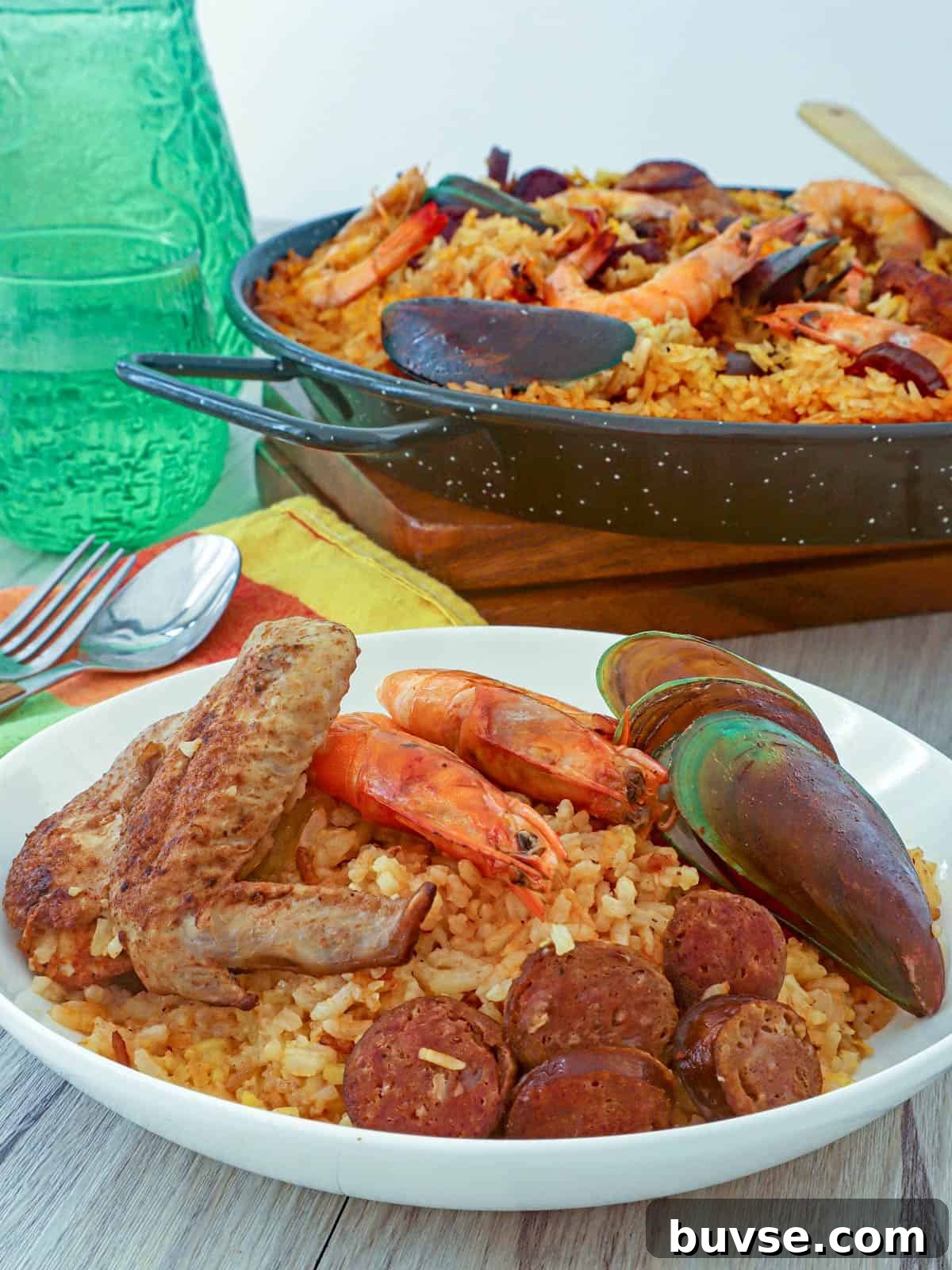
- Serve paella directly from the pan for the most authentic presentation. Brighten the dish with lemon wedges and offer crusty bread or fried plantain slices on the side if desired.
- Store leftovers in an airtight container once cooled. Refrigerate for up to 3 days or freeze for up to 2 months. For safety, do not leave cooked paella at room temperature for more than 2 hours.
- To reheat, warm paella gently in a wide skillet with a splash of olive oil and stir to loosen the rice. Alternatively, reheat in the microwave in 2–3 minute intervals, stirring between intervals until evenly heated.
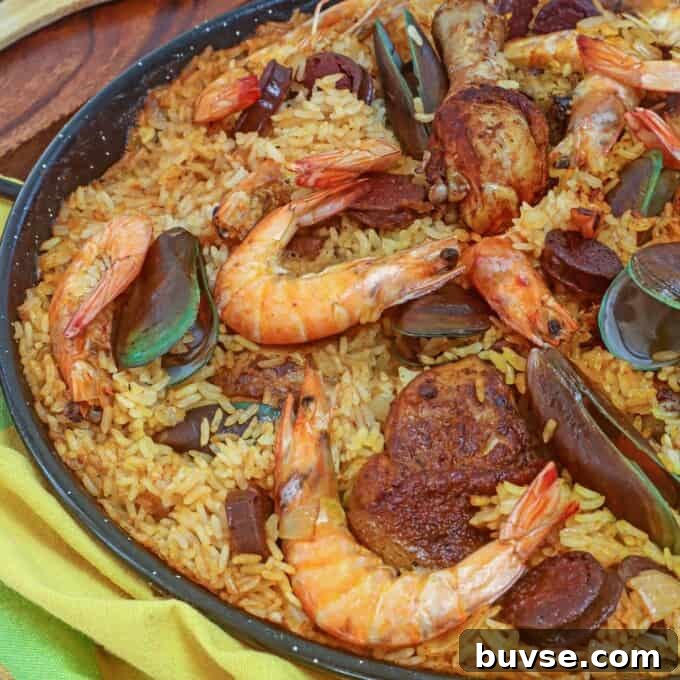
Paella
Prep Time: 30 mins · Cook Time: 1 hr · Total Time: 1 hr 30 mins · Servings: 12 · Author: Lalaine Manalo · Course: Main Entree
Ingredients
- 3 pounds whole chicken, cut into serving parts
- 1 tablespoon sweet paprika
- Salt and pepper to taste
- 2 tablespoons olive oil
- 5 ounces chorizo de Bilbao, sliced thickly
- 3 cloves garlic, peeled and minced
- 1 onion, peeled and chopped
- 1 cup tomato sauce
- 4 cups long grain rice
- 1 teaspoon saffron threads
- 6 cups warm water
- 1 pound large shrimp, shells removed or peeled, tails optional
- 1 dozen mussels or littleneck clams, scrubbed
Equipment
- Paellera or a wide, shallow skillet
Instructions
- In a bowl, combine the chicken with sweet paprika, salt, and pepper. Rub the seasoning over the pieces and marinate in the refrigerator for about 30 minutes.
- Heat olive oil in a paella pan or wide skillet over medium heat. Add the chorizo and cook 2–3 minutes until lightly browned. Remove and set aside.
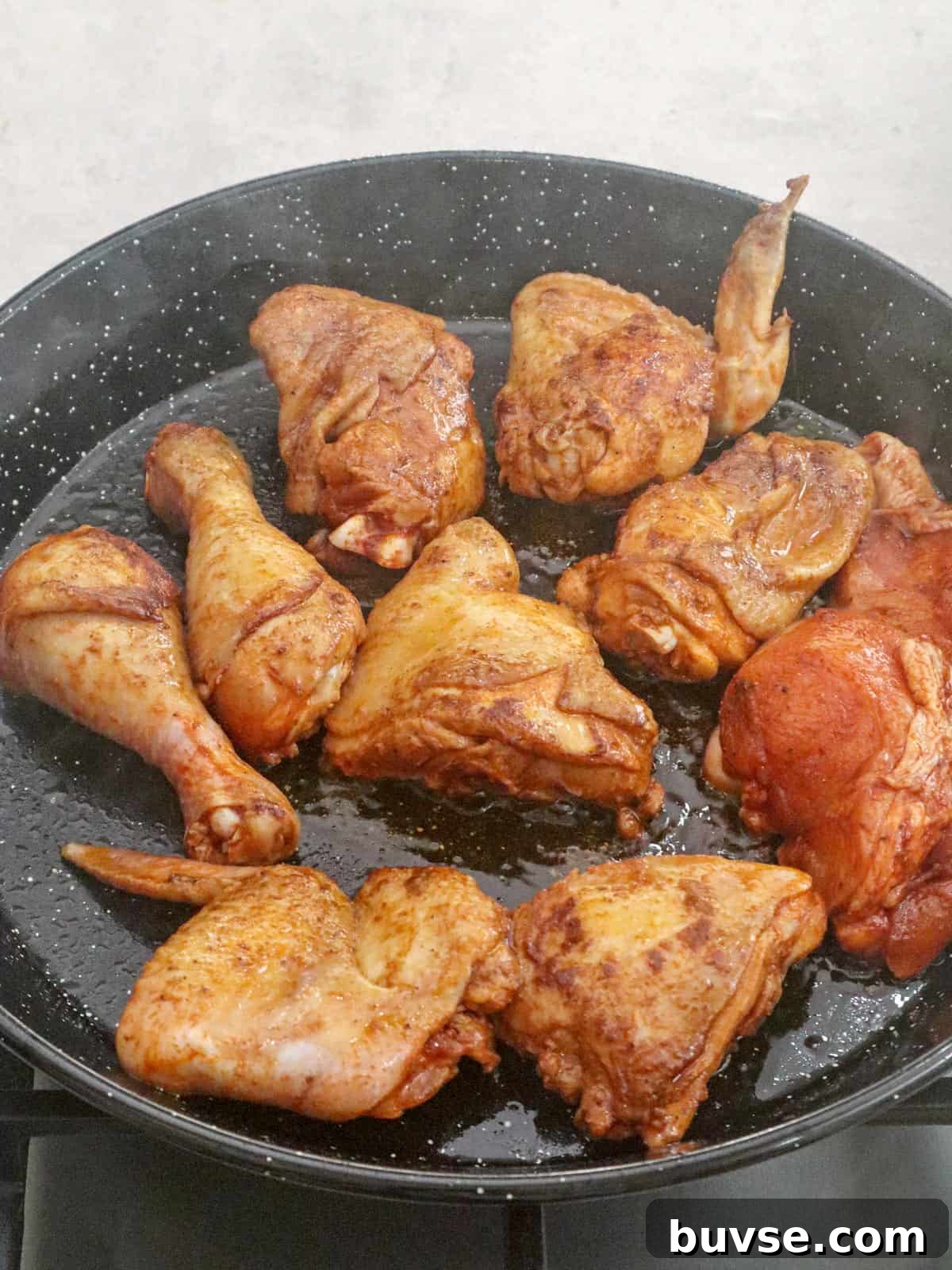
- Add the chicken pieces to the pan and brown on all sides. Remove and set aside with the chorizo.
- If needed, add a little more oil. Sauté the onion and garlic for 2–3 minutes until softened.
- Stir in the tomato sauce and cook until it reduces slightly.
- Add the rice and stir briefly to coat all grains with the sauce.
- Pour in the warm water and bring to a gentle boil.
- Return the chicken and chorizo to the pan and sprinkle in the saffron threads.
- Tuck the shrimp and mussels into the rice, distributing them evenly.
- Cover the pan, reduce heat to low, and simmer without stirring for 15–20 minutes or until the rice is tender and liquid absorbed.
- To form a socarrat (toasted crust), increase heat to high for 1–2 minutes at the end, listening for a slight crackling—be careful not to burn it.
- Remove from heat and let the paella rest, covered, for about 10 minutes before serving. Serve hot.
Notes
- Use a wide, shallow pan so rice cooks evenly and moisture can evaporate. A single-layer of rice helps develop texture and flavor.
- Limit stirring once the rice is simmering. Stirring prevents the formation of the socarrat and can make the rice gummy.
- Let the paella rest covered after cooking so it finishes absorbing any remaining liquid and the flavors meld.
Nutrition Information
Calories: 451 kcal · Carbohydrates: 52 g · Protein: 24 g · Fat: 15 g · Saturated Fat: 4 g · Cholesterol: 144 mg · Sodium: 542 mg · Fiber: 1 g