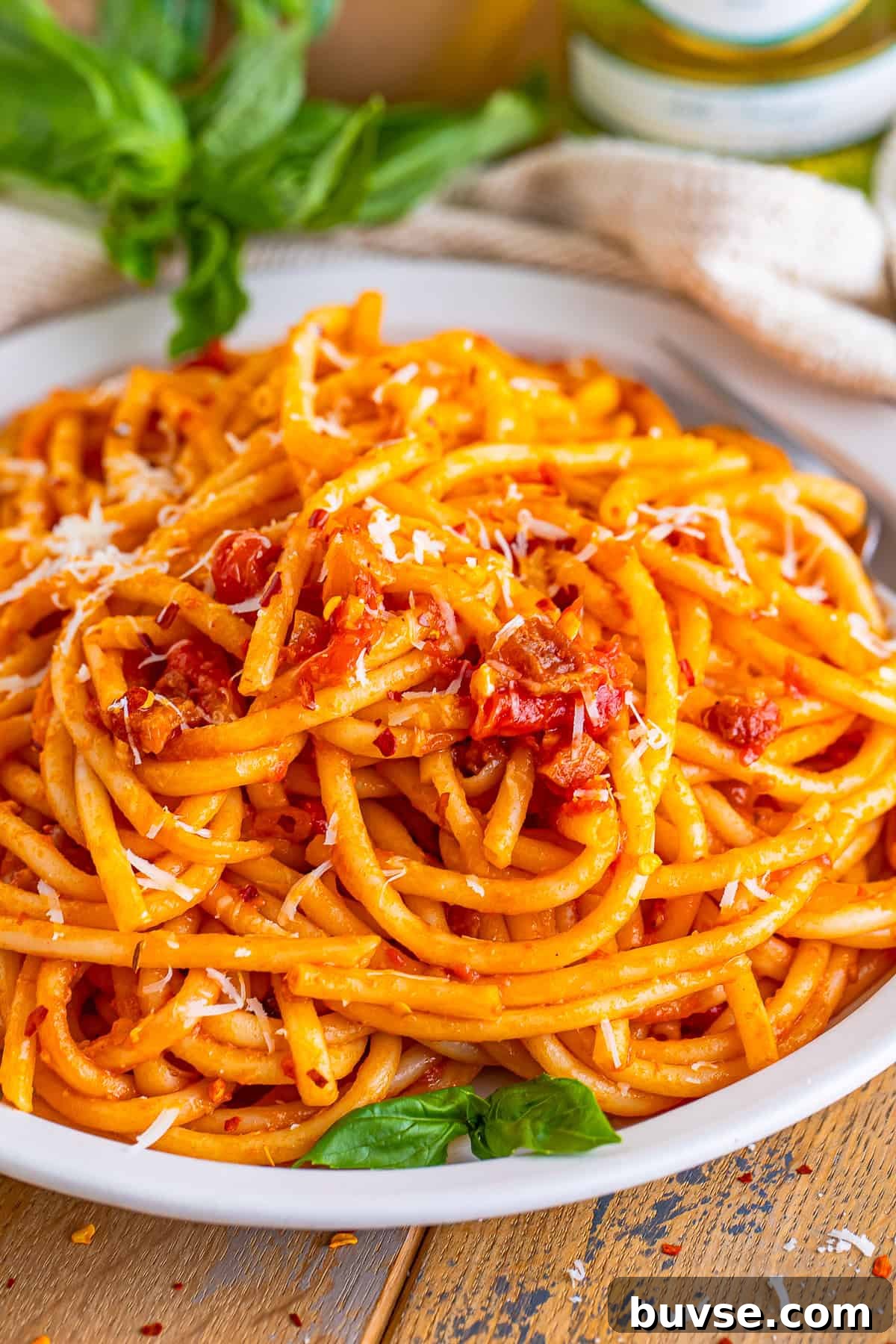
Pasta Amatriciana is a Roman classic that turns a handful of ingredients—crispy guanciale, crushed San Marzano tomatoes, bucatini, and pecorino—into a smoky, spicy, deeply savory tomato sauce. The first time I made it on a chilly Sunday afternoon, the whole house smelled like a trattoria before the pasta water even boiled. If you prefer a quicker garlic-forward pasta some nights, a simple spaghetti aglio e olio is another excellent classic to try.
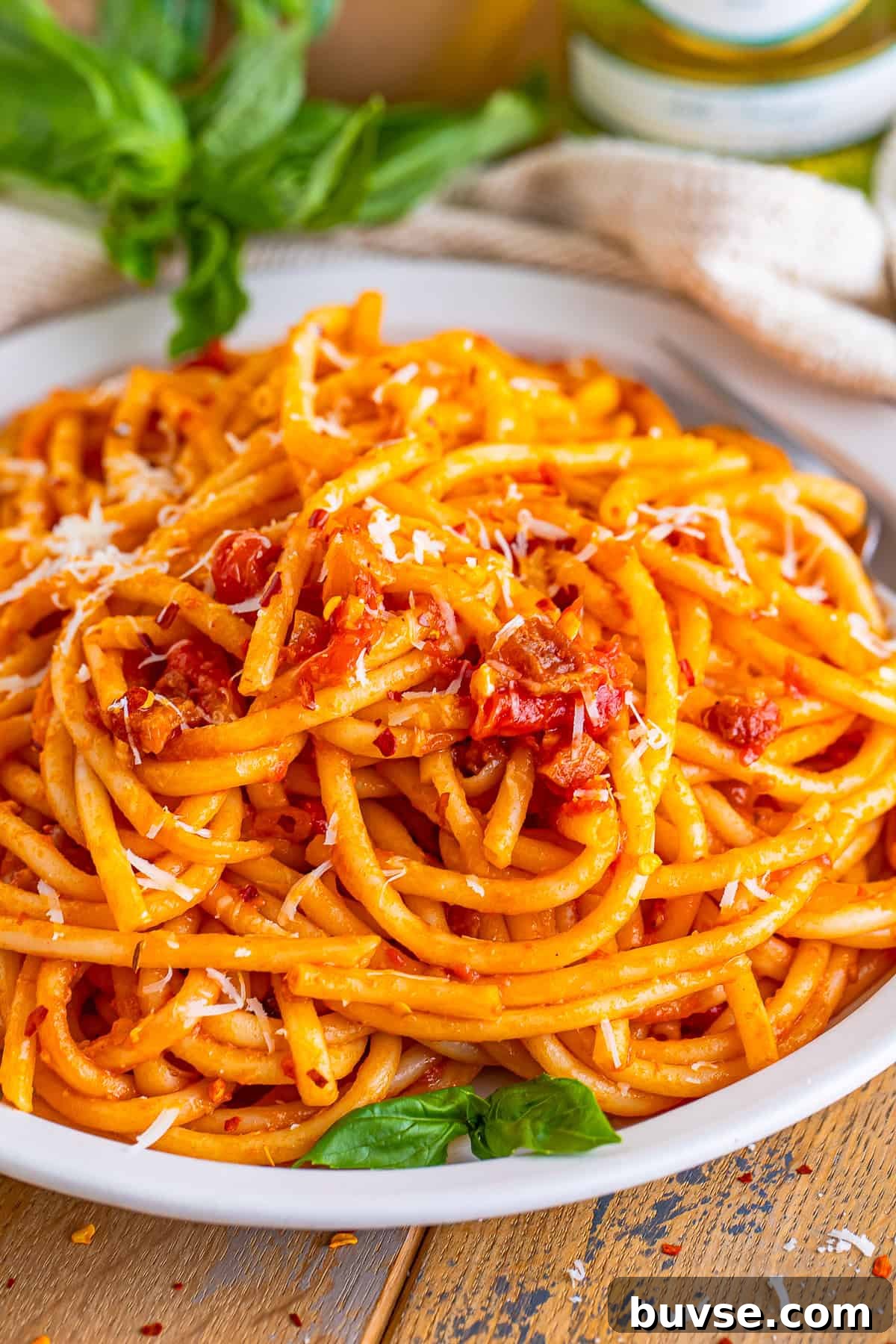
Crispy guanciale, hand-crushed San Marzano tomatoes, and thick bucatini combine to make an unforgettable bowl of pasta with balanced richness and bright tomato flavor.
Pasta Amatriciana Quick Look
- Prep time: 15 minutes
- Cook time: 45 minutes
- Total time: 1 hour
- Servings: 6
- Calories: 578 kcal
- Flavor profile: Smoky, savory tomato sauce with a gentle red pepper kick
- Difficulty: Intermediate
Quick Answer
How to make Pasta Amatriciana: Crisp diced guanciale in a large pot until the fat renders and the edges are golden. Cook diced onion in the rendered fat until translucent, then add garlic and red pepper flakes briefly. Deglaze with a splash of dry white wine, add hand-crushed San Marzano tomatoes, and simmer uncovered until thickened, about 15–20 minutes. Meanwhile, cook bucatini to just shy of al dente and reserve a cup of pasta water. Add the drained bucatini to the sauce with some reserved pasta water, toss vigorously until the sauce becomes glossy and coats the pasta, then finish off the heat with freshly grated pecorino romano.
Why This Recipe Works
Technique highlights
- Guanciale is the flavor engine. Cured pork jowl renders a silky fat and yields crisp, savory bites that infuse the entire sauce.
- Render fat, then cook aromatics in it. Softening the onion in the pork fat layers a smoky, meaty flavor into the base of the sauce.
- Hand-crushed tomatoes give texture. Crushing whole San Marzano tomatoes by hand creates rustic pieces that break down into a sauce with body.
- Deglazing lifts fond. A splash of white wine scrapes browned bits from the pot and adds bright acidity to balance the pork fat.
- Finish pasta in the sauce. Adding hot pasta to the sauce with starchy pasta water emulsifies the sauce and makes it cling to the noodles.
- Finish with pecorino off the heat. Stirring grated pecorino in off the heat keeps it creamy and prevents clumping.
Why You’ll Love This Recipe
- Restaurant-quality Roman pasta from one pot and a handful of ingredients.
- Crispy guanciale in a silky tomato sauce elevates simple tomato pasta.
- The pasta-water trick creates a glossy, clingy sauce that coats every strand.
- Fast enough for a weeknight but impressive enough for guests.
Key Ingredients
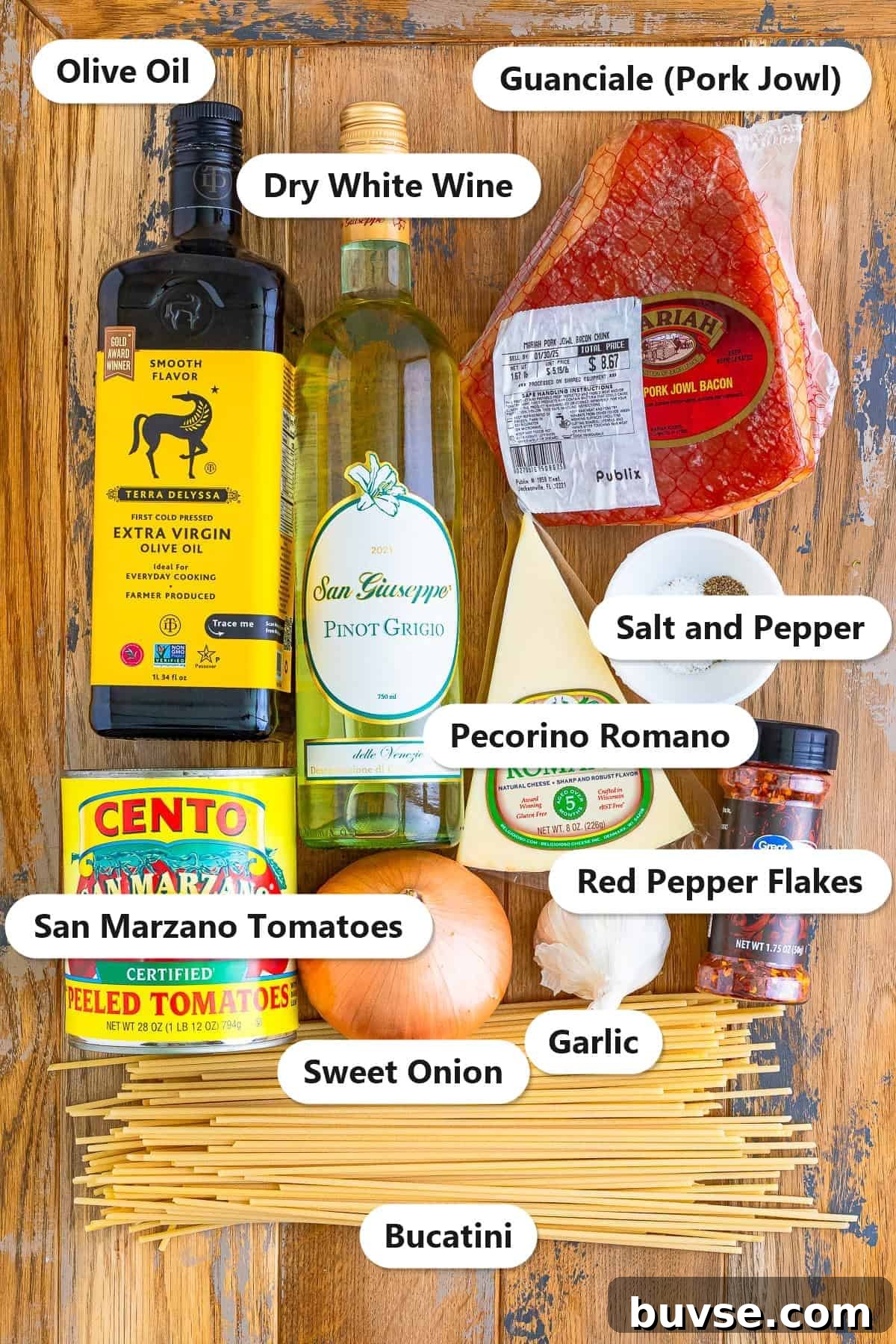
A few authentic Italian ingredients do the heavy lifting here.
- Guanciale: Cured pork jowl—traditional and rich. Use pancetta if necessary, or thick-cut bacon for a smokier result.
- San Marzano peeled tomatoes: Sweet, low-acid tomatoes that you hand-crush for a rustic texture.
- Bucatini: Thick, hollow spaghetti from Rome; it collects sauce in its center. Rigatoni or spaghetti work as substitutes.
- Pecorino Romano: Sharp, salty sheep’s-milk cheese—grate fresh for the best melt and flavor.
- Dry white wine: A splash brightens the sauce and helps deglaze the pan.
See the recipe card below for exact quantities.
Variations and Substitutions
If you need to swap ingredients, here are sensible alternatives that keep the spirit of the dish.
- Pancetta is the closest substitute for guanciale; thick-cut bacon adds a smoky American twist.
- Rigatoni or spaghetti can replace bucatini depending on what you have on hand.
- For more heat, increase the red pepper flakes to taste for an arrabbiata-style bite.
- To make a vegetarian tomato sauce, omit the pork and follow a classic marinara technique.
How to Make Pasta Amatriciana
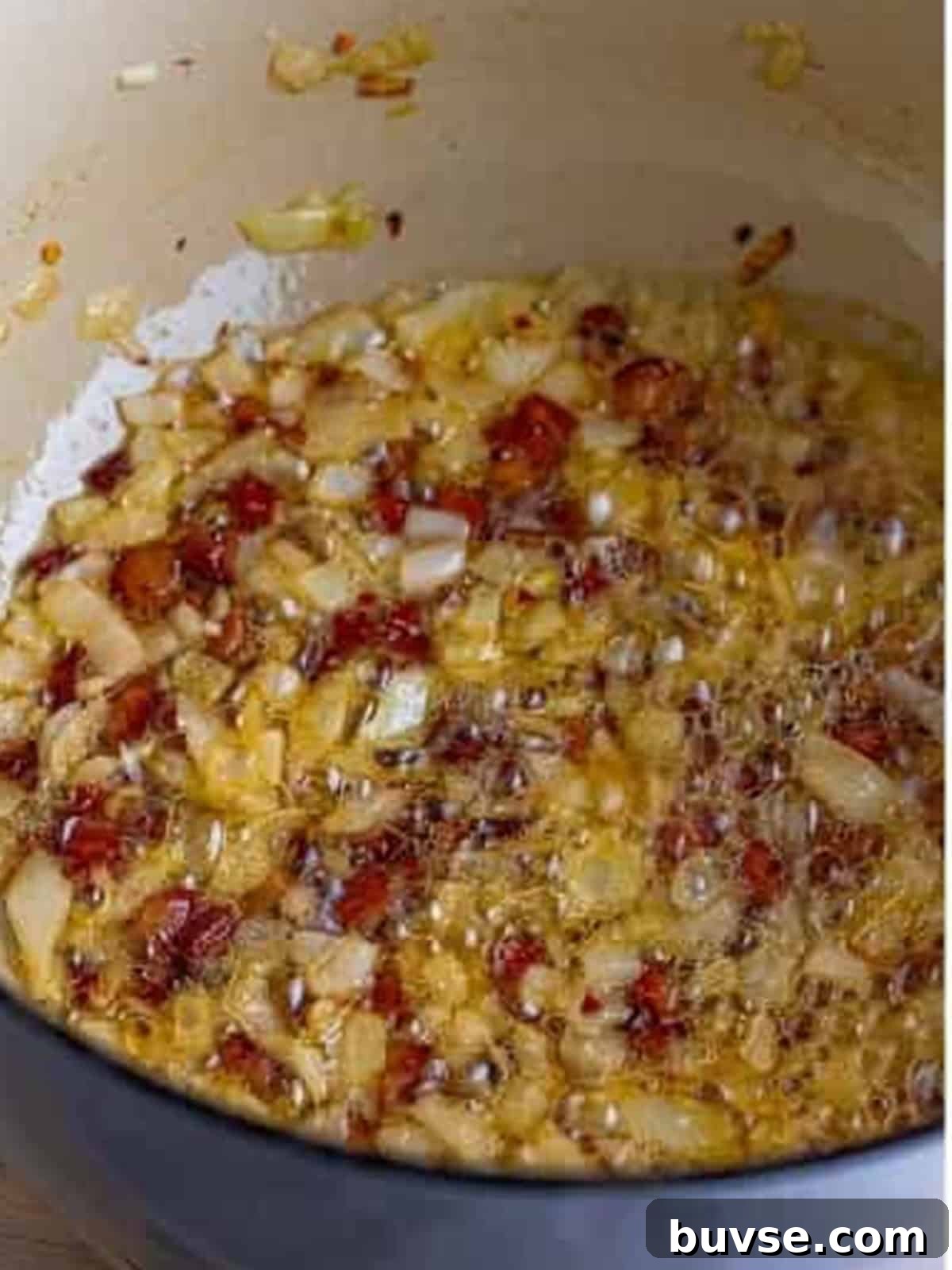
- Heat the olive oil in a large stock pot or Dutch oven over medium heat. Add the diced guanciale and cook, stirring occasionally, until it renders fat and becomes crispy, 8–10 minutes.
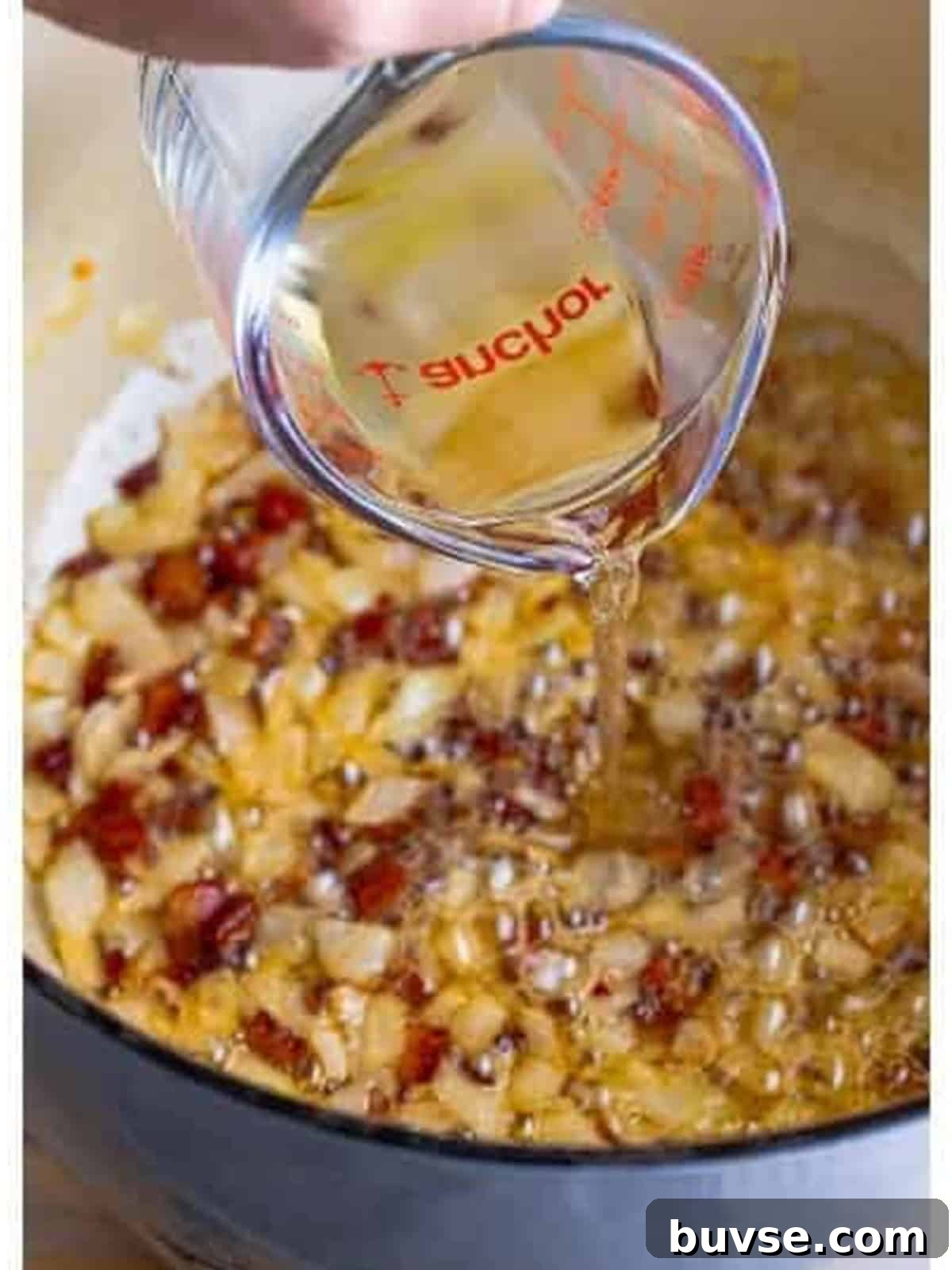
- Add the diced onion and cook in the rendered fat until translucent, 8–10 minutes. Add minced garlic, red pepper flakes, salt, and pepper and cook until fragrant, about 30–60 seconds.
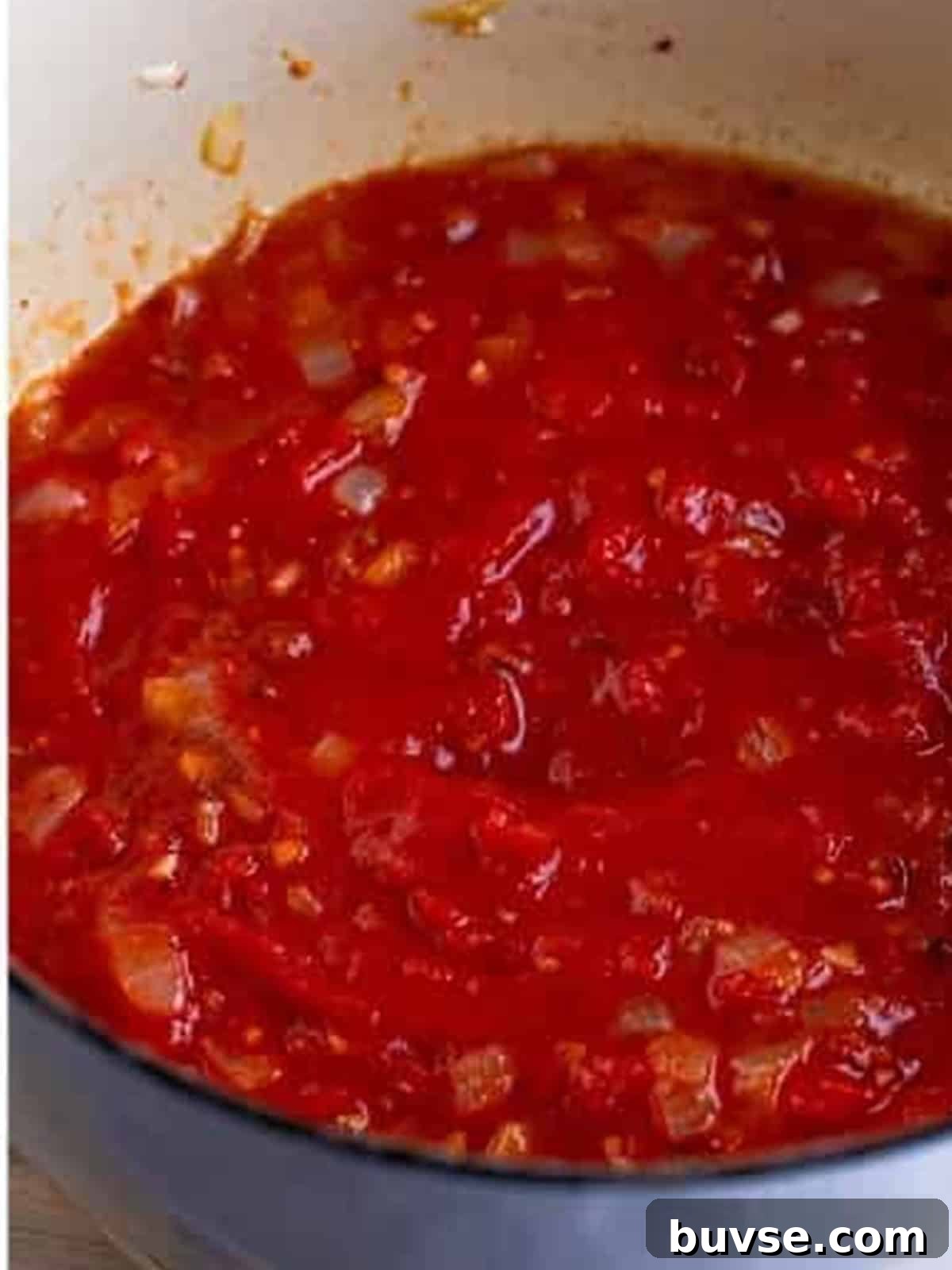
- Deglaze the pot with dry white wine, scraping up browned bits. Add the hand-crushed tomatoes, stir, and simmer uncovered until the sauce thickens, 15–20 minutes.
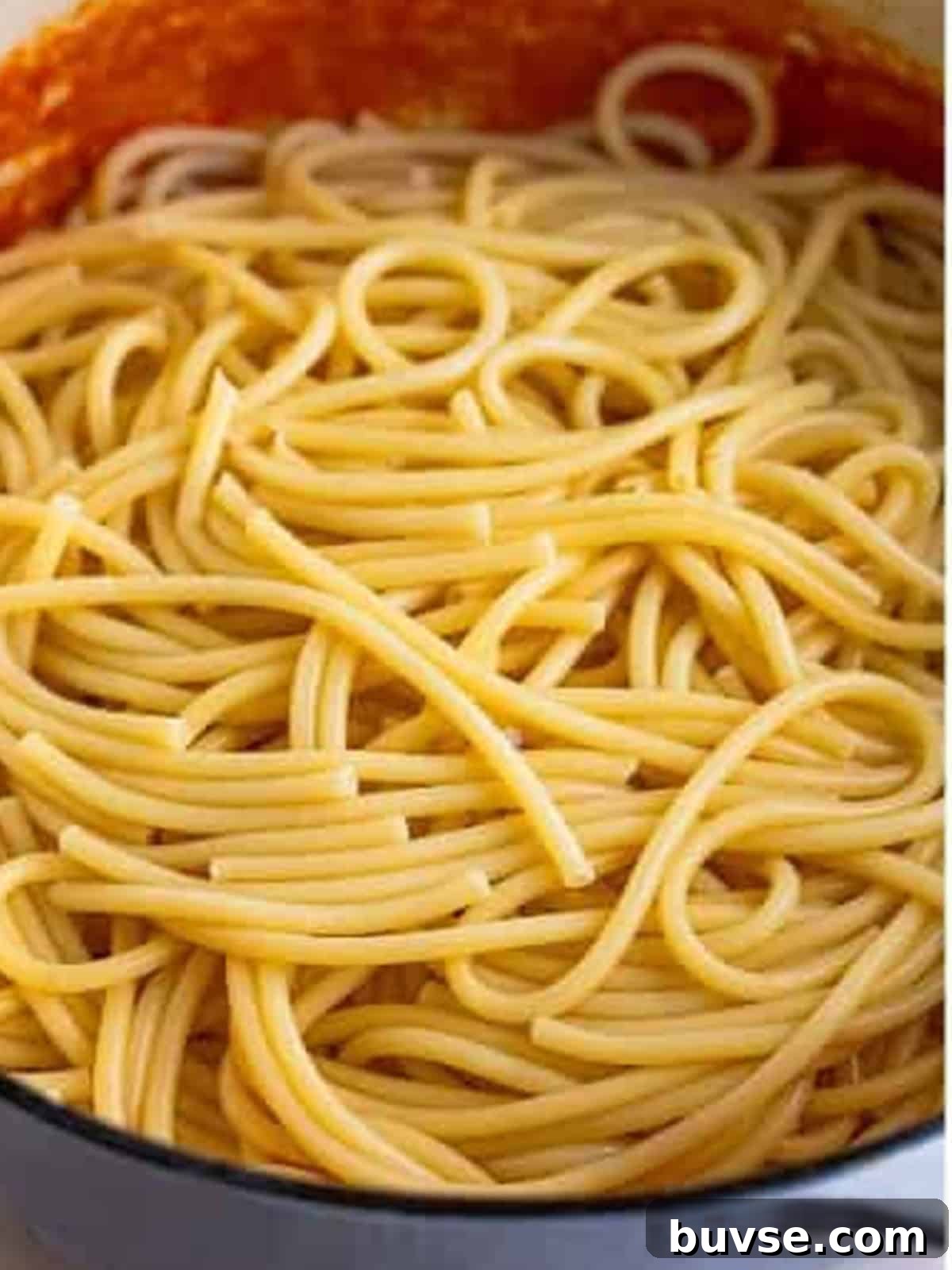
- While the sauce simmers, cook the bucatini in generously salted boiling water to just shy of al dente. Reserve 1 cup of the starchy pasta water, then drain.
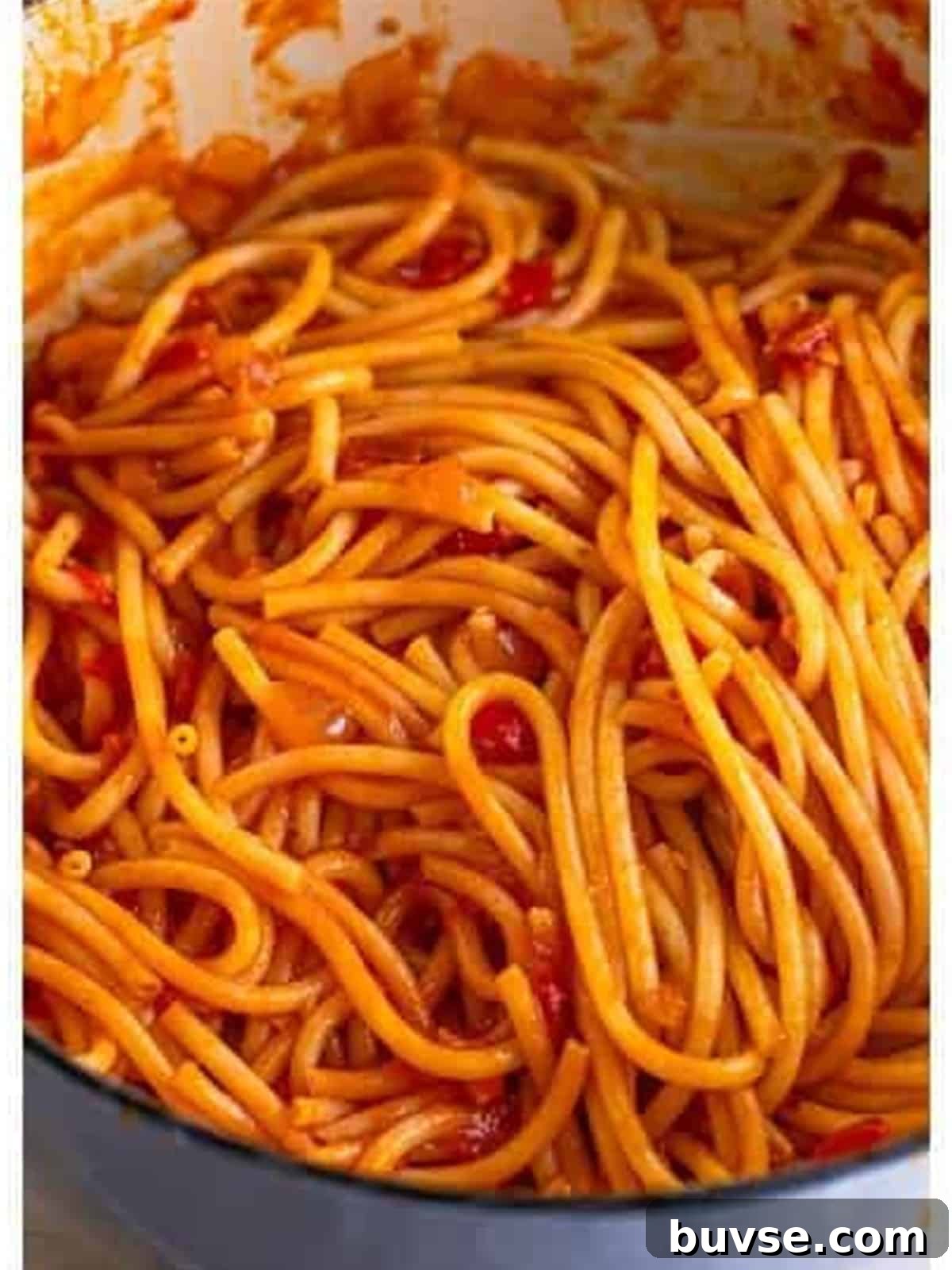
- Transfer the hot bucatini directly into the sauce with tongs. Add about half the reserved pasta water and toss vigorously until the sauce emulsifies and clings to the noodles. Add more pasta water if needed for a glossy finish.
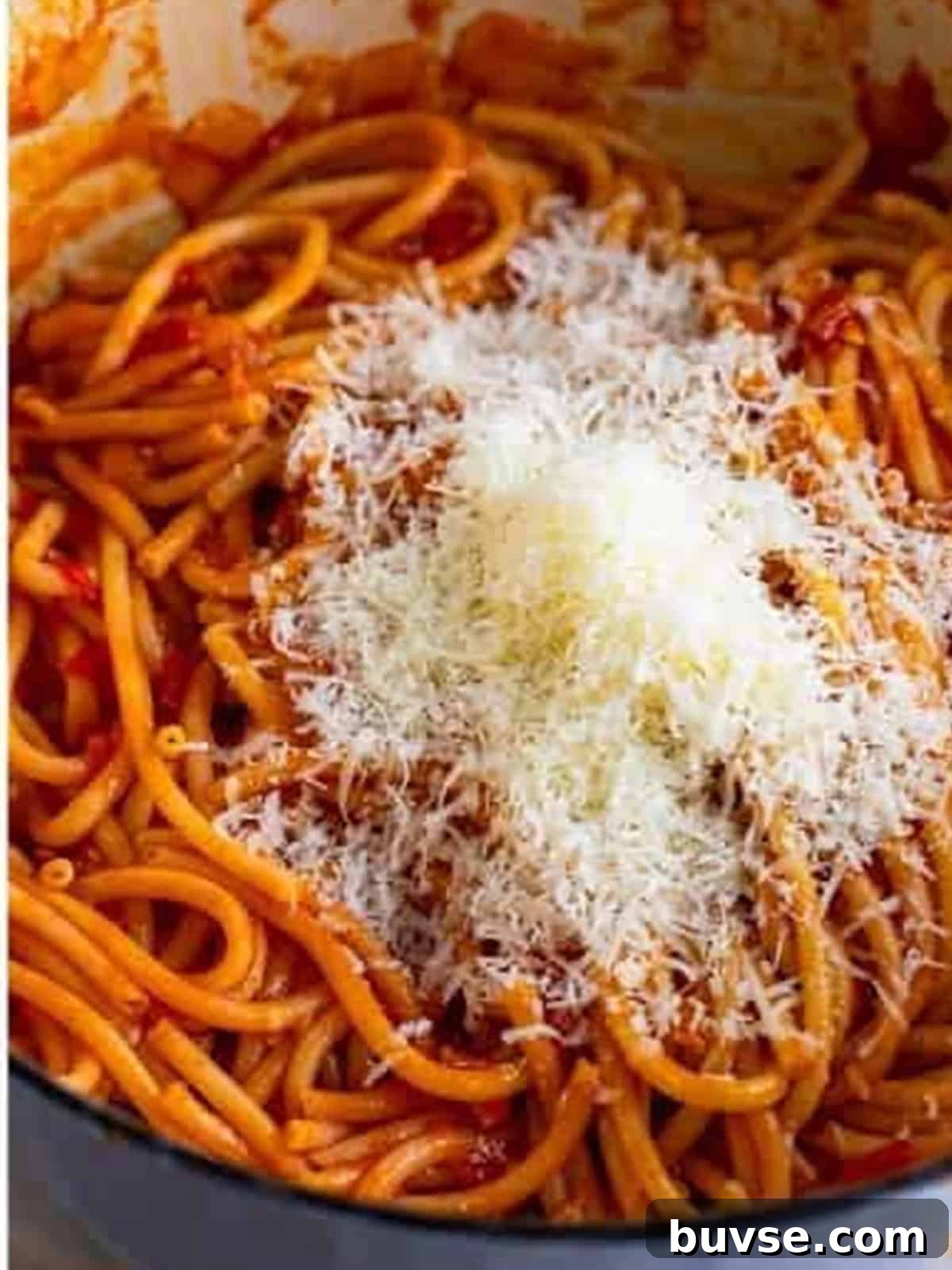
- Remove the pot from the heat, stir in freshly grated pecorino romano until creamy, and serve immediately with extra cheese and a pinch of red pepper flakes if desired.
Recipe Tips & Tricks
- Render the guanciale low and slow. Medium heat helps melt the fat before the edges crisp—rushing it risks burning the meat.
- Crush the tomatoes by hand. Squeeze each whole tomato into the pot for a rustic texture that canned crushed tomatoes can’t match.
- Salt the pasta water like the sea. It’s the only opportunity to season the pasta itself.
- Cook the pasta slightly under al dente. It will finish cooking in the sauce and absorb flavor.
- Don’t skip the pasta water. The starchy water emulsifies the sauce, turning it glossy and helping it cling to the bucatini.
- Grate the cheese fresh. Pre-grated cheese often contains anti-caking agents and won’t melt as smoothly.
Serving Ideas and Suggestions
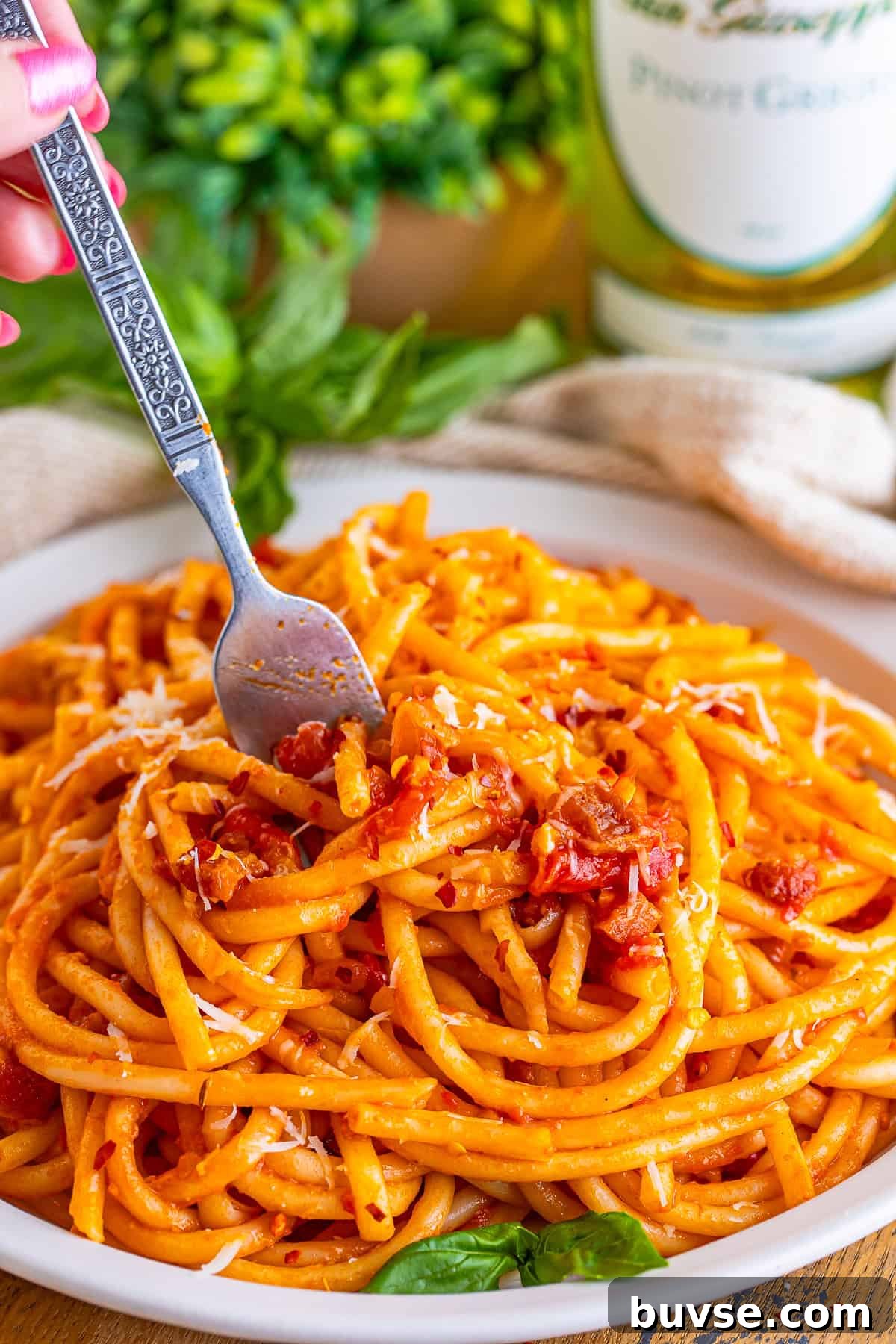
Serve Pasta Amatriciana in warm bowls with an extra flurry of pecorino romano, a pinch of red pepper flakes, and a piece of crusty bread for sopping up any remaining sauce. A simple green salad and a light white wine complement the dish well.
Leftovers: Store in an airtight container in the refrigerator for up to 4 days. Reheat gently in a skillet with a splash of water to loosen the sauce; the flavors often deepen overnight.
Pasta Amatriciana FAQs
Classic Amatriciana is made with guanciale, tomatoes, pecorino romano, and red pepper flakes, tossed with pasta—traditionally bucatini or rigatoni. Home cooks often add onion, garlic, and a splash of white wine for extra depth.
Pancetta is the closest substitute. Thick-cut bacon also works but will add a smoky flavor. Render any substitute slowly so the fat melts out and flavors the sauce.
Marinara is a meatless tomato sauce built on garlic and herbs. Amatriciana begins with rendered cured pork (guanciale), which imparts a rich, savory pork flavor to the tomatoes, and it’s finished with pecorino romano.
Bucatini is a Roman favorite because its hollow center collects sauce; rigatoni is also traditional, especially in the town of Amatrice. Regular spaghetti works in a pinch.
The sauce stores well in the refrigerator for up to 4 days and can be frozen for 2–3 months. Cook the pasta fresh when you’re ready to serve and finish it in the reheated sauce with a splash of reserved pasta water.
Pasta Amatriciana
Ingredients
- 1 tablespoon olive oil
- 6 ounces guanciale, small diced
- 1/2 sweet onion, small diced
- 3 cloves garlic, minced
- 1/2 teaspoon red pepper flakes (adjust to taste)
- 1 teaspoon salt (adjust to taste)
- 1/2 teaspoon black pepper
- 1/4 cup dry white wine
- 28 ounces San Marzano peeled tomatoes, crushed by hand
- 1 pound bucatini
- 1 cup reserved pasta water
- 1/2 cup freshly grated pecorino romano
Instructions
- Heat olive oil over medium in a large pot or Dutch oven. Add the guanciale and cook until it renders fat and becomes crispy, about 8–10 minutes.
- Add the diced onion and cook until translucent, stirring often, 8–10 minutes.
- Add garlic, red pepper flakes, salt, and pepper; cook until fragrant, 30–60 seconds.
- Deglaze with the white wine, scraping up any browned bits from the bottom of the pot.
- Add the hand-crushed tomatoes, stir, and simmer uncovered until the sauce thickens, 15–20 minutes.
- Meanwhile, cook the bucatini in salted water to just shy of al dente. Reserve 1 cup of the pasta water, then drain the pasta.
- Add the hot bucatini directly into the sauce, pour in half the reserved pasta water, and toss vigorously until the sauce emulsifies and coats the noodles. Add more pasta water if needed.
- Remove from heat, stir in the grated pecorino romano until creamy, and serve immediately with extra cheese on the side.
Notes
- Salt the pasta water generously so the pasta is seasoned inside.
- Watch the guanciale carefully—aim for golden, not burnt.
- The sauce should lightly coat the bucatini, not be soupy.
- Taste as you go; guanciale can be salty so adjust added salt accordingly.
- Serve hot—pasta absorbs sauce over time and can become soft if left too long.
Nutrition
Calories: 578 kcal | Carbohydrates: 65 g | Protein: 17 g | Fat: 27 g | Saturated Fat: 10 g | Sodium: 930 mg